




-60% Medium Left
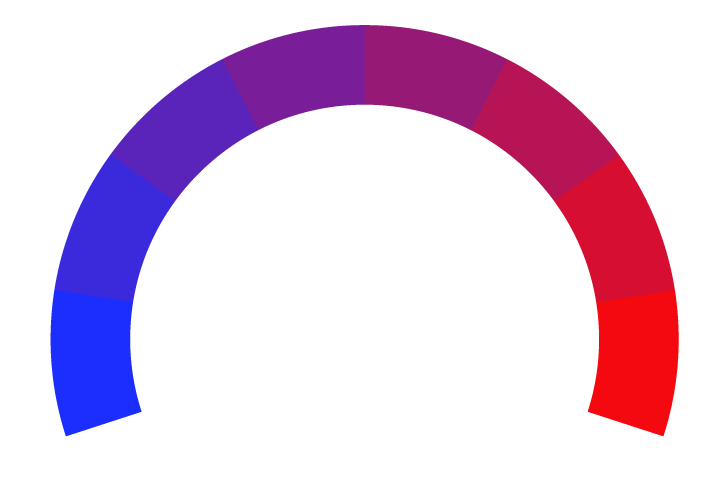
Bias Meter
Extremely
Liberal
Very
Liberal
Somewhat Liberal
Center
Somewhat Conservative
Very
Conservative
Extremely
Conservative
-100%
Liberal
100%
Conservative
Biasly determines media bias ratings through a dual-layered approach combining artificial intelligence and analyst review. The platform’s proprietary bias detection engine, Bias Meter, evaluates sentiment, policy position alignment, and language framing across thousands of data points in news articles. Analysts then verify and interpret the AI’s findings, providing additional context where needed. Learn more about ratings
- Profile
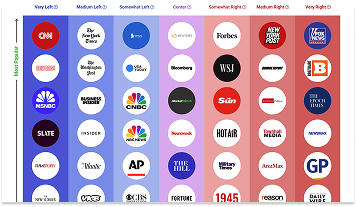
Raw Story on the media bias chart

- Bias Rating
-60% Medium Left
- Reliability62% Reliable AveragePolicy Leanings
-16% Somewhat Left
Extremely
LiberalVery
LiberalModerately
LiberalSomewhat Liberal
Center
Somewhat Conservative
Moderately
ConservativeVery
ConservativeExtremely
Conservative-100%
Liberal100%
Conservative
Average Reliability
*Our bias meter rating uses data science including sentiment analysis, machine learning and our proprietary algorithm for determining biases in news articles. Bias scores are on a scale of -100% to 100% with higher negative scores being more liberal and higher positive scores being more conservative and 0% being neutral. The rating is an independent analysis and is not affiliated nor sponsored by the news source or any other organization.
Politician Portrayal100% negative
Continue For Free
Create your free account to see the in-depth bias analytics and more.
By creating an account, you agree to our Terms and Privacy Policy, and subscribe to email updates.
Log In
Log in to your account to see the in-depth bias analytics and more.
Analysis of Raw Story Articles
Analysis of Bias in Raw Story Online Articles
According to Similar Web, as of October 2024, Raw Story had approximately 23.9 million total visits to their site. Raw Story tends to attract readers who identify as progressive or liberal. The platform primarily attracts readers who identify as progressive or liberal, with a notable focus on younger individuals, particularly those aged 18 to 34. Its audience tends to have higher levels of education, often seeking news that challenges mainstream narratives. Additionally, the readership is likely concentrated in urban areas, where progressive values are more prevalent.
How does Raw Story ensure its impartial content appeals to both liberal and conservative readers around the world, given its specific audience?
When determining bias, some of the most common metrics used include Tone, Tendency, Author, Diction, and Expediency Bias, which are the primary metrics we’ll focus on below.
- Tone: This represents the attitude of the writing, formed distinctively but related to the author’s word choices or diction.
- Diction: The specific words chosen by the writer.
- Author: A metric related to the article’s author, taking into account their history of stance on issues based on past articles and social media posts.
- Tendency: measures how consistently an author shows bias in their work, including factors like their tone and perspective.
- Expediency Bias: relates to the immediate impression created by elements like the article’s headline, images, or summary, indicating if they favor a particular viewpoint.
Source: Raw Story
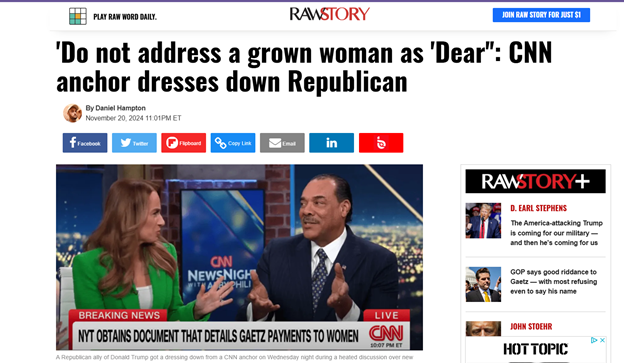
An example of this is “Do not address a grown woman as ‘Dear’: CNN anchor dresses down Republican.” The expediency bias within the article’s headline creates an immediate impression of confrontation and conflict, suggesting that the anchor is taking a firm stance against the Republican figure. The phrase “dresses down” implies reprimand or correction, framing the interaction as one-sided and authoritative rather than a balanced exchange. Additionally, highlighting the word “Dear” signals perceived condescension, priming the reader to view the Republican speaker negatively before engaging with the full context.
The article maintains a tense and confrontational tone, particularly in how it frames both the allegations and the televised exchange. For example, the phrase “a ‘web’ of transactions between embattled former Rep. Matt Gaetz (R-FL) and multiple women” introduces the subject with language that implies complexity and wrongdoing. The word “embattled” further reinforces a negative characterization, suggesting that Gaetz is already under justified scrutiny. This framing contributes to a serious and accusatory tone from the outset.
Another example of tone appears in the excerpt:
“Seriously, is this the best we can do?”
This quote reflects frustration and moral criticism from a participant in the discussion. Its inclusion emphasizes disapproval and dissatisfaction, reinforcing the article’s overall tone of critique toward the situation and those involved. By selecting and highlighting such reactions, the article amplifies tension and frames the discussion as one involving clear ethical concerns.
A further example is:
“Oh, ‘Dear?’… Oh, well thank you for the misogyny.”
This exchange introduces a tone of indignation and accusation. The use of the term “misogyny” escalates the interaction from disagreement to a moral critique of behavior, which intensifies the confrontational tone. Including this moment prominently draws attention to perceived disrespect and reinforces a narrative of conflict and impropriety.
The article employs strong and vivid diction to describe both the allegations and the individuals involved. Terms such as “web of transactions,” “trail of payments,” and “drug-fueled sex parties” create a serious and sensational tone, emphasizing the gravity of the accusations. Additionally, words like “embattled” and “vehemently denied” shape how readers perceive the subject, subtly reinforcing a sense of controversy and defensiveness. This choice of language prioritizes impact and urgency, which can influence how the reader interprets the situation.
The article shows a tendency toward highlighting negative or critical aspects of the individuals involved, particularly Matt Gaetz and the Republican participant in the discussion. The consistent emphasis on allegations, tense exchanges, and accusatory language suggests a pattern of framing events in a way that underscores conflict and criticism. While opposing viewpoints are technically included (such as Gaetz’s denial and references to the Justice Department’s decision), they receive less emphasis compared to the detailed presentation of allegations and confrontational moments. This pattern indicates a tendency to prioritize narratives that reinforce scrutiny and critique over balanced exploration.
Daniel Hampton serves as a senior editor at Raw Story and had previously worked at the Associated Press. As a journalist for two liberal news outlets, the author’s reporting may reflect a liberal bias. This could lead to a focus on the story’s negative aspects that align with the author’s ideological leanings, while potentially downplaying or omitting counterarguments or perspectives that might offer a more balanced view. Additionally, the choice of language and emphasis on specific details might be intended to shape the reader’s perception in a way that aligns with the author’s viewpoints.
Daniel Hampton does not display an outright lean on his Twitter profile, but some reposts and replies to others’ posts may suggest a left-leaning social media presence. One particular repost discusses an incident with armed civilians blocking a major roadway, and the comment section takes a harsh stance against the ability to bear arms in such a public area, and the lack of quick response by local law enforcement.
I’m not comfortable with heavily armed humans stopping traffic on a major thoroughfare on a holiday weekend and I don’t care what their particular strain of crazy is.
— Charles P. Pierce (@CharlesPPierce) July 3, 2021
Analysis of Raw Story Opinion Articles
Before addressing this question, it is essential to distinguish between reporting and opinion. Reporting aims to be neutral, focusing on presenting facts and quotes from primary sources, allowing readers to form their own opinions. In contrast, opinion articles give columnists a platform to express their personal views on current issues.
Consider the Opinion article, “MAGA pastor who wants to end female voting rights compares women to pigs.” The title’s language suggests a stark, controversial viewpoint intended to provoke reactions and debate. Comparing women to pigs implies a profoundly demeaning attitude towards women, reflecting extreme misogyny. Additionally, the title aligns with a political ideology that might further polarize readers and spark discussions on gender equality and voting rights. Let’s look at some of the quotes from the article:
“Pigs with gold nose rings.”
This quote uses highly provocative and demeaning language to describe a group of people, making it inherently emotionally charged. Its inclusion amplifies outrage and draws attention to extreme rhetoric, but without sufficient contextual balancing, it risks reinforcing a one-sided negative portrayal. By foregrounding such a striking phrase, the article leans into emotional impact rather than neutral presentation, which contributes to perceived bias.
“Trump and his people trying to revisit this history is not the sign of a healthy republic; this is a bright red flashing warning about a country sliding into autocracy.”
This statement reflects strong interpretive commentary rather than neutral reporting. The use of metaphorical language like “bright red flashing warning” introduces urgency and alarm, framing the situation as a crisis. Because this is not a direct quote from a primary source but an evaluative claim, it signals clear ideological positioning and guides the reader toward a specific conclusion, rather than allowing independent interpretation.
“They then claim that this ‘proof’… is an ‘injury’ to their states because it lowers their potential population.”
Although this quote references legal or policy arguments, the selective use of quotation marks around words like “proof” and “injury” subtly casts doubt on their legitimacy. This framing can influence how readers perceive the argument, making it appear questionable or unreasonable without fully presenting the underlying rationale. As a result, the quote contributes to bias through selective emphasis and framing.
“This guy isn’t an outlier; this is the direction the entire GOP has been going for years.”
This statement generalizes an individual’s views to an entire political group, which is a strong indicator of bias. Rather than focusing on specific actions or statements, it broadens the claim to characterize a whole party. Such generalizations move beyond reporting into opinion and can shape reader perception by reinforcing a particular narrative about a political group without presenting countervailing perspectives.
The author’s language illustrates a distinct bias by using inflammatory language and selective examples that emphasize the extreme positions within the political ideology they criticize. Employing vivid metaphors such as “bright red flashing warning” underscores the perceived absurdity and offensiveness of the pastor’s statements, potentially leading the audience to question the motives and values of those supporting similar ideologies. However, this approach could influence the reader’s perception, leading them to accept the author’s conclusions without considering alternative perspectives.
Another example is an opinion article, “How America became a ‘Mafia State’ — right under our noses”. The language used in the article’s headline suggests that the author believes corruption and organized crime have infiltrated government operations. The term “Mafia State” implies a comparison between the actions of the government and the secretive, coercive tactics commonly associated with criminal enterprises.
“They would’ve laughed at you if you told them that the richest man in the world would come from apartheid South Africa to hook up with a grifter billionaire to become co-president.”
This quote uses highly loaded and derogatory language (“grifter billionaire,” “apartheid South Africa”) to frame political figures in a negative light. Rather than presenting factual information, it relies on ridicule and characterization to shape reader perception. The phrasing is speculative and rhetorical, not evidence-based, which signals strong opinion and contributes to ideological bias by framing individuals through emotionally charged descriptors.
“As a result, for most of the 20th century prior to the Reagan Revolution, politicians did what the citizens wanted. We got Social Security, the minimum wage, Medicare, unemployment insurance, Medicaid,”
This statement presents a simplified and idealized historical narrative, suggesting a direct and consistent alignment between government action and public will. While the policies mentioned are factual, the causal framing (“politicians did what the citizens wanted”) overlooks political complexity, opposition, and institutional constraints. This selective framing supports a broader argument about systemic decline, contributing to bias through omission of nuance and alternative interpretations.
“All of these positions…are overwhelmingly supported by the American people. None can get into law because billionaires or corporations have paid off enough politicians to stop them.”
This quote makes a sweeping generalization about both public opinion and political corruption. While some policies may have broad support, the claim that “none can get into law” solely due to financial influence simplifies a complex legislative process. The assertion that politicians have been “paid off” is presented without evidence in this context, which introduces a strong accusatory tone. This contributes to bias by attributing causation to a single factor without acknowledging competing explanations.
“This corruption of the ‘rules of the game’ by the Supreme Court has, in turn, attracted criminally disposed sociopaths into government at all levels.”
This statement employs extreme and inflammatory language (“criminally disposed sociopaths”) to describe political actors, which goes beyond critique into outright condemnation. The claim draws a direct causal link between judicial decisions and the character of individuals in government, but does so without supporting evidence. This type of language reflects a strong ideological stance and contributes to bias by presenting opinion as fact and using emotionally charged descriptors to influence reader perception.
Across these quotes, the article relies heavily on emotionally charged language, generalizations, and causal assertions without substantiated evidence. The quotes function less as neutral evidence and more as persuasive rhetoric, reinforcing a clear ideological perspective. This approach positions the piece firmly as opinion-driven content rather than balanced or objective analysis.
The author uses provocative language to effectively express intense disapproval and concern about the current state of government. By comparing government actions to those of criminal enterprises, this language aims to create an atmosphere of distrust and to underscore the perceived severity of corruption. Terms like “Mafia State,” “grifter billionaire,” and “criminally disposed sociopaths” reflect a bias against specific political figures and systems, potentially resonating with readers who share similar frustrations or skepticism.
Such language can heighten readers’ emotions and reinforce existing beliefs, potentially increasing polarization among the audience. It may also inspire those disillusioned with the political system to engage more actively in political discourse or activism.
Both articles illustrate how language can influence readers’ perceptions and emotions. While the first article uses terms like “Mafia State” and “criminally disposed sociopaths” to evoke a sense of corruption and underhanded dealings, the second article might employ different rhetorical strategies to mitigate or amplify these sentiments. This contrast in language can ultimately impact how readers interpret the issues at hand, shaping their attitudes and potentially affecting their engagement with the political system.
Analysis of Reliability in Raw Story’s Online News Articles
Raw Story’s online articles are recognized for their progressive and left-leaning perspective, often highlighting political topics and social justice issues. While it offers a platform for alternative viewpoints, some critics argue that it occasionally lacks thorough fact-checking and may present information with a partisan bias.
One notable example is the article titled “‘It’s insulting’: Outgoing GOP Rep trashes Trump’s ‘slap in the face’ to average Americans.” Robert Davis covered Marjorie Taylor Greene’s commentary when announcing her resignation, and clearly emphasized her negative words for President Trump and his administration. Following Raw Story’s Medium Left rating, this piece illustrates a left-leaning bias.
Quality of Sources and Facts Used
Raw Story has been criticized for inaccuracies in its reporting, with some articles labeled as misleading. The spread of misinformation can erode trust in media outlets, making it challenging for audiences to distinguish credible from unreliable sources. This loss of trust can contribute to the spread of false narratives and misinformation, further polarizing public opinion.
Raw Story generally uses credible sources from across varying viewpoints. However, some articles skew in how comprehensively they present. For example, “Using Fox as a staffing agency’: Trump attacked over latest Cabinet hire” by Jessica Corbett. The article received an “Excellent” Rating for its use of Multiple Sources. Corbett included 12 quotes of varying lengths: two are short, and ten are long. In terms of multiple sources, the article lists eight references:
- CNN (Very Liberal)
- Raw Story (Medium Liberal)
- AP News (Somewhat Liberal)
- Common Dreams
- Truth Social
- Media Matters for America
- X (Twitter)
- League of Conservation Voters Scorecard
Stoehr’s selection bias is evident in his reliance on sources that primarily reflect liberal viewpoints, such as The Bulwark and a Democratic pollster. By focusing on these sources, he may convey a narrative highlighting the influence of right-wing media, potentially strengthening his argument about the role of conservative media in the election outcome.
The author neglects to include sources and perspectives that could highlight other factors influencing the outcome of the 2024 election, such as economic issues and voter turnout. As a result, readers may come to believe that right-wing media was the only determining factor rather than one of many influences at play.
Another example is “’ Tremendous and well-liked’: Trump taps another Fox TV host for Cabinet position” by Daniel Hampton. Hampton includes eight quotes of varying lengths: four short, three medium, and one long. In terms of multiple sources, the article lists four references:
- Raw Story (Medium Liberal)
- Truth Social
- ABC News (Somewhat Liberal)
- Milwaukee Journal Sentinel
Hampton attempts to provide a balanced perspective by including sources with different political leanings, such as ABC News and the Milwaukee Journal Sentinel. Yet, it also poses the challenge of verifying the accuracy and reliability of each source. Raw Story, with its liberal bias, may present information in a way that favors one perspective, potentially leading to the dissemination of misinformation if not critically evaluated. Readers must be cautious and actively cross-reference these sources to ensure that the information presented is accurate and not skewed by any inherent bias.
The selection of sources can significantly influence how information is framed and interpreted. When an article primarily relies on liberal-leaning sources, it may unintentionally emphasize perspectives that align with a particular ideological stance, potentially neglecting or diminishing opposing viewpoints. This selective focus can contribute to the spread of misinformation by presenting a narrative that appears comprehensive yet is biased by an unbalanced representation.
Selection and Omission Bias
Raw Story is a publication known for endorsing a liberal ideology and seeks to influence its audience with that specific agenda. However, its Opinion Section features a variety of viewpoints, allowing readers to engage with perspectives that may not align with the publication’s overall stance. Biased articles often present information selectively, emphasizing specific facts while downplaying or ignoring others to support a particular narrative.
Let us examine an opinion article from Raw Story, “Until there’s a liberal media apparatus, the Democrats will live in Trump’s America” by John Stoehr, which is rated as centered. The article explores how right-wing media and attack advertisements influence the outcome of the 2024 election. It examines in particular the impact of numerous accusations directed at Kamala Harris and the media’s role in shaping the political landscape.
The sources listed in the article include The Bulwark, a Democratic pollster, and media expert Matthew Sheffield.
“According to a new study by a Democratic pollster, Trump’s attack ads largely explain the outcome of the election.”
This quote relies on a partisan source (a Democratic pollster) to explain a major electoral outcome, which introduces potential bias in both sourcing and interpretation. While polling data can be informative, the lack of counterbalancing perspectives—such as independent analysts or Republican-affiliated research—means the claim is presented with limited scrutiny. The phrasing “largely explain the outcome” is also definitive, framing a complex election result around a single cause, which simplifies the narrative and reinforces the article’s broader argument.
“…the substance of what she said could not be heard through the din of the right-wing media apparatus. ”
This quote uses metaphorical and evaluative language (“din,” “right-wing media apparatus”) to characterize the media environment, rather than neutrally describing it. The phrasing suggests overwhelming dominance and distortion by one side, which reflects a clear ideological framing. Instead of presenting measurable evidence of media imbalance, the quote relies on interpretation and tone, guiding readers toward a specific conclusion about media influence and reinforcing a one-sided perspective.
“The final weeks of the election, the Trump campaign spent more than $29 million on television ads attacking Harris on trans rights.…making that topic their fifth-most emphasized.”
This quote introduces quantitative data, which adds an element of factual grounding to the article. However, the way the statistic is framed selectively emphasizes one campaign strategy (attack ads on trans rights) without providing a broader context, such as total campaign spending or how Democratic messaging compares. This selective use of data can shape interpretation by highlighting one aspect of the campaign while omitting others, contributing to a narrative that supports the article’s central argument about media influence and messaging imbalance.
Across these quotes, the article combines partisan sourcing, interpretive language, and selective statistics to construct a narrative that attributes electoral outcomes primarily to media dynamics and opposition messaging. While some elements (like ad spending data) are fact-based, the lack of countervailing perspectives and the use of evaluative framing contribute to a clearly opinion-driven, left-leaning analysis rather than neutral reporting.
Stoehr’s selection bias is evident in his reliance on sources that primarily reflect liberal viewpoints, such as The Bulwark and a Democratic pollster. By emphasizing these sources, he may present a narrative that underscores the impact of right-wing media, potentially reinforcing his argument about conservative media’s influence on the election outcome.
However, the omission of sources or viewpoints that might suggest other factors that played a significant role in the election outcome, such as economic issues or voter turnout, skews the reader’s understanding of the situation. This absence of diverse perspectives can lead readers to believe that right-wing media was the sole determining factor rather than one of many influences.
Let us examine another article, “Trump’s ‘first buddy’ is in deep, you-know-what,” by Robert Reich, which is rated as centered. The article is about potential candidates for Trump’s Treasury Secretary position, Elon Musk’s influence in the decision-making process, and the implications of the choices for economic policy and democracy.
The sources listed in the article are The Wall Street Journal and X.
“Lutnick had been in the lead, but a few days ago, according to The Wall Street Journal, he heard from Trump’s allies that he might not get the nod.”
“Bad enough that Musk broke this basic rule. He went even further, publicly encouraging his nearly 205 million followers on X to weigh in in favor of Lutnick.”
Reich’s selection bias is evident as it heavily centers on the actions and potential consequences of Elon Musk’s public advocacy for Howard Lutnick to be selected as Treasury Secretary. This bias could compromise the audience’s understanding of the issue by concentrating exclusively on Musk’s influence and actions while neglecting other important factors in the selection process.
The article fails to address the complexities of internal political dynamics and the qualifications of other candidates. Consequently, it may lead readers to form opinions based solely on Musk’s involvement rather than a comprehensive understanding of the candidate’s capabilities and potential impact on economic policies.
Both articles illustrate how selection and omission bias can influence public perception by highlighting specific narratives while overlooking others. These biases can cause readers to develop distorted viewpoints as they are not given a thorough analysis of all relevant factors. Consequently, the audience may form opinions based on incomplete information, which can lead to a polarized and misinformed public discourse.
Raw Story Bias Overview
Raw Story is owned by Raw Story Media, Inc., which was established by John K. Byrne in 2004. As an independent news outlet, Raw Story is not owned by any large media conglomerate or corporation. Raw Story has received multiple journalism awards for its investigative reporting, including EPPY Awards, Folio Awards, National Federation of Press Women (NFPW) awards, and a Sidney Award for work by its journalists, recognizing coverage on extremism, Jan 6th, lawmaker misconduct, and mail carrier safety. Biasly’s AI and analyst reviews evaluate Raw Story’s content and sourcing to determine its political leaning.
Source: Pew Research
As one of the leading news media outlets with a focus on United States political parties and the growing political community worldwide, Raw Story plays a significant role in shaping public perception of international and domestic issues. With rapidly increasing polarization between Republicans and Democrats, Raw Story’s favoring of liberal policies attracts a specific left-leaning and often Democratic audience.
Readers’ trust in the accuracy of Raw Story local news may mirror the conclusions reached by Biasly’s media bias ratings. This article delves into Raw Story’s written and editorial tendencies to explore present political bias and to what extent.
Is Raw Story Biased?
Based on Biasly’s evaluations, Raw Story is rated as Medium Left.
By examining content patterns and the broader context of media influence, we aim to offer a balanced perspective on Raw Story’s political bias—and contribute to the ongoing discussion about bias in the news.
How Does Biasly Rate News Sources?
Biasly uses proprietary algorithms and a team of analysts to provide comprehensive bias evaluations across thousands of news outlets. Over 200,000 articles from more than 3,200 sources have been analyzed to identify the most accurate and unbiased stories.
Biasly assigns each outlet three key scores:
- Reliability Score – Reflects factual accuracy
- AI Bias Score – Generated via natural language processing
- Analyst Bias Score – Assessed by human political analysts
These scores are based on seven core metrics: Tone, Tendency, Diction, Author Check, Selection/Omission, Expediency Bias, and Accuracy. These elements help analysts and algorithms evaluate the political attitude conveyed by each article.
Biasly’s Bias Meter ranges from -100% (most left) to +100% (most right), with 0% indicating neutrality. The system evaluates individual articles based on political terms, policies, figures, and sentiment to calculate precise bias ratings.
Is Raw Story Politically Biased?
Raw Story earns a Medium Left rating for its AI Bias Score and a Medium Left for its Analyst Bias Score. The Analyst Bias Score is generated by reviewers from liberal, moderate, and conservative backgrounds.
Analysts reviewed 15 Raw Story articles and noted slight preferences in coverage of liberal politicians, but also many neutral topics. For example, Biasly has rated its stance on policies such as Anti-Discrimination Laws and Criminal Justice as medium liberal. Different types of bias in articles, preferences for liberal or conservative politicians and policies, all factor into the generation of these scores.
For example, coverage of the recent US capture of the president of Venezuela reflects a mostly neutral tone, but articles involving a negative portrayal of US President Trump contributed significantly to the liberal score.
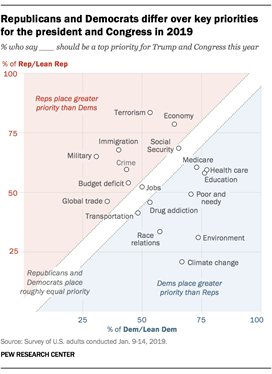
The United States’ demographics present a contrasting backdrop, with a mix of liberals and conservatives. Pew Research shows that there are large groups of Republicans in the United States who support the Trump administration polices, especially immigration. Though Raw Story leans liberal, the survey shows that the political landscape in the US does not fully align with the news site’s stance, which could explain differing perceptions of Raw Story’s content. The paper may draw mixed reactions depending on readers’ political orientations.
This Bias score is determined through natural language processing that evaluates the tone, word choice, and opinion embedded in the reporting. Recent AI evaluations highlight liberal-leaning narratives.
How to Evaluate Bias
Although Biasly rates Raw Story as Medium Left, it’s important to remember that bias can vary from article to article. Raw Story also covers a more conservative-leaning country with objectivity on many issues, from world news to domestic legislation. This complexity emphasizes the importance of examining each article individually. So, let’s learn how to evaluate media bias.
Recognizing media bias requires awareness and critical thinking. Often, readers trust news sources that affirm their existing beliefs, a psychological tendency known as confirmation bias. This makes it harder to identify slanted narratives or one-sided reporting.
To combat this, it’s essential to challenge your assumptions by consulting multiple viewpoints and verifying news through third-party analysis. Tools like Biasly’s media bias ratings allow readers to compare the same news story across the political spectrum.
Ultimately, bias isn’t always a matter of what is said; it’s also about what is left out, how topics are framed, and which stories are chosen for coverage. Learning to recognize these patterns can help readers make more informed decisions and develop greater media literacy.
To start comparing news outlets and gain a better understanding of bias, sign up for Biasly’s Media Bias & News Analytics Platform to see how stories vary between sources.
Raw Story Reliability Overview
Is Raw Story Reliable?
For many years, Raw Story has dedicated itself to investigative journalism and breaking news from a progressive perspective. Their reporting has shed light on various political and social issues, often sparking important conversations and highlighting stories that might be forgotten.
Raw Story has played a significant role in fostering a more informed and engaged public by emphasizing transparency and accountability. However, Raw Story has been criticized for misinformation regarding its reporting accuracy, with articles often containing inaccuracies or being misleading.
At Biasly, we strive to evaluate the reliability and accuracy of all media outlets. The following section examines Raw Story’s reliability.
How to Evaluate Reliability?
Reliability refers to how trustworthy or accurate a news source is. If we can’t trust what we read, then continuing to consume content from that outlet serves little purpose. So how do we evaluate a news outlet’s reliability?
There are several potential measures of reliability to look out for when trying to determine whether a media source is reliable or not. Red flags for an unreliable article can include the presence of wild, unsubstantiated claims, facts dependent on other unreliable sources, heavy use of opinionated language, and more. In contrast, hallmarks of a reliable source include:
- Absence of subjective language
- Citing credible sources (e.g., .gov, .edu, academic references)
- Verifiable facts and statistics from multiple outlets
- Use of primary sources, like interviews or transcripts
- Consistency with coverage across other platforms
Biasly’s reliability scores incorporate these elements in evaluating media outlets.
So How Does Raw Story Fare in Its Reliability?
The political reliability index developed by Biasly assesses both accuracy and trustworthiness. Raw Story currently holds Average Reliability Score, which is calculated as a weighted average of:
- Fact Analysis Score – Evaluates the accuracy of claims, facts, and evidence.
- Source Analysis Score – Assesses the number, diversity, and credibility of sources and quotes used.
Raw Story’s Source Analysis Score is Average at 58% Reliable. This suggests moderate trustworthiness in its sourcing practices. The score is AI-generated and considers quote length, frequency, diversity, and quality.
The Fact Analysis Score of Raw Story is Average at 63% Reliable. This further shows how well Raw Story supports its claims, addresses selection and omission bias, and presents verifiable evidence.
While Raw Story leans toward factual reporting, occasional lapses or personal biases—such as unbalanced viewpoints or incomplete data—can affect its reliability rating. These nuances emphasize the importance of analyzing media bias for individual articles.
Raw Story’s Accuracy and Reliability
According to Biasly’s analysis, Raw Story maintains Average Reliability Score, but individual articles may vary significantly. Let’s dive into the details.
Political stances play an important role in how readers and audiences view the reliability of a source. Raw Story is generally considered to be Medium Left, or relatively objective; however, they sometimes uphold more liberal values, making them occasionally left-leaning. This comes at the expense of fact-based reporting, where articles can be influenced by political ideology rather than objectivity. One must analyze the publication’s assertions to find whether there is sufficient evidence and diverse views.
Two common types of bias that affect factuality include:
- Selection Bias – Highlighting or omitting stories to fit a particular narrative.
- Omission Bias – Leaving out differing perspectives or relevant details to skew perception.
Biasly’s accuracy ratings use a scale from 1% (least accurate) to 100% (most accurate). Factors include the balanced viewpoints, the presence of supporting evidence, and internal and external reliable sources.
For instance, Biasly also gave The New Indian Express a Medium Left bias rating. One The Indian Express article, titled “Energy choices guided by consumer interest: India after Trump says Modi assured halt to Russian oil”, has an Average analyst reliability rating from Biasly. The article includes multiple diverse quotes of good length, but has limited sources and doesn’t thoroughly address opposing arguments.
The author, Jaynath Jacob, had a left-leaning bias in this article. In contrast, another piece from the outlet was titled “AG grants contempt action against lawyer who hurled shoe at CJI Gavai”. It did not feature sufficient quotes or diverse sources, was rated as Medium Left, and scored limited for accuracy. The article does, however, maintain objectivity. Facts are presented about the issue in an organized fashion and with no personal bias visible from the author.
So, Is Raw Story Reliable?
Overall, Raw Story can be considered to be an outlet that is moderately reliable. It demonstrates a consistent goal of journalistic integrity and typically supports claims with sources and quotes. Occasional omissions and framing bias do appear, particularly on culturally sensitive or partisan issues.
As media literacy improves, readers can more easily detect issues with selection bias, omission bias, and factuality. To strengthen your ability to assess reliability across the political spectrum, use the News Bias Checker to compare how multiple outlets report the same story.
This empowers you to consume more accurate, balanced, and dependable news.
Raw Story Editorial Patterns
Raw Story’s coverage of political topics often reflects a Medium Left bias, with consistent patterns in phrasing, source selection, and thematic focus that is Moderately Liberal. While the publication demonstrates journalistic standards in some of its reporting, its choice of issues, framing, and word choice can indicate a left-leaning political slant. This content analysis examines how Raw Story handles liberal and conservative issues and evaluates its language choices and editorial tendencies.
Coverage of Liberal vs. Conservative Topics
Raw Story’s articles include a wide range of social causes. These include critical language regarding recent events involving the release of the Epstein files and mentions of Donald Trump. Additionally, support for Democratic politicians, racial justice, and climate policy tends to adopt sympathetic, supportive language, as these issues are generally aligned with liberal initiatives.
In contrast, articles covering conservative figures or Republican-led initiatives employ a slightly more critical tone, but remain somewhat objective. Biasly’s analysis of recent Raw Story articles reveals a tendency to highlight opposition surrounding Republican policies in US politics. It may also downplay positive aspects or a conservative rationale.
In coverage of tariffs instituted by the US, the problems these will create for other countries are highlighted more than the positive effects on the US economy, which the current US president, Donald Trump, cites as the reason for enacting them.
This news media bias manifests in subtle ways regarding most topics, such as painting Democratic voices in a slightly more positive light when discussing US politics. The author may use emotional diction when describing liberal causes, such as critiques of race-based mistreatment.
At the same time, they may offer more detached language in most conservative contexts. Words like “anti-discrimination,” “equality,” and “rights” appear more frequently in liberal-oriented reporting, while conservative views are sometimes framed as “pushbacks” or “oppositions.” Though Raw Story maintains a neutral stance on many international issues.
Policy and Issue Framing
On gender equity, Raw Story challenges negative assumptions about the Democratic Party and positions itself consistently with a left-leaning frame in the context of the United States. Environmental coverage and clean energy movements often convey a sense of urgency (e.g., “negative impact of global warming,” “save our earth”).
Conversely, coverage of policies commonly associated with conservative platforms (e.g., U.S. tariffs) may be contextualized in terms of costs to trading partners or described as polarizing. Additionally, topics such as immigration are framed critically toward deportation policies. While reporting is generally fact-based, repeated phrasing choices can cumulatively signal editorial leaning.
Even in neutral coverage, phrasing choices shape perception. Articles describe liberal proposals as “established” or “applied,” while conservative legislation may be described as “failed to pass.” This consistent word choice reflects an editorial direction that, even subconsciously, can contribute to bias in news media.
Coverage and Relevance
Raw Story is a progressive news website focusing on investigative journalism and political commentary. It often highlights stories underreported by mainstream media, offering an alternative perspective on current events. By promoting transparency and accountability, Raw Story plays a significant role in diversifying the media landscape and enriching public discourse.
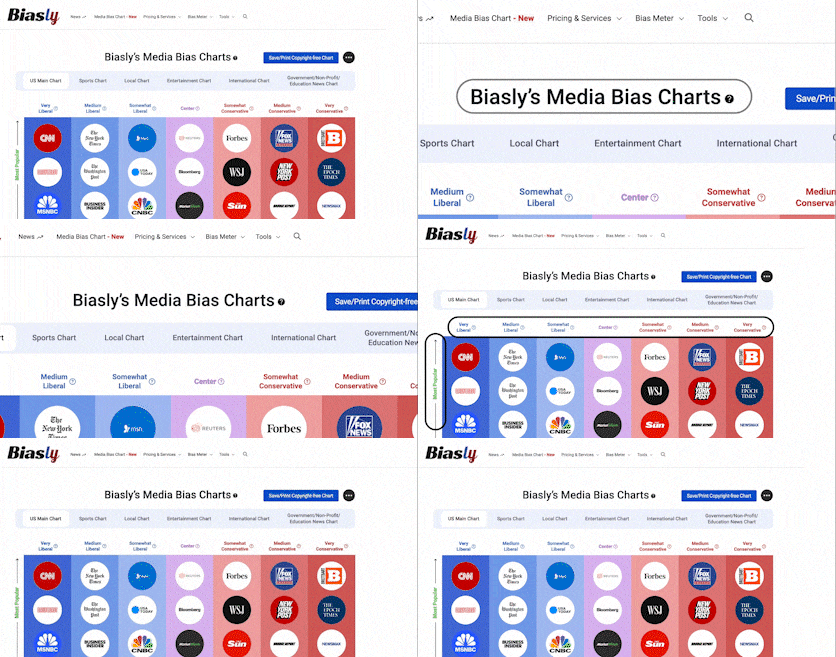
Readers who wish to further explore how Raw Story compares with other publications can visit Biasly’s Media Bias Chart to analyze tone and word choice in real time.
Funding and Ownership
Who Owns Raw Story?
Raw Story is owned by Raw Story Media, Inc., which was established by John K. Byrne in 2004. As an independent news outlet, Raw Story is not owned by any large media conglomerate or corporation. This independence allows it to maintain editorial freedom and focus on investigative journalism, especially regarding The Grape, an alternative student news and culture magazine. He was also Editor of The Oberlin Review, where he wrote an exposé about steroid abuse on the football team.
In its early years, Raw Story focused on reporting on anti-gay political figures who were themselves closeted gays. In 2010, Byrne stepped down as Raw Story’s editor but remains the company’s CEO. In 2018, Byrne and his business partner, Michael Rogers, acquired the progressive news website AlterNet from the nonprofit Independent Media Institute and The New Civil Rights Movement.
Who Funds Raw Story?
Raw Story is funded primarily through digital advertising, readership traffic, and partnerships. Media observers note that it has relied less on commercial advertising than many mainstream outlets, allowing its editorial decisions to prioritize community-focused reporting over revenue-driven content. Its long-standing readership also helps sustain operations without aggressive monetization.
Because Raw Story is closely tied to the local community it serves, its funding model can influence the topics it emphasizes or the perspectives it highlights, particularly on issues affecting its core U.S.-based progressive readership. While this structure reduces the pressures associated with large corporate ownership, readers should be aware that a newsroom supported mainly by its core audience may at times reflect that audience’s concerns or viewpoints more prominently than others’.
Additional Insights
News Source Comparison
When it comes to news source comparison, Raw Story is often evaluated alongside outlets that lean left. Sources like Independent Australia present similar tones and editorial philosophies. While Raw Story maintains a Medium Left media bias, it differs from strongly non-partisan sources ranked as center. This is because it only occasionally includes opposing viewpoints and often favors liberal topic selection.
This contrasts it with more biased media outlets that present balanced narratives with factual counterpoints, as Raw Story sways left. Readers seeking balanced political coverage may compare Raw Story’s framing of issues with outlets rated as Lean Right on our Media Bias Chart, or explore other regional papers on our Similar Sources page.
Notable Contributors and Authors
Raw Story features a diverse range of reporters and columnists, many of whom are familiar with the United States’ political and social climate. An important writer is John K. Bryne, who is the founder and CEO of Raw Story media and a former writer.
This is as well as David Kay Johnston, who is a Pulitzer Prize-winning investigative journalist who partnered with Raw Story from 2019 to 2021 through his nonprofit news service, DCReport, providing original investigative content. These writers demonstrate the outlet’s strength in local investigative journalism.
Other contributors focus on religion, politics in the United States, or issues worldwide. While many contributors are seen as leaning left in tone or topic selection, their work is generally rooted in factual reporting. The presence of recurring bylines can help readers evaluate individual writers’ biases over time.
Related Tools and Resource Pages
To better understand how Raw Story fits into the broader media landscape, we recommend exploring these helpful resources:
- Media Bias Chart: See where Raw Story ranks compared to hundreds of media outlets across the entire political spectrum.
- Political Bias Chart: Visualize political slants of news sources across various policy areas.
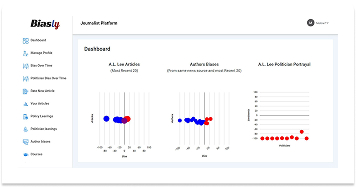
- Journalist Bias Analytics Platform: Explore how individual journalists contribute to bias within their publications.
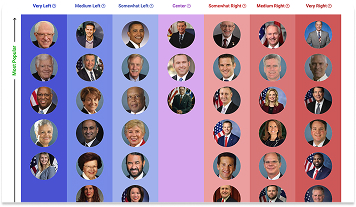
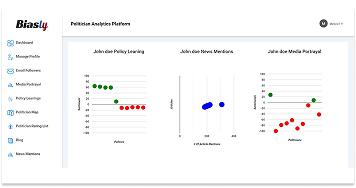
- Politician Bias Analytics Platform: Compare how politicians are framed differently by Raw Story and other outlets.
- Media Literacy Education Platform: Learn how to critically assess media sources, bias techniques, and news reliability scores.
Frequently Asked Questions
Raw Story is rated as Medium Left based on Biasly’s media bias algorithm, which assesses sentiment, article framing, and policy favorability.
Raw Story has faced multiple criticisms for publishing misleading headlines and disputed information. In at least one case involving coverage of a Georgia lawmaker’s response to proposed legislation, the reporting was widely challenged for its accuracy. Readers are encouraged to independently verify claims and approach potentially sensational content with caution.
Biasly uses a combination of AI sentiment analysis and human analyst review. This assesses tone, fact accuracy, source quality, and media bias indicators. Learn more on our Bias Meter page.
Yes, but with caution and close reading. Raw Story upholds fact-based journalism, though occasional partisan framing and selective reporting, especially regarding liberal topics, impact overall news credibility.
Military Spending
| Date | Sentiment | Associated Article | Snippet |
|---|---|---|---|
| 08/25/2019 | 75% For | Trump Family Detentions Flores Agreement (link) | So, of course, the Trump administration is doing the opposite in a baldfaced |