




34% Somewhat Right
Bias Meter
Extremely
Liberal
Very
Liberal
Somewhat Liberal
Center
Somewhat Conservative
Very
Conservative
Extremely
Conservative
-100%
Liberal
100%
Conservative

Biasly determines media bias ratings through a dual-layered approach combining artificial intelligence and analyst review. The platform’s proprietary bias detection engine, Bias Meter, evaluates sentiment, policy position alignment, and language framing across thousands of data points in news articles. Analysts then verify and interpret the AI’s findings, providing additional context where needed. Learn more about ratings
- Profile
Richmond Times-Dispatch on the media bias chart

- Bias Rating
34% Somewhat Right
- Reliability69% Reliable AveragePolicy Leanings
26% Somewhat Right
Extremely
LiberalVery
LiberalModerately
LiberalSomewhat Liberal
Center
Somewhat Conservative
Moderately
ConservativeVery
ConservativeExtremely
Conservative-100%
Liberal100%
Conservative
Average Reliability
*Our bias meter rating uses data science including sentiment analysis, machine learning and our proprietary algorithm for determining biases in news articles. Bias scores are on a scale of -100% to 100% with higher negative scores being more liberal and higher positive scores being more conservative and 0% being neutral. The rating is an independent analysis and is not affiliated nor sponsored by the news source or any other organization.
Politician Portrayal5% negative
Continue For Free
Create your free account to see the in-depth bias analytics and more.
By creating an account, you agree to our Terms and Privacy Policy, and subscribe to email updates.
Log In
Log in to your account to see the in-depth bias analytics and more.
Analysis of Richmond Times-Dispatch Articles
Analysis of Bias in Richmond Times-Dispatch Online Articles
Richmond Times-Dispatch has found that in-depth coverage of Virginia politicians is one of the most effective ways to drive subscriptions. Given that much of its readership is Virginia-based, where regional issues take precedence, it’s essential to ask: is Richmond Times-Dispatch truly biased?
To evaluate this, we can analyze select Richmond Times-Dispatch articles using several of Biasly’s bias-rating criteria: Tone, Tendency, Author, Diction, and Expediency Bias.
- Tone: The overall attitude conveyed by the article
- Diction: Specific word choices made by the writer
- Author: The background and social presence of the journalist
- Tendency: Patterns of bias in the writer’s broader body of work
- Expediency Bias: Quick visual or textual indicators like headlines and photos that imply bias

In “Va. representatives spar as health insurance sticker shock looms,” The article demonstrates subtle but noticeable bias through tone and diction, even though it remains largely factual and restrained overall.
First, the use of the word “spar” in the title introduces a slightly dramatic and conflict-driven framing. While not overtly partisan, “spar” carries a connotation of petty or combative disagreement, which can make the political interaction seem more contentious than a neutral term like “debate” or “discuss.” This is a mild example of loaded language, where word choice shapes how readers perceive the situation.
Additionally, phrases that emphasize conflict, such as highlighting disagreement or tension between representatives, can lead readers to focus more on political division than on policy substance. Even when the reporting is fact-based, this stylistic framing subtly influences interpretation by prioritizing drama over neutrality.
“On Friday, the Republican-controlled House of Representatives voted to pass a stopgap funding bill to avoid a potential federal government shutdown at the end of this month, but did not support Democratic efforts to extend the enhanced benefits, which aren’t part of the resolution.”
However, the bias here is not extreme or overt. The article does not appear to distort facts or present misinformation. It’s also important that the author themselves is not widely known for strong bias and is relatively inactive on social media, which suggests that any bias present is more likely a result of institutional style or common journalistic framing rather than personal agenda.
Overall, while the diction, especially words like “spar,” may hint at bias, it is minor and stylistic rather than ideological. The article remains grounded in factual reporting, and the language does not amount to a “wild take,” but rather a subtle framing choice that slightly shapes reader perception.
Another article by the Richmond Times, “Most Virginia teachers are women, but most superintendents are men”, can be read as reflecting bias through how it frames gender disparity without strongly endorsing structural or systemic explanations.
The tone and diction are relatively restrained, avoiding highly charged language like “discrimination” or “systemic sexism.” Instead, the article presents the gender gap in a more matter-of-fact, observational way, which aligns with a conservative tendency to report disparities without immediately attributing them to institutional failure. This lack of urgency can signal an implicit stance that the issue is not necessarily evidence of injustice, but rather a situation that may have multiple explanations.
Additionally, the article appears to avoid strong advocacy language or calls for intervention. A more progressive-leaning piece might emphasize the need for policy changes or highlight barriers facing women, whereas this article’s framing is more descriptive than prescriptive. This can reflect a conservative bias, as it does not push for systemic reform or reinterpret the data through an equity-focused lens.
Another subtle indicator is the limited exploration of structural causes. By not deeply examining factors like workplace discrimination, gender bias in hiring, or institutional barriers, the article leaves room for interpretations more consistent with conservative viewpoints, such as differences in career choices, leadership pathways, or personal preferences. This omission shapes how readers understand the issue, even without explicitly stating a position.
The balance of sources and presentation of information may also contribute to this interpretation. If the article includes statistics and observations without strongly privileging advocacy voices or emotional narratives, it creates a tone of neutrality that can lean conservative, especially in contrast to more activist-oriented reporting.
The author, Anna Bryson, frequently writes about education and gender issues. She posts her articles on her X account and retweets Virginia-related stories from other authors.
More than 66,000 of Virginia’s K-12 students are now educated at home — nearly 50% more than before the pandemic. Unlike many pandemic-era disruptions, the growth has held.https://t.co/YrcQx3X9Tq
— Anna Bryson (@AnnaBryson18) March 10, 2026
Overall, while the article is not overtly ideological, it can reasonably be interpreted as subtly conservative, primarily through its understated tone, lack of structural critique, and reluctance to frame the disparity as a clear injustice requiring action.
In summary, Richmond Times-Dispatch shows inconsistent bias in its reporting.
Analysis of Richmond Times-Dispatch Opinion Articles
To fully understand political bias in media, it’s important to distinguish between factual reporting and opinion pieces. While reporting aims to present facts and let readers form their own conclusions, opinion articles express personal viewpoints on current issues. Although the previous section examined factual reporting, this section turns to how bias surfaces through Richmond Times-Dispatch’s selection and tone of opinion content.
In “Elimination of DEI played out differently at VCU and UVa,” the article demonstrates a clear conservative bias, particularly in how it frames the dismantling of diversity, equity, and inclusion (DEI) programs as pragmatic, effective, and even beneficial.
One of the strongest indicators of bias is the article’s contrast-driven framing. It presents Virginia Commonwealth University (VCU) as having “quickly scrubbed” its DEI programs and “emerged unscathed,” while the University of Virginia (UVa) is portrayed negatively for “slow-walking change” and facing leadership consequences. This juxtaposition implicitly rewards swift elimination of DEI and penalizes resistance, reinforcing a narrative that aligns with conservative critiques of such programs.
The diction itself carries evaluative weight. Words like “scrub” suggest decisiveness and efficiency, while phrases like “too slowly” imply reluctance or incompetence. These are not neutral descriptors; they subtly guide the reader toward viewing DEI removal as the correct and responsible course of action and hesitation as failure.
Additionally, the article’s tone lacks substantial critical engagement with the consequences of eliminating DEI. While the broader debate includes concerns about setbacks to civil rights or campus inclusion, those perspectives are either minimized or not given equal narrative weight. This creates an imbalance in framing, where the benefits or necessity of removing DEI are foregrounded, while potential harms are backgrounded or underdeveloped. This aligns with broader conservative messaging that portrays DEI as unnecessary, inefficient, or politically driven.
Another element of bias is the focus on outcomes tied to leadership and institutional stability. By emphasizing that one university avoided fallout while another lost its president, the article frames the issue less as a complex policy debate and more as a matter of administrative success versus failure, again reinforcing the idea that eliminating DEI is the safer, more effective path.
Overall, the bias is not in factual inaccuracies, but in how the story is structured and told. By portraying the elimination of DEI as efficient and largely consequence-free, and contrasting it with negative outcomes for those who resist, the article advances a distinctly conservative interpretation of the issue.
In “Gambling again to be a big General Assembly focus,” the article shows significantly less bias, especially compared to others, because it relies more on a neutral tone, balanced framing, and descriptive reporting rather than persuasive language.
First, the tone and diction are largely straightforward and informational. Words like “focus,” “legalizing,” and “oversight” are policy-oriented and neutral, lacking the emotional or evaluative charge seen in more biased pieces. Unlike articles that use loaded terms (such as “scrubbed” or “slow-walking”), this one avoids language that clearly signals approval or disapproval. Instead, it presents gambling expansion as a legislative issue under consideration, not inherently good or bad.
Second, the article demonstrates a more balanced framing of the issue. It acknowledges both sides of the debate, expanding gambling opportunities and increasing regulation without clearly privileging one perspective over the other. By presenting gambling as both an economic opportunity and a regulatory concern, the article avoids pushing a singular narrative and instead reflects the complexity of policymaking.
Another key difference is the lack of strong ideological signaling. The article does not frame the issue as part of a broader political or cultural battle (as seen in education or DEI-related coverage). Instead, it stays focused on practical legislative actions and their potential impacts, which contributes to a more neutral reading experience.
Additionally, the source presentation appears more even-handed. Rather than amplifying emotionally charged quotes or privileging one side’s rhetoric, the article centers on policy details, legislative priorities, and procedural developments. This reduces the likelihood that readers will be nudged toward a particular interpretation.
Overall, this article is a good example of low-bias reporting. While no piece is completely free of framing, the neutrality of its language and its balanced presentation make any bias minimal and difficult to detect, especially when contrasted with more clearly slanted coverage.
Analysis of Reliability in Richmond Times-Dispatch’s Online News Articles
Richmond Times-Dispatch aims to serve Virginians with objective, fact-based reporting. Its staff includes writers from varying ideological backgrounds, which can help balance coverage. However, readers should distinguish between news reporting and opinion pieces to evaluate credibility effectively.
“Virginia sends three new representatives to Congress led by GOP” has Average reliability according to Biasly. The article does a good job of finding a variety of sources. Multiple sources are used for claims, and multiple people are quoted. However, the quality of those sources is questionable. There are very few sources that tell the other side of the story. The people quoted all represent a familiar point of view. The quotes are also a bit short, which can leave readers with a limited understanding of what the speaker is trying to say.
“Rep. Gerry Connolly won’t seek re-election due to health” shows stronger reliability from Richmond Times-Dispatch. As with the last article, multiple sources and quotes are included. However, this article provides stronger quotes. The quotes give us a better understanding of the entire story. The sourcing is still limited, with all the sources being kind to Rep. Connolly. However, considering it’s a story about retirement and he’s in declining health, it’s not unreasonable for it to have a positive angle. Overall, Biasly considers this article to have Good reliability.
Quality of Sources and Facts Used
Richmond Times-Dispatch often uses credible sources from across the political spectrum. However, some articles lean too heavily toward how comprehensively they present opposing viewpoints.
The article “Richmond-born maestro Isaiah Jackson left his mark on the musical world” is structured as an obituary-style narrative that traces Jackson’s life, career, and legacy. The piece is primarily biographical and descriptive, focusing on achievements, personal background, and reflections from family members and past reporting. The tone is respectful and commemorative, which is typical for obituary reporting, and the article does not attempt to present competing viewpoints or political arguments. Instead, it emphasizes Jackson’s contributions to music and his personal journey.
The article contains 9 direct quotes in quotation marks, including excerpts from his son, past interviews, and prior journalism. The shortest quote is approximately 6 words (“is more of a calling than a profession”), while the longest spans roughly 80–90 words (the extended reflection on classical music as part of cultural heritage). The average quote length is approximately 30–35 words, making the article relatively quote-rich compared to standard news reporting. These longer quotations provide depth and preserve the subject’s voice, particularly in expressing his philosophy on music and cultural accessibility. Because many quotes come from Jackson himself or close family members, they function less as “soundbites” and more as narrative-building elements that reinforce the article’s commemorative purpose.
Based on the provided text and linked sources, the article appears to use 0 explicit hyperlinks in the body. Instead, it references external publications, such as the Dayton Daily News and The Times-Dispatch, without linking to them. By left/center/right: Left = 0, Center = 0, Right = 0 (no hyperlink-based ideological sourcing). This indicates that the article relies on traditional attribution rather than a digital linking structure. The absence of hyperlinks means the sourcing footprint is limited in terms of direct navigation for verification, but this is common in obituary or legacy-style reporting, where citations are often embedded narratively rather than linked.
Sources referenced in the article include:
- Isaiah Allen Jackson III (primary subject; via past quotes)
- Benjamin Jackson (son; primary contemporary source)
- Dayton Daily News (secondary reporting source)
- Clarke Bustard (journalist, The Times-Dispatch)
- Robinson (piano teacher; anecdotal reference)
- Virginia Richardson (music librarian)
- Joe Kennedy Jr. (music educator and violinist)
The sourcing is concentrated around family testimony and archival references, with Benjamin Jackson serving as the dominant contemporary voice. Historical context is supplemented by prior reporting in recognized publications, but it is used descriptively rather than analytically. There are no opposing or critical perspectives, which is consistent with the genre. The article’s “share of voice” is therefore heavily weighted toward personal and supportive accounts, reflecting its purpose as a tribute rather than an evaluative or investigative piece.
In how sources are used, the article prioritizes personal narrative and legacy framing. Quotes from Jackson and his son highlight themes such as perseverance, artistic philosophy, and cultural inclusion. External references (e.g., Dayton Daily News, The Times-Dispatch) reinforce credibility by anchoring achievements in documented reporting, but they do not introduce contrasting viewpoints. This results in a source structure that is informational and commemorative rather than balanced or adversarial, aligning with a Center (neutral, non-political) orientation typical of obituary writing.
In terms of factual accuracy, the article appears consistent with standard biographical reporting. It presents verifiable milestones such as Jackson’s education (Harvard, Stanford, Juilliard), professional roles (Royal Ballet, Dayton Philharmonic), and later career at Berklee College of Music. Claims about his influence, such as bridging racial divides in classical music, are framed as descriptions rather than contested assertions. While the lack of hyperlinks limits immediate verification, the use of established institutions and publications supports overall credibility. Any limitations in accuracy are more about the depth of sourcing rather than factual inconsistency, as the article does not engage with controversial or disputed claims.
Overall, sourcing is moderately strong, but not exceptional. The sourcing is good for storytelling and context, but it lacks a wider range of independent or expert voices.
“Virginia Union student graduates months after paralysis” relies primarily on personal, firsthand sources closely connected to Jaiden Picot, along with limited institutional input. The article is centered on people directly involved in the story, such as Picot himself and his support system. Physical therapists lend professional credibility by explaining the difficulty of recovery. The VUU president provides official validation of Picot’s accomplishment.
There are many quotes in this story. It makes sense, since it’s a human-interest story. The direct quotes from Picot are generally short but emotionally powerful. No quote is long, which allows the different perspectives to be represented fairly. Even in a story where there would be no “opposing” perspective, it’s still important to hear from different voices.
Most voices come from people emotionally connected to Picot. There are no outside experts (e.g., spinal cord injury specialists not involved in his care). This limits the article’s depth and context.
Overall, a strong human-interest feature, but limited journalistically. The article has excellent firsthand storytelling and emotional sourcing, but lacks independent, critical, or broader contextual sources.
The sourcing is appropriate and effective for a feature story, but not especially rigorous. It prioritizes narrative and inspiration over depth and verification, which works for its purpose but wouldn’t meet the standard of more investigative or analytical reporting.
Selection and Omission Bias
Richmond Times-Dispatch provides extensive coverage of Virginia’s Republican leaders, which is reasonable given the state’s political makeup. However, bias may still emerge through framing and story selection.
“Meteorologist Sublette announces run for Wittman’s seat in VA-01” showcases both selection and omission bias.
This choice frames him as a recognizable outsider candidate, which can make him seem more appealing or unique. However, focusing on his media career may overshadow other important qualifications (or lack thereof), such as political experience. Readers may view him as more credible or interesting than other candidates simply because of his prior visibility.
The article notes that Sublette is one of several Democrats (the eighth candidate) seeking the nomination. This emphasizes a crowded Democratic field, which can subtly suggest party disorganization or competitiveness. However, the article may not place equal emphasis on the Republican incumbent’s advantages. The race may be framed as uncertain or chaotic on one side, shaping perceptions of viability.
Campaign announcement articles often mention general goals (e.g., public service, key issues) but omit specific policy proposals or controversial stances. The article references Rep. Rob Wittman (R), but likely does not explore his policy record or past election performance in depth. There is typically little or no inclusion of voter opinions or grassroots reactions. The story centers on political actors, not the people affected by the election.
Selection bias shapes the article by emphasizing Sublette’s media background, campaign framing, and the crowded Democratic field, while omission bias limits readers’ understanding by omitting deeper policy analysis, voter perspectives, and the full electoral context.
In “AN ENDURING LEGACY William J. ‘Bill’ Martin, director of the Valentine museum, dies after being hit by car,” Selection bias shows up in how the article frames Bill Martin and chooses which details to highlight. The article emphasizes that Bill Martin was a “longtime director” of The Valentine and focuses on his accomplishments. Readers are guided to see him almost entirely as a beloved, impactful figure, with little critical perspective.
The article relies on local officials and community members. This creates a consensus of praise, even if more neutral or less familiar voices are absent. Although the article is about his death, it primarily highlights his career and legacy. The story becomes more of a tribute than a neutral news report.
The article does not go into the details of the crash. Readers are not given a full understanding of the circumstances of his death. There is little to no mention of challenges faced during his tenure. The portrayal is one-dimensional, presenting only the positive aspects of his life.
The article does not expand much on larger issues of pedestrian safety. The event is treated as an isolated tragedy, not part of a bigger societal issue. While professional praise is included, there may be less emphasis on personal details beyond his career. The narrative prioritizes public identity over private life.
The article selectively highlights praise, achievements, and respected voices, creating a strongly positive portrayal. It leaves out deeper context about the accident, any criticism, and broader societal issues, limiting a fully balanced understanding.
Richmond Times-Dispatch Bias Overview
The Richmond Times-Dispatch is a daily newspaper that has been serving the Richmond metropolitan area since 1886. The newspaper was founded by a group of local business leaders and community members who recognized the need for a reliable source of news and information in the growing city of Richmond.
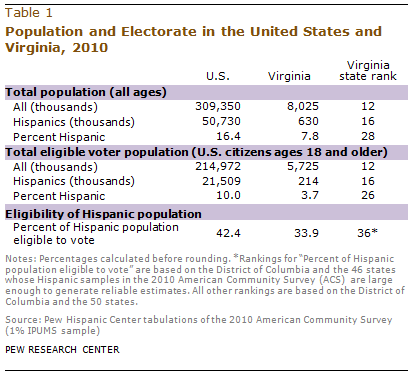
Source: Pew Research
The website covers a wide range of news and information relevant to the Richmond region, including local and regional news, sports, entertainment, and community events. While The Richmond Times-Dispatch’s primary focus is on issues and happenings within the local community, it also provides coverage of statewide and national news that impacts the Richmond metropolitan area.
Is Richmond Times-Dispatch Biased?
Based on Biasly’s evaluations, Richmond Times-Dispatch is rated as Somewhat Right.
By examining content patterns and the broader context of media influence, we aim to offer a balanced perspective on Richmond Times-Dispatch’s political bias and contribute to the ongoing discussion about bias in the news.
How Does Biasly Rate News Sources?
Biasly uses proprietary algorithms and a team of analysts to provide comprehensive bias evaluations across thousands of news outlets. Over 200,000 articles from more than 3,200 sources have been analyzed to identify the most accurate and unbiased stories.
Biasly assigns each outlet three key scores:
- Reliability Score – Reflects factual accuracy
- AI Bias Score – Generated via natural language processing
- Analyst Bias Score – Assessed by human political analysts
These scores are based on seven core metrics: Tone, Tendency, Diction, Author Check, Selection/Omission, Expediency Bias, and Accuracy. These elements help analysts and algorithms evaluate the political attitude conveyed by each article.
Biasly’s Bias Meter ranges from -100% (most left) to +100% (most right), with 0% indicating neutrality. The system evaluates individual articles based on political terms, policies, figures, and sentiment to calculate precise bias ratings.
Is Richmond Times-Dispatch Politically Biased?
Richmond Times-Dispatch earns a Somewhat Right rating for its AI Bias Score and a Somewhat Right for its Analyst Bias Score. The Analyst Bias Score is generated by reviewers from liberal, moderate, and conservative backgrounds. Analysts reviewed Richmond Times-Dispatch articles and noted preferences in areas like coverage of conservative politicians and policies.
How to Evaluate Bias
Although Biasly rates Richmond Times-Dispatch as Somewhat Right, it’s important to remember that bias can vary from article to article. Richmond Times-Dispatch also covers a swing state with objectivity on many issues, from state legislation to social developments. This complexity underscores the importance of examining each article individually. So, let’s learn how to evaluate media bias.
Recognizing media bias requires awareness and critical thinking. Often, readers trust news sources that affirm their existing beliefs, a psychological tendency known as confirmation bias. This makes it harder to identify slanted narratives or one-sided reporting.
To address this, it’s essential to challenge your assumptions by consulting multiple perspectives and verifying information through third-party analysis. Tools like Biasly’s media bias ratings allow readers to compare the same news story across the political spectrum.
Ultimately, bias isn’t always a matter of what is said. It’s also about what is left out, how topics are framed, and which stories are chosen for coverage. Learning to recognize these patterns can help readers make more informed decisions and develop greater media literacy.
To start comparing news outlets and gain a better understanding of bias, sign up for Biasly’s Media Bias & News Analytics Platform to see how stories vary between sources.
Richmond Times-Dispatch Reliability Overview
Is Richmond Times-Dispatch Reliable?
Richmond Times-Dispatch finds itself toward the middle of the spectrum, with neither high nor low accuracy. Its status as a local news outlet contributes to its moderate reputation for reliability. According to Pew Research, Americans generally hold less politically polarized views of local news than of national media. In fact, 85% of adults regard local journalism as at least somewhat important to their community. However, another Pew study reports that satisfaction with local political news coverage remains disproportionately low relative to its airtime.
This suggests that Richmond Times-Dispatch’s popularity among Virginia residents may not stem from the reliability of its political news coverage. Further investigation is needed to determine whether bias or other factors are affecting its accuracy. At Biasly, we specialize in evaluating not just bias but also the reliability of media outlets. Let’s explore the accuracy and trustworthiness of Richmond Times-Dispatch.
How to Evaluate Reliability?
Reliability refers to how trustworthy or accurate a news source is. If we can’t trust what we read, then continuing to consume content from that outlet serves little purpose. So how do we evaluate a news outlet’s reliability?
There are several key indicators of reliability to consider when assessing a media source. Red flags of an unreliable article can include wild, unsubstantiated claims, facts that depend on other unreliable sources, heavy use of opinionated language, and more. In contrast, hallmarks of a reliable source include:
- Absence of subjective language
- Citing credible sources (e.g., .gov, .edu, academic references)
- Verifiable facts and statistics from multiple outlets
- Use of primary sources, like interviews or transcripts
- Consistency with coverage across other platforms
Biasly’s reliability scores incorporate these elements in evaluating media outlets.
So How Does Richmond Times-Dispatch Fare in Its Reliability?
The political reliability index developed by Biasly assesses both accuracy and trustworthiness. Richmond Times-Dispatch currently holds Average Reliability Score, which is calculated as a weighted average of:
- Fact Analysis Score – Evaluates the accuracy of claims, facts, and evidence.
- Source Analysis Score – Assesses the number, diversity, and credibility of sources and quotes used.
Richmond Times-Dispatch’s Source Analysis Score is Average at 69% Reliable. This suggests moderate trustworthiness in its sourcing practices. The score is AI-generated and considers quote length, frequency, diversity, and quality.
The Fact Analysis Score of Richmond Times-Dispatch is Pending at N/A. This further shows how well Richmond Times-Dispatch supports its claims, addresses selection and omission bias, and presents verifiable evidence.
While Richmond Times-Dispatch leans toward factual reporting, occasional lapses—such as unbalanced viewpoints or incomplete data—can affect its reliability rating. These nuances emphasize the importance of analyzing individual articles.
Richmond Times-Dispatch’s Accuracy and Reliability
According to Biasly’s analysis, Richmond Times-Dispatch maintains Average Reliability Score, but individual articles may vary significantly. Let’s dive into the details.
Political orientation plays a crucial role in how audiences perceive reliability. Richmond Times-Dispatch has been accused of favoring a conservative narrative, potentially at the expense of factual reporting. To validate such claims, it’s essential to analyze whether the publication backs its assertions with sufficient evidence and diverse viewpoints.
Two common types of bias that affect factuality include:
- Selection Bias – Highlighting or omitting stories to fit a particular narrative.
- Omission Bias – Leaving out differing perspectives or relevant details to skew perception.
Biasly’s accuracy ratings use a scale from 1% (least accurate) to 100% (most accurate). Factors include supporting evidence, reliable internal and external sources, and balanced viewpoints.
For example, according to Biasly, Quartz is generally considered a reliable news source with relatively low political bias. Their analysis provides a structured way to evaluate reliability using both AI tools and human review.
Articles are typically written with limited subjective or emotional language. Quartz often includes quotes and references from diverse perspectives, improving credibility. Information tends to align with reporting from other reputable sources.
Based on Biasly’s evaluation, Quartz has Good reliability, especially for business and global news. Its combination of high factual accuracy, generally balanced reporting, and credible sourcing makes it reliable for most readers, though, like any outlet, it should still be read critically and compared with other sources.
So, is Richmond Times-Dispatch Reliable?
Overall, Richmond Times-Dispatch is rated to be a source that is moderately reliable. The site often prioritizes opinion-driven content, with variable sourcing and occasional editorial framing on sensitive international topics. While some claims are supported with evidence, consistency in sourcing and balance could be improved to meet stronger journalistic standards.
As media literacy improves, readers can more easily detect issues with selection bias, omission bias, and factuality. To strengthen your ability to assess reliability across the political spectrum, use Biasly’s News Bias Checker to compare how multiple outlets report the same story.
This empowers you to consume more accurate, balanced, and dependable news.
Richmond Times-Dispatch Editorial Patterns
Richmond Times-Dispatch’s coverage of political topics often reflects a Somewhat Right bias, with consistent patterns in phrasing, source selection, and thematic focus that are Slightly Conservative. While the publication demonstrates journalistic standards in many of its reports, the choice of issues, framing, and word usage can indicate a political slant. Their editorial patterns lean conservative.
Coverage of Liberal vs. Conservative Topics
Richmond Times-Dispatch provides in-depth coverage of politics from Richmond to the federal government. As expected, they primarily focus on angles that most directly impact Richmond residents. Generally, they cover political topics with little bias. However, their articles can occasionally favor the conservative side of an issue.
Policy and Issue Framing
There are some political issues where Richmond Times-Dispatch attempts neutral coverage. These issues include the impeachment of President Bill Clinton, the death penalty, and ICE. The death penalty has been a hot-button issue in politics for a long time, and ICE has moved to the forefront of political debate. It’s important to cover these issues with minimal bias to foster healthy political debate.
However, Richmond Times-Dispatch takes a conservative stance on other issues. Abortion, government interference, and gun control are some of Richmond Times-Dispatch’s most covered topics. Richmond Times-Dispatch takes a conservative stance on all these issues. Although it makes sense for Richmond Times-Dispatch to cover these hot-button issues, showcasing bias in their articles can create political polarization.
Coverage and Relevance
Richmond Times-Dispatch’s reporting often touches on key issues central to Virginia politics. As such, it serves as a compelling case study for examining source bias and news media bias in state-focused reporting.
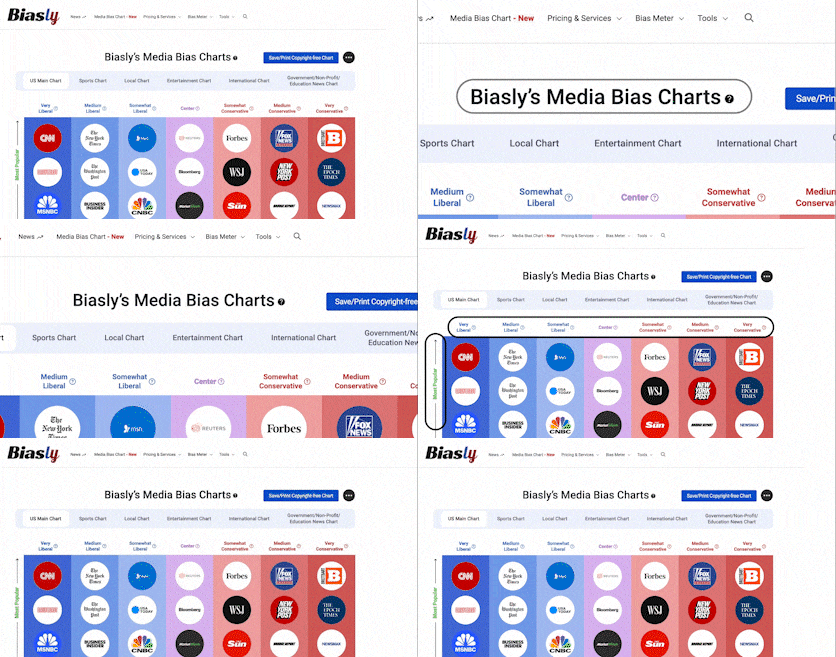
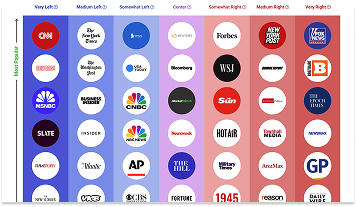
Readers who wish to further explore how Richmond Times-Dispatch compares with other publications can visit Biasly’s Media Bias Chart to analyze tone and word choice in real time.
Funding and Ownership
Who Owns Richmond Times-Dispatch?

Berkshire Hathaway, former owners of Richmond Times-Dispatch- source: Wikimedia Commons
Richmond Times-Dispatch is owned by Lee Enterprises. Lee Enterprises is an Iowa-based newspaper chain that owns many local publications like Richmond Times-Dispatch. David Hoffmann recently paid $35 million to become the chair of Lee Enterprises. Hoffman is the founder and chair of the Hoffman Family of Companies, which holds ownership stakes in a variety of industries, including agriculture, media, and transportation.
Was the Richmond Times-Dispatch owned by Warren Buffett?
The Richmond Times-Dispatch was owned by BH Media Group, the newspaper division of Berkshire Hathaway, Warren Buffett’s company. Berkshire acquired it in 2012 as part of its purchase of Media General’s newspapers.
So while Warren Buffett did not personally own the paper, it was owned by his company, Berkshire Hathaway.
That ownership ended in 2020, when Berkshire sold BH Media Group’s newspapers — including the Richmond Times-Dispatch — to Lee Enterprises.
Who Funds Richmond Times-Dispatch?
Richmond Times-Dispatch has a hard paywall. It’s impossible to even look at an article without a full-page pop-up appearing. Their subscriptions are relatively cheap. Like many local papers, they still rely on print copies. The digital subscription is cheaper than the print one. Richmond Times-Dispatch gets support from Lee Enterprises, but it’s unknown how much.
Additional Insights
News Source Comparison
When it comes to news source comparison, Richmond Times-Dispatch is often evaluated alongside other regional and national outlets that lean center-right. Sources like The Chicago Tribune, KHOU 11, and The Daily Herald often present similar tones and editorial philosophies. While Richmond Times-Dispatch maintains a Somewhat Right media bias, it differs from strongly partisan sources in that it occasionally includes opposing viewpoints and strives for regional coverage balance.
This puts it in contrast with more biased media outlets that present consistently one-sided narratives without factual counterpoints. Readers seeking balanced political coverage may compare Richmond Times-Dispatch’s framing of issues with outlets rated as Center or Lean Right on our Media Bias Chart, or explore other regional papers on our Similar Sources page.
Notable Contributors and Authors
Richmond Times-Dispatch features a diverse range of reporters and columnists, many of whom are deeply familiar with Virginia’s political and social climate.
Encarnacion Pyle is one of Richmond Times-Dispatch’s most experienced reporters. She got her first action in journalism as a broadcast intern for WUSA-TV in 1991. She got her first full-time job in 1991 as a staff reporter for The Oxnard Press-Courier. She worked for the Columbus Dispatch for 19 years. In 2025, she was hired by Richmond Times-Dispatch as the executive editor and Virginia state editor.
Michael Martz is one of the most active reporters for Richmond Times-Dispatch. He is the state politics reporter for Richmond Times-Dispatch. This means he covers issues that impact both Richmond and Virginia as a whole. Biasly considers him a somewhat right-leaning reporter with average reliability.
Related Tools and Resource Pages
To better understand how Richmond Times-Dispatch fits into the broader media landscape, we recommend exploring these helpful resources:
- Media Bias Chart: See where Richmond Times-Dispatch ranks among hundreds of media outlets across the political spectrum.
- Political Bias Chart: Visualize political slants of news sources across various policy areas.
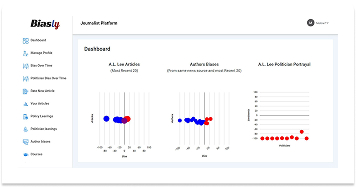
- Journalist Bias Analytics Platform: Explore how individual journalists contribute to bias within their publications.
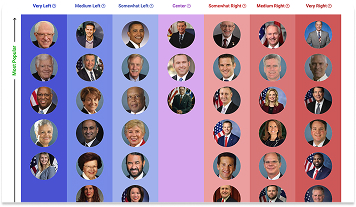
- Politician Bias Analytics Platform: Compare how politicians are framed differently by Richmond Times-Dispatch and other outlets.
- Media Literacy Education Platform: Learn how to critically assess media sources, bias techniques, and news reliability.
Frequently Asked Questions
Richmond Times-Dispatch is rated as Somewhat Right based on Biasly’s media bias algorithm, which assesses sentiment, article framing, and policy favorability.
While Richmond Times-Dispatch is not widely known for promoting fake news, some articles have shown selection and omission bias, especially in political reporting. Its factual reporting is generally sound. However, a Reddit thread in the r/Virginia subreddit has accused them of deep conservative bias, including accusing reporters of being friendly with GOP officials. Although Reddit isn’t always reliable, many readers believe that since they’re owned by a larger company they can no longer cover local issues unbiasedly. A non-partisan news watchgroup called “Bacon’s Rebellions” believes being owned by a large company will be the death of Richmond Times-Dispatch.
Biasly uses a combination of AI sentiment analysis and human analyst review to assess tone, fact accuracy, source quality, and media bias indicators. Learn more on our Bias Meter page.
Generally, yes, though partisan framing and selective reporting can affect perceived reliability.
Military Spending
| Date | Sentiment | Associated Article | Snippet |
|---|---|---|---|
| 08/25/2019 | 75% For | Trump Family Detentions Flores Agreement (link) | So, of course, the Trump administration is doing the opposite in a baldfaced |