









How News Sources Portray Social Security Spending Policy
This chart shows how major news sources across the ideological spectrum frame social security spending policy, from left to right-leaning perspectives.













Social security is a social policy in the United States that provides monthly payments to retirees, disabled individuals, or the families of retirees, disabled persons, and deceased individuals. Workers in the country pay into the Social Security fund and, once eligible, receive monthly payments back. The estimated average monthly Social Security payment is $1,976 as of January 2025.
In 2021, approximately 176 million people were covered by government spending on Social Security, constituting about 94 percent of all jobs in the United States. However, a small subset of jobs provides their own retirement plan in lieu of Social Security; this is particularly true for state and local government employees, as well as teachers.
History of Social Security
The first program in the United States that resembled modern-day Social Security was developed in the wake of the American Civil War, when widows, orphans, and soldiers who were disabled as a consequence of military duty were provided with generous monthly payments. By 1910, 90 percent of surviving Civil War veterans were covered under this program.
However, the Social Security program as it exists today was signed into law two decades later, on August 14, 1935, by President Franklin D. Roosevelt. Throughout the 1930s, the U.S. Supreme Court struck down many of Roosevelt’s proposed policies, and there was initial concern that the Social Security Act would be ruled unconstitutional. There was significant opposition to the program at its onset for fears that it would contribute to a reduced workforce, increase the burden on farmers, and be perceived as socialism.
Nevertheless, the Social Security fund gradually expanded from the 1930s and into the 1970s. Following stagflation under President Jimmy Carter and broader concerns about the trajectory of the program, amendments curtailed Social Security from the 1970s into the 2000s, with an increase in the retirement age and restrictions in eligibility for individuals with addictions to alcohol and drugs, as well as non-citizens. Despite efforts to reform the program, recent years have seen an increase in concerns about the sustainability of Social Security over the next few decades.
Social Security in the Modern Era
In a July 2025 AARP poll, 96 percent of Americans considered Social Security an important program, and nearly three-quarters of the country ranked it as one of the most important. National support for the program spanned political divides, with 98 percent of Democrats, 93 percent of Republicans, and independents considering it important. It also garnered strong support across generational lines. However, confidence in the long-term sustainability of the program has decreased in recent years.
Recent forecasts suggest that, as a consequence of the aging population in the United States, Social Security spending may outpace income in the early 2030s. This would result in benefit cuts of 19-23 percent for beneficiaries, potentially impacting the quality of life for recipients. Domestic social spending on Social Security is a pressing issue for both political parties in America to address, though they differ in potential solutions to the problem.
The Democratic Stance on Social Security Spending
The Democratic Party’s policy stance on Social Security spending is strongly in favor of federal spending on Social Security. In an April 2024 Pew Research poll, 83 percent of Democrats and Democratic-leaning voters said that Social Security benefits should not be cut in any way, and 51 percent of those voters said that the program should instead be expanded.
In an effort to raise additional money for Social Security, the primary goal among Democrats is to raise the payroll tax. Currently, only income up to $176,000 annually is taxed, but Democrats aim to increase the taxable income up to $400,000 annually. As noted in the Democratic Party platform, middle-class Americans pay 6.2 percent of their income into Social Security, whereas multi-millionaires contribute less than 1 percent of their income. The party argues for wealthy individuals to “pay their fair share.”
Americans broadly support increasing taxes on wealthy individuals and corporations according to a March 2025 Pew Research poll. Plans introduced in the House of Representatives and backed by a majority of the party would increase overall Social Security benefits by 2 percent, particularly for lower-income seniors, widows, and widowers. A 2025 bill titled the Social Security Expansion Act, cosponsored by multiple Senate Democrats and 2 dozen House Democrats, would ensure Social Security is fully funded while expanding benefits by $2,400 a year.
Democrats routinely argue that Republicans are in support of privatizing Social Security or reducing overall benefits, calling such efforts a betrayal to workers who have contributed to the program for their entire lives. They also point to those efforts as an indication that the Republican Party prioritizes wealthy citizens over low-income Americans.
Politicians Who Support Social Security Spending

83% of Democrats and Democratic-leaning voters said that Social Security benefits should not be cut in any way.

Joe Biden
“In the years since, Social Security has brought greater dignity, peace of mind, and freedom to America's seniors and families... It is a moment that impels us, perhaps more than any in recent memory, to strengthen our commitment to Social Security and the promise for which it stands — to protect the most vulnerable and help every American family guard against uncertainty and loss. ... I will never, ever defund Social Security. To the contrary — I will strengthen it.”

Elizabeth Warren
“Social Security serves as a lifeline for millions of seniors, and hardworking Americans deserve to receive the benefits they paid into. It's a mistake for [policymakers] to focus on securing tax cuts for billionaires and large corporations when we should be focusing on expanding and increasing Social Security benefits so that everyone can retire with dignity.”
The Republican Stance on Social Security Spending
The Republican Party policy stance on Social Security spending favors Social Security spending at current levels. In an April 2024 Pew Research poll, 77 percent of Republicans and Republican-leaning voters said that Social Security benefits should not be reduced in any way. However, relative to the 51 percent of Democratic voters who advocated for expanding the program, only 29 percent of Republican voters responded the same way.
The GOP party platform pledges not to reduce spending for Medicare or Social Security, nor raise the current retirement age. The current Republican nominee, President Donald Trump, has suggested potentially ending the current tax on Social Security benefits. Legislatively, House and Senate Republicans have focused their efforts on preventing further expansion of the government program. However, in 2025, President Joe Biden signed the Social Security Fairness Act that was introduced by a House Republican, repealing some of the more restrictive provisions within the original Social Security Act.
Republicans commonly argue that Democrats are depleting the social safety net by spending unnecessary amounts of money on illegal immigrants and climate change agendas, and they favor a more conservative approach to expanding the program. Some Republicans have suggested privatization of Social Security, while others have floated increasing the retirement age, though neither of these ideas have progressed in recent years.
Politicians Who Oppose Social Security Spending

77% of Republicans and Republican-leaning voters said that Social Security benefits should not be reduced in any way.

Mike Johnson
“The largest spending items, the reason we're in trouble is because over 74% of federal spending is on autopilot—mandatory spending, that is your entitlement programs like Medicare, Medicaid, and things like Social Security—they have to be adjusted and fixed. At some point you get into a hole so deep you can't climb out of it, so desperate times call for desperate measures.”
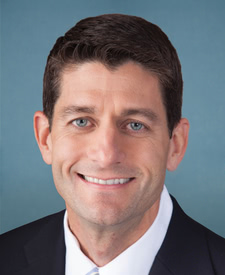
Paul Ryan
“Left unaddressed, the spending pressures in these programs don't just put the solvency of the federal government at risk and future economic growth in doubt—they also threaten the government's ability to protect the promise of health and retirement security for millions of seniors today.”
Political Implications
Social Security spending remains one of the most politically sensitive issues in American politics because it affects retirees, disabled individuals, surviving family members, and workers across nearly every demographic group. Public support for the program is overwhelmingly high, with 96% of Americans considering Social Security important, including 98% of Democrats and 93% of Republicans, according to the figures cited on this Biasly page. That broad support means the political fight is usually not over whether Social Security should exist, but over whether it should be expanded, how it should be financed, and how to address long-term sustainability concerns.
For Democrats, Social Security spending is often tied to a broader argument that government should strengthen the social safety net and require higher-income earners to contribute more in order to preserve and expand benefits. For Republicans, support for the program typically centers on preserving benefits at current levels while resisting large expansions or significant tax increases. This creates an important political distinction: both parties generally treat Social Security as politically untouchable, but they diverge on whether the solution to its long-term funding problem should involve new revenue, structural restraint, or both.
The issue also carries major electoral consequences because older Americans are one of the most consistent voting blocs in the country. Any proposal perceived as cutting benefits, raising the retirement age, or weakening the program can quickly become politically damaging. As a result, Social Security spending often becomes a test of credibility on economic security, fiscal responsibility, and protection of earned benefits.
What the Future Holds
The future of Social Security spending will likely be shaped by the tension between public support for the program and mounting concerns about its long-term finances. According to the figures cited on this Biasly page, spending may outpace income in the early 2030s, potentially resulting in benefit cuts of 19% to 23% if no legislative changes are made. That projection means future debate is likely to center on whether policymakers raise the payroll tax cap, adjust benefits, change eligibility rules, or combine multiple reforms to preserve solvency.
For Democrats, the future likely involves continued support for protecting and potentially expanding benefits, especially through proposals that ask higher-income earners to contribute more to the system. For Republicans, the future is more likely to involve protecting current benefits while resisting major expansions and remaining more cautious about increasing tax burdens. Even where both parties say they want to preserve Social Security, they continue to differ on what kind of reform is politically acceptable and economically sustainable.
More broadly, Social Security is likely to remain a central issue in U.S. politics because its financial pressures are becoming harder to postpone. As the population ages and the ratio of workers to beneficiaries changes, pressure will grow on both parties to move beyond rhetoric and adopt a clearer long-term plan. Whether that leads to benefit expansion, tax reform, structural adjustments, or a bipartisan compromise, Social Security spending will remain one of the defining domestic policy debates of the coming decade.
