









How News Sources Portray Narrative on Affirmative Action Policy Policy
This chart shows how major news sources across the ideological spectrum frame narrative on affirmative action policy policy, from left to right-leaning perspectives.













Many of the media biases we observe—in both news coverage and political rhetoric—stem from the fundamental differences in policy stances held by the major political parties. One of many key points of conflict is Affirmative Action.
Affirmative action programs aim to enable colleges and universities to consider ethnicity and race as factors for admissions. These programs are intended to support goals for diversity. However, they have been criticized on grounds of inefficacy and ‘reverse discrimination.’ Understanding past and current political stances on affirmative action will help voters, educators, researchers, and policymakers comprehend the evolution and impact of the ideological divide between liberal and conservative values in the United States.
The Democratic Stance on Affirmative Action
The Democratic stance on affirmative action is grounded in the belief that the federal government should help vulnerable people. Democrats largely support affirmative action as a means to counter race-based injustices that have characterized U.S. history, ensuring opportunities for disadvantaged students in college admissions.
Until the 2023 Supreme Court decision in which race-conscious admissions policies were banned, Students for Fair Admissions v. Harvard, the Supreme Court’s stance on affirmative action corroborated affirmative policy in admissions. Their change in stance was heavily criticized by the Democratic party, as Democrats largely viewed the decision as a setback for racial justice and equity.
According to a 2017 Pew report, affirmative action policy in the United States is considerably popular, with 71% of Americans expressing support. Among Democrats, 84% of voters are supportive of affirmative action. Republicans are more split, with approximately half supporting and half opposing affirmative action programs. Neither of the 2016 party platforms take an explicit stance on the topic.
Politicians Who Support Narrative on Affirmative Action Policy

Joe Biden
“We cannot let the Supreme Court’s decision on affirmative action be the last word.Here’s what my Administration is doing:The Biden-Harris Administration Is Taking Action in the Wake of the Supreme Court Upending Precedent and Effectively Ending Affirmative Action in Higher Education Admissions by: Proposing a new standard for colleges and universities, when selecting among qualified applicants, to take adversity into account. Providing colleges and universities with clarity on what college admissions practices and programs to support student body diversity remain lawful convening a National Summit on educational opportunity. Releasing a report on strategies for increasing diversity and educational opportunity in colleges and universities, including ways to meaningfully consider adversity. Increasing transparency in college admissions and enrollment practices. Supporting states in analyzing data to design programs that increase educational opportunity for underserved communities.”

Kamala Harris
“It rolls back long-established precedent and will make it more difficult for students from underrepresented backgrounds to have access to opportunities that will help them fulfill their full potential”
The Republican Stance on Affirmative Action
While the Democratic stance on affirmative policy was fairly clear-cut, the Republican stance on affirmative action is less direct as indicated by the Pew poll results. Republican and Conservative viewpoints prefer a limited government that doesn’t interfere with state rights, so they are generally opposed to governance through affirmative action.
Republicans have also expressed that race-based admissions are outdated and inherently discriminatory, disturbing a system they believe should be primarily merit-based. Supreme Court cases, such as California v. Bakke in 1978, which ultimately allowed race-based admissions but condemned admissions quotas, have wrestled with the issue of weighing diversity and merit up until the 2023 Students for Fair Admissions v. Harvard decision. Following the 2023 Supreme Court case, affirmative action policies were banned as race-conscious admissions decisions were determined to be unconstitutional. Republicans were generally pleased by the change, viewing it as a victory for equal opportunity and merit-based admissions.
Prior to Students for Fair Admissions v. Harvard, nine states had already banned race-based college admissions policies in accordance with Conservative ideals: Idaho, Arizona, Florida, Nebraska, New Hampshire, Oklahoma, Washington, California, and Michigan. Following the court decision, colleges and universities throughout the U.S. were required to find other means of achieving diversity without affirmative action programs.
Politicians Who Oppose Narrative on Affirmative Action Policy

Donald Trump
“People with extraordinary ability and everything else necessary for success, including future greatness for our country, are finally being rewarded, he said, adding, Were going back to all merit-based and thats the way it should be!”
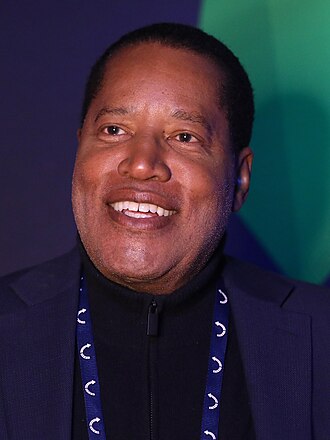
Larry Elder
“Affirmative action also discriminates against Asian Americans who have the temerity to work hard, make good grades and perform well on standardized tests, only to find themselves penalized when it comes to admission into the college or university of their choice. Discrimination to fix historical discrimination is still discrimination. Affirmative action is divisive, undermines merit and does more harm than good. When it has been put to voters in states like California and Michigan, it has been voted down.”
Public Attitudes Regarding Affirmative Action in the United States
The majority of the United States expresses a positive attitude toward affirmative action according to the 2017 Pew poll cited previously. However, ‘considerations based on race’ in admissions are opposed by 65% of the U.S. according to a 2016 poll by Gallup. The difference in terms seems to influence respondent answers, given that another more recent poll by Pew in 2023 found that half of U.S. adults say they disapprove of admissions decisions prospective students’ racial and ethnic backgrounds into account while 33% support it and 16% report uncertainty. This poll did not use the words ‘affirmative action’ for the explicit purpose of avoiding potential bias associated with the term.
Race also plays a role in opinions on using racial and ethnic background information in admission. In the 2023 Pew poll, nearly half of Black Americans approved, while 29% disapproved and 24% remained uncertain. For Hispanic Americans, 39% approved and 39% disapproved. White and Asian Americans were more likely to disapprove than approve, with 57% and 52% respectively disapproving.
Each of these polls was taken before the 2023 Supreme Court ruling banning affirmative action, which may have influenced opinions further. The general expectation among the public is that the ban on affirmative action will impact the racial composition of student bodies, resulting in decreased diversity across U.S. campuses. Many, including both those who are for and those who are against affirmative action in admissions, have expressed concern regarding the education of disadvantaged individuals, highlighting a need for alternative ways of targeting and providing opportunities to these people without race-based admissions criteria.
A Brief History of Affirmative Action Policy in the U.S.
Affirmative action is another of many tools that have been used in the U.S. to seek racial equality and justice since the Civil Rights movement. The policy has been challenged in court a number of times on account of people who found affirmative action inhibiting merit-based admissions decisions, and it was upheld every time with only minor changes up until 2023.
The 1978 California v. Bakke Supreme Court decision ruled that universities could continue to consider race as a factor in admissions decisions to promote diversity, but that specific racial quotas were unconstitutional.
In 2016, the Fisher v. University of Texas case concluded with the Supreme Court maintaining that affirmative action was constitutional and appropriate for promoting diversity in university admissions. They put emphasis on the requirement for universities to demonstrate a compelling need for race-conscious admissions and for the policy to be tailored to achieve that goal.
The most recent Supreme Court ruling in the 2023 Students for Fair Admissions v. Harvard case overturned previous rulings, deeming affirmative action in admissions unconstitutional for violating the Equal Protection Clause of the Fourteenth Amendment. Notably, the Supreme Court continued to allow military academies to consider race in admissions since these academies operate with different needs and circumstances out of the scope of higher education. As of 2025, the exception allowed for military academies has been removed under President Trump’s term, following the trends under his administration which move away from race-based admissions and hiring.
What the Future Holds
The removal of affirmative action programs is expected to lead to decreasing diversity in colleges and universities as well as to greater difficulty for disadvantaged students in entering higher education. Both those who approve and those who disapprove of affirmative action policies hold an interest in ensuring opportunities for disadvantaged individuals based on merit, so alternative admissions standards have been and continue to be explored. Some of these alternatives include needs-based admissions, which may be more effective at targeting disadvantaged individuals than racial and ethnic factors.
To explore how each political party views other key policy topics, visit Biasly’s full list of Political Party Policy Stances.
To unlock more data-driven insights into media bias, explore political leanings with research-backed tools, and customize your news feed around what matters most to you, sign up for a Biasly Premium News Membership.
