









How News Sources Portray Government Spending Policy
This chart shows how major news sources across the ideological spectrum frame government spending policy, from left to right-leaning perspectives.














Many of the media biases we observe, whether in news coverage or political rhetoric, stem from fundamental differences in policy perspectives held by major political parties. One of the many key points of conflict is government spending.
Government spending refers to the United States government’s aggregate expenditures in its activities. It is a complex topic, and there is much debate as to how the funds should be distributed. Republicans and Democrats often feud over whether the Government should spend as much money as it does to fund certain organizations or projects.
In a Pew poll, 74% of Republicans reported that they would prefer decreased federal spending, and in turn, decreased federal services, while 67% of Democrats reported the opposite. Voters were especially split on healthcare, education, and welfare, with Democrats reporting support for increased spending in those arenas.
The Democratic Stance on Government Spending
The Democratic stance on government spending generally favors government interaction in addressing social and economic issues. They tend to support higher spending on healthcare, education, infrastructure, and economic aid. A Pew Research Center survey from 2019 on how Republicans and Democrats view government spending found that:
- 57% of Democrats support increasing Social Security.
- 64% of Democrats support increasing infrastructure spending.
- 62% of Democrats support increasing economic aid spending.
The party argues that programs funded through fiscal policy government spending help reduce inequality, expand opportunities, and strengthen the long-term economy. Democratic votes in Congress usually support increasing services such as clean energy, education, and healthcare.
Politicians Who Support Government Spending
67% of Democrats reported that they would prefer increased federal spending, and in turn, increased federal services.
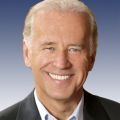
Joe Biden
“Where we choose to invest speaks to what we value as a Nation. ... It is a Budget for what our economy can be, who our economy can serve, and how we can build it back better by putting the needs, goals, ingenuity, and strength of the American people front and center. It is a Budget that reflects the fact that trickle-down economics has never worked, and that the best way to grow our economy is not from the top down, but from the bottom up and the middle out.”
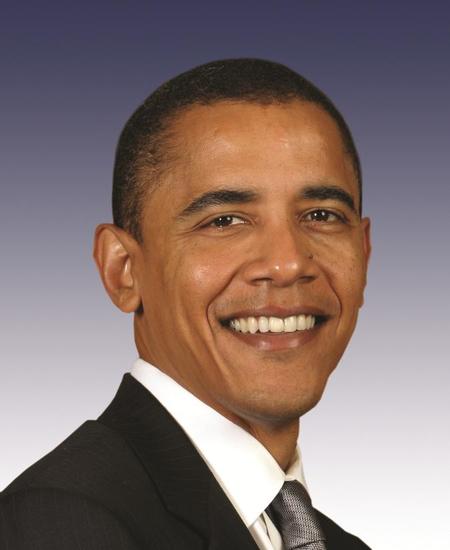
Barack Obama
“Development isn't charity. It's one of the smartest investments we can make in our shared future — in our security and our prosperity.”
The Republican Stance on Government Spending
The Republican stance on government spending typically prefers smaller government, lower taxes, and reduced federal involvement. Their policy stance on government spending centers on limiting spending, decreasing federal programs, and reducing the national debt. In the Pew Research Center survey from 2019, the Republican priorities were reflected:
- 38% of Republicans support increasing Social Security spending, 11% favor lowering it, and 49% keeping spending the same.
- 57% of Republicans support increasing infrastructure spending, 9% favor lowering it, and 31% keeping spending the same.
- 27% of Republicans support increasing economic aid spending, 29% favor lowering it, and 40% keeping spending the same.
These statistics show a clear difference from the Democratic Party, favoring decreasing government spending over government spending policies. Republican lawmakers often oppose large federal packages because they believe excessive spending harms the economy. They argue that limiting government spending is necessary to reduce debt and promote private-sector solutions.
Politicians Who Oppose Government Spending
74% of Republicans reported that they would prefer decreased federal spending, and in turn, decreased federal services.
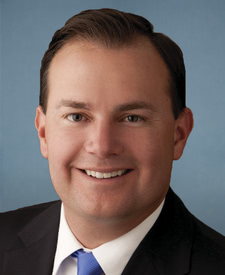
Mike Lee
“The greatest threat to our national security is our debt and our deficit.”

Ronald Reagan
“We don't have deficits because people are taxed too little. We have deficits because big government spends too much.”
Policy on Government Spending in the United States
U.S. government policy is shaped by multiple debated questions, such as what is government fiscal policy and how does fiscal policy affect government spending. Federal spending covers major categories, including Social Security, Medicare, Medicaid, national defense, education and welfare, and infrastructure and transportation. Major programs in recent years reflect the ongoing struggle between parties over spending policies and federal involvement.
As for how Republican and Democratic politicians feel about the increase in government spending, the Senate voted 68-31 in March 2022 to pass a $1.5 trillion omnibus bill that will fund federal government agencies for the remainder of Fiscal Year 2022. The majority of support came from the Democratic side of the aisle due to increased funding for Democratic priorities. So, the feelings of increased and/or decreased political spending by the electorate are mirrored by the party in government.
From 2020 to 2022, Democrats enacted major spending programs, including the largest public infrastructure bill in history, the Infrastructure Investment and Jobs Act, and the Inflation Reduction Act, which pertains to climate change, health care, and tax reform. Authorized new spending for these programs is set to exceed $3 trillion.
In December 2022, Congress passed a humongous $1.7 trillion omnibus package to fund the government through September 2023. It passed in the Senate by a 68-29 vote and in the House, with a 225-201-1 vote. The voting in the House was along party lines (Democrats in favor, Republicans opposed), with 9 Republicans crossing over to vote for the measure alongside Democrats and 1 Democratic member voting present.
A Brief History of Government Spending in the U.S.
Government spending has expanded significantly over the past century. In the 1930s, the New Deal dramatically increased federal programs through multiple acts that stabilized the economy, created jobs, and established social safety nets. A few examples were the Civilian Conservation Corps (CCC) for jobs in conservation, the Works Progress Administration (WPA) for public works, and the Social Security Act (SSA) for retirement and disability income.
In the 1960s, the Great Society sought to end poverty, reduce crime, abolish inequality, and improve the environment, including Medicare, Medicaid, and major social programs. Some acts pushed by President Lyndon B. Johnson during this time were the Economic Opportunity Act, which created programs like Job Corps and Head Start to provide job training and early childhood education, and the Civil Rights Act, which outlawed discrimination based on race, color, religion, sex, or national origin.
After the 2008 financial crisis, the American Recovery and Reinvestment Act of 2009 (ARRA) was passed to alleviate the Great Recession, including a wide range of federal spending initiatives to improve the economy. Past this, COVID-19 led to some of the largest federal spending packages in U.S. history, provided through stimulus payments that helped the nation respond to and recover from the pandemic.
These different eras shaped Democratic and Republican views on government spending, centered on how much the government should intervene during economic crises.
What the Future Holds
The future of government spending will depend on elections, economic conditions, and public opinion. Democrats are likely to continue supporting investments in public services, clean energy, healthcare, and education. Republicans are expected to push for government restrictions in federal budgets, focusing on the national debt and the private sector.
In future debates, the parties will argue whether the government should cut or expand federal programs, how fiscal policy responds to economic downturns, and what the balance is between federal and state responsibilities. While both parties are divided on almost every major category of spending, the conflict over federal budgets will remain one of the most defining political battles in the U.S.
To explore how each political party views other key policy topics, visit Biasly’s full list of Political Party Policy Stances.
To unlock more data-driven insights into media bias, explore political leanings with research-backed tools, and customize your news feed around what matters most to you, sign up for a Biasly Premium News Membership.
