









How News Sources Portray Military Spending Policy
This chart shows how major news sources across the ideological spectrum frame military spending policy, from left to right-leaning perspectives.
















Military spending is a higher budgetary priority for Republicans than for Democrats. The 2024 Republican Party Platform emphasizes strengthening and modernizing the U.S. Armed Forces, rejecting efforts to cut defense appropriations, and restoring the defense industrial base. This includes enhancing missile defense systems and urging allies to meet shared security commitments. In contrast, the 2024 Democratic Party Platform supports maintaining a world-class military while focusing on the need to root out inefficiencies and waste in the defense budget. A stance that implies more targeted spending growth. Pew Research Polling indicates that nearly three-fourths of Republicans (71%) favor increased military defense funding versus roughly one-third of Democrats (31%). Visit our news media bias chart to know what side of the spectrum you are getting your news from.
Brief History of U.S. Military Spending
Military spending has fluctuated throughout United States history, with significant conflicts reflecting an increase in military spending, while peacetime has historically seen a recession of military expenditure. In the early republic, defense spending was modest enough to ensure a small standing army and naval forces. Then, the Civil War saw a surge in military spending that eventually dropped sharply during the Reconstruction.
Entering the 20th century, U.S. defense budgets began a sustained upward climb, rising sharply during World War I and escalating to unprecedented levels in World War II. During this period, the federal government centralized and expanded its control over military spending, a system that continued into the Cold War. As the United States sought to maintain a global military presence to counter the Soviet Union, this structure solidified a permanent state of elevated defense funding.
After the collapse of the Soviet Union in 1991, spending declined during the peace dividend years. However, after September 11, 2001, when terrorist attacks led to wars in Afghanistan and Iraq, the expansion of homeland security initiatives led to another increase in defense funding. Although budget constraints led to a brief slowdown in growth in the 2010s, recent years have seen a continued increase in spending as the country competes to modernize its military against the advancing technological capabilities of China and Russia’s military.
Today, the United States is the world’s largest military spender, allocating over $800 billion annually to defense. According to figures from SIPRI, in 2024, the U.S. spent $997 billion on defense, which is more than the combined spending of the following nine countries and accounts for nearly 40% of all military expenditures in the world. Evolving security threats, strategic global commitments, modernization of military capabilities, and domestic political priorities drive this sustained investment.
Democratic Stance on Military Spending
The Democratic policy stance on military spending affirms that the U.S. must maintain the strongest military in the world, only to exercise its force as a last resort. Leftwing policymakers also emphasize that national security is not only strengthened through military strength, but also through alliances and diplomacy. While the parties’ 2024 platform supports investing in modernizing the armed forces, stressing the importance of maintaining a nuclear deterrent, it also emphasizes the importance of eliminating waste, fraud, and inefficiency within the budget.
Democrats frequently tie defense priorities to broader security goals that include cybersecurity, climate resilience, and global health preparedness, reflecting the view that non-military tools of influence should complement military strength. In practice, Democratic policymakers have frequently backed modest increases in defense spending. For example, in July 2025, a Senate Appropriations Committee Bill received strong bipartisan support, which included Democrats, to authorize roughly $852 billion in defense spending, allocating approximately $800 million for the Ukraine Security Assistance Initiative and $225 million for the Baltic Security Initiative. This was alongside investments in munitions production, naval shipbuilding, and quality of life improvements for service members.
Leftwing policies tend to endorse a broader concept of national security and seek to increase efficiency within the defense budget. This perspective is grounded in the belief that military power should be balanced with diplomatic engagement and domestic resilience to ensure national security through armed strength and international cooperation. Check out our media education programs to enhance your media literacy and learn how to get news from sources you can trust.
Politicians Who Oppose Military Spending Rights

One-third of Democrats (31%) favor increased military defense funding.
Republican Stance on Military Spending
The Republican Party’s stance on military spending strongly supports the expansion and modernization of the U.S. military. This involves investments in strategic deterrence systems, next-generation weapons platforms, and domestic defense manufacturing. This ideology is firmly rooted in the belief that overwhelming military capability is essential to deter enemies and maintain global leadership, often summarized as the principle known as “peace through strength.”
A recent example of the conservative stance on military spending is inherent in the 2026 Defense Appropriations Act, which allotting $831.5 billion in defense funding. The bill directs resources to large-scale programs that include $2.6 billion towards hypersonic missile development, $13 billion for missile defense under the Golden Dome project, and major shipbuilding contracts such as the Columbia-class ballistic missile submarine. Moreover, the bill funds a 3.8% military pay raise, additional F-35 fighters, and related industrial-base investments. These priorities demonstrate a rightwing ambition to fund ambitious, multi-year defense initiatives designed to enhance U.S. superiority across all sectors of the military.
Politicians Who Support Military Spending Rights

Three-fourths of Republicans (71%) favor increased military defense funding.
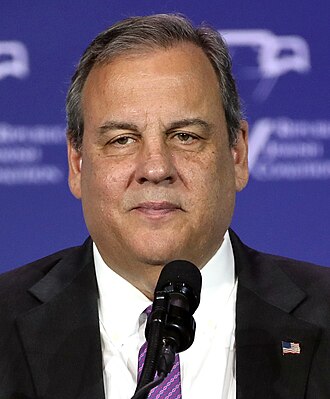
Chris Christie
“When you spend 5% of your annual Pentagon budget supporting Ukraine, and theyve degraded 50% of the Russian military hardware, thats a pretty good investment.”
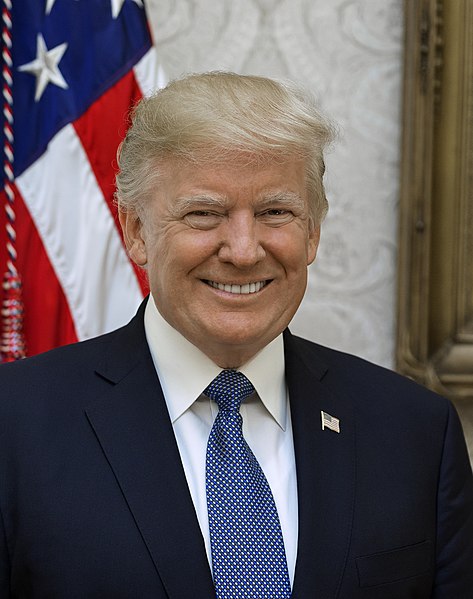
Donald Trump
“My Administration has embarked on a colossal rebuilding of the American armed forces, a record like no other. After years of devastating budget cuts and a military that was totally depleted from these endless wars, we have invested over 2 trillion trillion; thats with a T dollars in the most powerful fighting force, by far, on the planet Earth. We are building new ships, bombers, jet fighters, and helicopters by the hundreds; new tanks, military satellites, rockets, and missiles; even a hypersonic missile that goes 17 times faster than the fastest missile currently available in the world and can hit a target 1,000 miles away within 14 inches from center point.”
Partisanship Over Military Spending
While both parties agree on the necessity of maintaining a strong U.S. military, military spending political views often clash over how to define, fund, and prioritize that strength. Democrats view military spending as a piece of a broader national security strategy that focuses on diplomacy, alliance-building, and addressing non-military threats that include climate change, cybersecurity, and global health. This approach favors targeted modernization while seeking to eliminate waste and direct some savings toward domestic priorities such as veterans care and infrastructure. Leftwing support for defense budget increases usually coincides with specific global security needs that maintain a focus on efficiency.
By contrast, Republicans hold to the “peace through strength” doctrine, which advocates for sustained or increased topline defense budgets that maintain overwhelming military superiority. They prioritize large-scale, multi-year investments in advanced weapons systems, alongside expanded shipbuilding and aircraft procurements. The Republican Party also emphasizes revitalizing the U.S. defense industrial base and pressuring allies to meet their defense commitments, reinforcing a vision of deterrence through unmatched strength.
Overall, while both parties seek to ensure U.S. military defensive readiness, Democrats tend to integrate defense spending into a diverse stance on military issues that balances military power with diplomatic and domestic investment. On the other hand, Republicans concentrate resources on expanding the military, technological, and strategic edge as the primary safeguard of national security. For more bias-free news, visit our best news sources at Biasly.com.
