









How News Sources Portray Prison Reform Policy
This chart shows how major news sources across the ideological spectrum frame prison reform policy, from left to right-leaning perspectives.














Many of the media biases we observe, whether in news coverage or political rhetoric, stem from the fundamental differences in policy perspectives held by major political parties. One of the many key points of conflict is prison reform.
Prison reform refers to “the movement to improve the penal system and facilities,” also proposing to make alternatives to contemporary incarceration. It focuses on creating fairer sentencing laws, improving prison conditions, and expanding rehabilitation programs.
U.S. prison reform continues to evolve as policymakers strive to strike a balance between punishment, deterrence, and rehabilitation. Supporters of reform policies argue that excessive incarceration rates undermine communities and waste public resources. Those who oppose this idea warn against leniency that could reduce accountability. Over time, this issue has evolved into a social and political matter, tied to discussions about race, injustice, and public safety.
The Democratic Stance on Prison Reform
The Democratic Party platform generally advocates for a liberal stance on prison reform. Its main focus is on rehabilitation, fairness, and reducing racial disparities in sentencing. The Democrats believe that effective policy reform requires addressing the root causes of crime, such as poverty, addiction, and mental health.
On this account, Democrats and Democratic-leaning independents are much more likely to say people convicted of crimes spend too much time in prison (41% and 21% respectively). The party tends to support prison reform policies that expand job training, education, and programs to reduce recidivism. The Democratic agenda often aligns with social justice movements, seeking to eliminate mandatory minimums for non-violent offenses. By doing this, Democrats see reform as not just a moral obligation but a means of achieving greater equity within the justice system.
Politicians Who Support Prison Reform

41% Democrats and 21% Democratic-leaning independents are more likely to say people convicted of crimes spend too much time in prison.
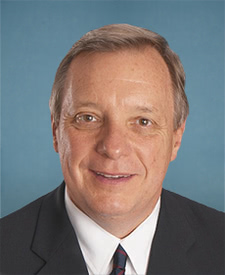
Richard J. Durbin
“This December marks the seventh anniversary of the passage of the First Step Act—the most significant reform to our criminal justice system in a generation. ... The end result was—and continues to be—life-changing for the people who were impacted. The First Step Act delivered much-needed reforms to our outdated sentencing laws and provided opportunities for incarcerated Americans to safely reenter their communities. Those reforms have reduced populations in overcrowded prisons, reunited families, and revitalized the communities these men and women reenter as productive neighbors.”
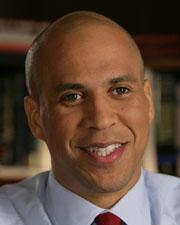
Cory A. Booker
“Our nation's broken criminal justice system is a stain on the soul of our country, the result of decades of failed policies that have broken apart families and communities and have not made us safer. The burden of this broken system has been disproportionately and dramatically borne by Black and brown Americans, and the poor. It's past time for change.”
The Republican Stance on Prison Reform
The Republican stance on political issues such as prison reform is completely different from the Democratic Party’s. Among Republicans and Republican-leaning independents, 44% of Republicans say people convicted of crimes spend too little time in prison, while 14% say they spend too much time behind bars. This party often views policies on prison reform from a law-and-order perspective, prioritizing safety and accountability. Republicans strive to ensure that reforms do not compromise security or justice for victims.
When it comes to U.S. prison system reform, Republican policymakers argue that strong deterrence and structured rehabilitation can coexist, but reforms shouldn’t be too lenient. The party advocates data-driven approaches to measure reform outcomes, highlighting the community’s well-being, which is central to the debate.
Politicians Who Oppose Prison Reform

44% of Republicans say people convicted of crimes spend too little time in prison.

Tom Cotton
“A number of serious felonies, including violent crimes, are still eligible for early release in the version of the bill the Senate will vote on in a matter of days... In short, the First Step Act flunks their basic test to protect public safety.”
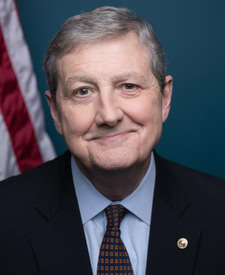
John Kennedy
“Rather than try and fix [laws] we're going to give almost unfettered discretion to the bureaucrats and the Bureau of Prisons to fix our mistakes... It's like putting paint on rotten wood.”
Policy on Prison Reform in the United States
Prison reform has long been a debated issue at all levels of American politics. The debate on prison reform is more centered along the lines of the length of punishment that is received by inmates. In the U.S., incarceration rates are among the highest in the world, leading to the rise of reforms to combat current prison policies.
Historically, reforms have depended on the political climate and public sentiment. Democratic and Republican politicians, like their followers, subscribe to the same beliefs, as evidenced by voting patterns on S. 756: FIRST Step Act. This act was a prison reform bill that was voted upon by the United States Senate, with the vote being tallied as follows: 100% of Democrats voted Yea, along with 31.5% of Republicans. It marked a shift in rehabilitation and reentry support, demonstrating that despite partisan divides, cooperation remains possible.
Modern debates over prison reform goals focus on recidivism reduction, sentencing reform, and the treatment of nonviolent offenders. Progress often depends on balancing compassion with accountability. While Democrats seek to humanize the justice system, Republicans aim to preserve deterrence and public confidence. When combining and balancing these perspectives, reforms evolve in their implementation nationwide.
A Brief History of Prison Reform in the U.S.
Early American prisons were designed for punishment and deterrence, which later began changing in the 19th century as people called for humane treatment and rehabilitation. In 1891, the United States federal prison system was formally established with the passage of the Three Prisons Act, authorizing the construction of three federal penitentiaries.
In 1930, Congress created the Federal Bureau of Prisons (BOP) within the Department of Justice through Public Law No. 71-218, 46 Stat. 325, tasked with overseeing all federal correctional institutions, which was a major step toward standardizing regulations and improving oversight of the federal prison system. In 1934, the Federal Prison Industries (UNICOR) was established, providing vocational training and work opportunities for inmates.
The Progressive Era introduced education and labor programs in prisons, emphasizing moral correction. Later, the civil rights movement of the 1960s and 1970s pushed for fairness and equal treatment under the law. In 1974, the National Institute of Corrections (NIC) was founded to improve corrections through training and reform. After this, many acts and reforms reinforced contrasting Democratic and Republican ideas, paving the way to a new era of modern prison reforms.
The 21st century focused more on a revival of reforms such as the First Step Act, which aimed to reduce recidivism through modified sentencing laws, rehabilitative programs, and improved federal prison conditions. There was a switch to restorative justice, alternatives to imprisonment, and evidence-based policymaking.
What the Future Holds
The future of prison reforms will likely depend on bipartisan collaboration and public awareness. Policymakers must balance public safety with compassion and fiscal responsibility. As the years go by, technology and data analytics will improve and affect prison reform policies in reducing recidivism and promoting reintegration.
Prison reform reflects the nation’s values of justice and equality, which is why it is so important in politics. For the near future, both parties will continue to be challenged with creating sustainable policies that lower incarceration rates while maintaining fairness and security for all citizens.
To explore how each political party views other key policy topics, visit Biasly’s full list of Political Party Policy Stances.
To unlock more data-driven insights into media bias, explore political leanings with research-backed tools, and customize your news feed around what matters most to you, sign up for a Biasly Premium News Membership.
