









How News Sources Portray Religious Freedom Policy
This chart shows how major news sources across the ideological spectrum frame religious freedom policy, from left to right-leaning perspectives.













Religious freedom refers to an individual’s ability to practice or not practice any form of religion in the United States. In America, freedom of religious practice is a constitutional right guaranteed by the First Amendment of the Constitution. While Christianity is the predominant religion in the country, the United States has no official religion because of this amendment.
Prior to the establishment of the United States, many European citizens fled religious persecution from England and sought refuge in modern-day America. However, many individuals throughout the early colonies also felt that having an established religion was important to society. This led to some colonies, such as Plymouth and Massachusetts, establishing official churches, while others, like Rhode Island and Connecticut, promoted a freedom of religion policy.
Founding Father Thomas Jefferson was a strong proponent of religious freedom during and after the creation of the First Amendment in 1791. During his presidential term, he refused to declare Thanksgiving as a national day of prayer. Both he and his successor, James Madison, vetoed religious-oriented bills that would violate the First Amendment.
For well over a century to follow, religious freedom was a point of contention across the United States. The First Amendment applied only to the federal level, so many states continued to designate official churches and religions even into the 1940s. A 1947 Supreme Court case, Everson v. Board of Education, finally established a separation of church and state at both the federal and state levels.
In modern times, religious freedom in the United States remains a contentious topic. Debate persists around whether the United States should recognize an official religion, whether Christian values should be prioritized over other religions, and whether businesses should be allowed to turn away individuals who do not align with their values, such as LGBT equality.
The Democrat Stance on Religious Freedom
The Democratic Party stance on religious freedom is strongly in support of the policy. In an April 2024 AP-NORC poll, 84% of all Americans viewed the freedom of religion as extremely/very or somewhat important to the United States’ identity, including 61% of Democrats who viewed it as extremely/very important.
However, contrast with the Republican Party emerged when asking whether a United States culture grounded in Christian religious values was important. Only 18% of Democrats felt that this was extremely/very important.
In 2022, President Joe Biden signed the Respect for Marriage Act, which required the government and all states/territories to recognize same-sex marriages while protecting religious freedom. It also repealed the Defense of Marriage Act, which banned federal recognition of same-sex marriages and recognized marriage as a union between one man and one woman.
One point of controversy in recent years has been whether or not small business owners with Christian values should be able to decline service to people they disagree with. In a 2023 PRRI survey, 60% of Americans opposed small businesses being allowed to refuse service, including 82% of Democratic voters.
Conversely, a 2024 Pew Research poll found that 50% of Americans felt that liberals who were not religious had gone too far in trying to keep religious values out of the government and public schools. The same survey showed that 48% of Americans believed conservative Christians had gone too far in pushing their religious values into the government and schools.
Recent polling suggests many Americans perceive the free exercise of religion as constrained by policy and bureaucratic decisions. In the 2024 Religious Freedom Index, only 36% said society is at least “a good amount” accepting of people of faith living according to their beliefs, even though 73% reported being personally accepting.
Majorities also resisted specific government actions seen as intrusive: 56% opposed Massachusetts’ denial of a foster-care license to a Catholic couple based on their religious beliefs, rising to 67% after respondents learned additional details. Strong majorities said the government should not require religious organizations to pay for abortions against their beliefs (70%) and supported equal eligibility for religious charities to receive public funds (73%). Taken together, these findings indicate a broad concern that contemporary policy choices are encroaching on religious exercise.
Politicians Who Nuanced Religious Freedom
61% of Democrats who viewed religious freedom as extremely/very important.

Kamala Harris
“The freedom to worship is one of our nation's most fundamental rights. That First Amendment guarantee should never be used to undermine other Americans' civil rights or subject them to discrimination on the basis of race, gender, sexual orientation, or gender identity.”
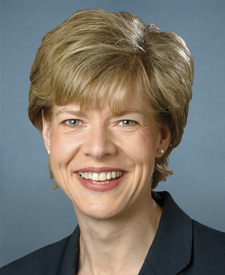
Tammy Baldwin
“The rights of LGBTQ Americans are at stake... because [a] broad view of religious freedom could provide a license to discriminate against these individuals.”
The Republican Stance on Religious Freedom
The Republican Party also strongly supports religious freedom. In an April 2024 AP-NORC poll, the share of Republicans believing freedom of religion is extremely/very or somewhat important stood at 66%. In contrast to the 18% of Democrats who felt a United States culture grounded in Christian religious values was important, 58% of Republicans felt that way.
Support for allowing small businesses to decline services to people they disagree with has increased among Republican voters in the past decade, according to a 2023 PRRI survey. In 2015, 40% of conservatives opposed allowing businesses to do so. In 2023, that number dropped to 34%.
In May 2025, President Donald Trump established the Religious Liberty Commission, which he stated would investigate and recommend policies to safeguard religious freedom in the United States. He also established a task force to reduce anti-Christian bias across the country.
Politicians Who Support Religious Freedom
66% of Republicans believe freedom of religion is extremely/very or somewhat important.
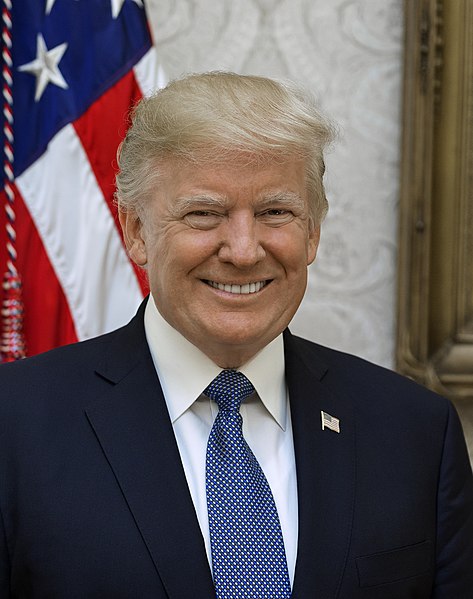
Donald Trump
“For 250 years, our Nation and our people have abided by a simple truth: Every person is born with the God-given right to practice their faith, follow their conscience, and worship their God freely and without fear. ... My Administration is boldly bringing faith back to the public square because the freedom of religion means the freedom to practice your religion proudly, publicly, and without fear of persecution. As President, I am leading a renewal of faith in our schools, military, workplaces, hospitals, and halls of Government because the revolution of common sense is incomplete without a resurgence of faith in God.”
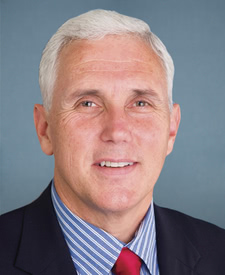
Mike Pence
“Since the earliest days of our nation, America has stood for religious freedom. ... The crafters of America's Constitution enshrined religious liberty as the first of our American freedoms. Our Declaration of Independence proclaims that our precious liberties are not the gift of government, but rather they're the unalienable rights endowed by our Creator. Americans believe that people should live by the dictates of their conscience, not the diktats of government.”
Political Implications
Religious freedom carries major political implications because it is supported in principle by both parties but interpreted very differently in practice. It touches constitutional rights, civil-rights enforcement, education, healthcare, LGBTQ+ protections, and the place of faith in public life. Public opinion reflects both broad support and sharp disagreement over application: an April 2024 AP-NORC poll found that 84% of Americans viewed freedom of religion as important to U.S. identity, including 61% of Democrats and 66% of Republicans. At the same time, views diverge much more sharply when the issue turns to Christian values, public institutions, or service refusals.
For Democrats, religious freedom is generally framed as a protected constitutional right that must be balanced against anti-discrimination law and equal treatment in public life. For Republicans, it is more often framed as a right of conscience that should be actively protected from government intrusion and from what they see as cultural hostility toward religious belief, especially Christianity. That difference matters politically because it turns a shared constitutional principle into a wider conflict over whether religious liberty is primarily a shield for private belief or also a basis for exemptions from generally applicable laws.
The issue also has consequences for court appointments, school policy, public funding, marriage law, and healthcare mandates. Because disputes over religious freedom often involve emotionally charged questions of identity and morality, they can mobilize religious voters, civil-liberties advocates, LGBTQ+ groups, and legal activists at the same time. As a result, religious freedom remains a durable flashpoint in American politics even when both parties claim to support it.
What the Future Holds
The future of religious freedom policy will likely center on where courts, lawmakers, and voters draw the line between conscience protections and civil-rights obligations. Public opinion suggests the country remains divided on that balance. A 2023 PRRI survey found that 82% of Democratic voters opposed allowing small businesses to refuse service based on religious values, while conservative resistance to those limits has been lower and more variable. At the same time, a 2024 Pew Research survey found that Americans were nearly split on whether non-religious liberals had gone too far in keeping religious values out of government and schools or conservative Christians had gone too far in pushing them in.
For Democrats, the future likely involves continuing to defend religious liberty while insisting that it cannot be used to weaken protections for women, LGBTQ+ people, or other groups covered by civil-rights law. For Republicans, the future likely involves expanding protections for religious conscience, especially in education, business, foster care, and healthcare settings where believers argue they are being asked to act against their faith. As those disputes continue, religious freedom will remain tied closely to the judiciary and to the way courts interpret the First Amendment in conflicts between equality norms and faith-based exemptions.
More broadly, religious freedom is likely to remain a major issue because it sits at the center of larger debates over pluralism, secularism, and the role of religion in a diverse democracy. Future conflicts will probably focus less on whether religious liberty matters and more on whose rights prevail when religious conviction and nondiscrimination principles come into direct conflict.
