









How News Sources Portray School Choice Vouchers Policy
This chart shows how major news sources across the ideological spectrum frame school choice vouchers policy, from left to right-leaning perspectives.
School vouchers are certificates of government funding provided to parents for the option of sending their child to a private school. In the United States, citizens pay taxes that the state allocates to important issues such as education. In most cases, these funds pay for children to attend public schools. However, if a family so chooses, the share of money that typically pays for a child’s public education can be provided as a voucher to cover the tuition at a private school.
By far the most common option in America is traditional public schools, which are taxpayer-funded and must adhere to guidelines provided by the school district or state board of education. Private schools, in comparison, charge tuition and have much greater control over the curriculum. A third option, public charter schools, offer a blend of both, with taxpayer funding but more leeway over the curriculum based on an agreement with the state or local government.
During the 2021-2022 school year, 83% of all students, or about 47.2 million students, attended public schools. Only 10% attended private schools, and only 7% attended public charter schools. However, the popularity of public schooling has declined slightly, while the prevalence of public charter schools has grown slightly, over the past decade.
The Democrat Stance on School Choice Vouchers
The Democratic Party policy stance on school choice vouchers is deeply divided. Although many Democrats, including members of the former Obama administration, have expressed support for expanding private and charter schooling, others have expressed school choice opposition. For decades, the Democratic Party has maintained a close relationship with teacher unions, which argue that private and charter schools drain students and funding from public schools.
A 2025 PDK poll found that Americans’ trust in public schooling continued to erode, while their support for school choice policies continued to increase. When offered the choice between sending their children to a public school or a private/religious school, Democrats were almost equally divided, with 53% opting to send their child to a public school and 47% opting to send their child to a private/religious school.
Given these divides, the topic of education may be a divisive subject during the 2028 Democratic Party primary. Potential candidates such as Pennsylvania Governor Josh Shapiro and Maryland Governor Wes Moore appear open to supporting President Donald Trump’s initiative to create the first national private school choice program.
Politicians Who Support School Choice Vouchers
53% of Democrat voters opted to send their child to a public school and 47% opted to send their child to a private/religious school.

Josh Shapiro
“I believe every child of God deserves a shot here in the Commonwealth of Pennsylvania, and one of the best ways we can guarantee their success is making sure every child has a quality education... I think it's very important that we fully fund public education, and I also think it's really important that we empower parents to put their kids in the best place for them to be able to succeed.”
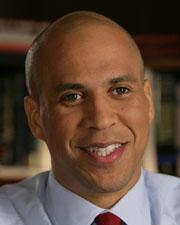
Cory A. Booker
“I was so resoundingly against any type of vouchers in education. I thought they were evil and an affront to public education. As I got older and became more nuanced, I realized that public education is first and foremost the right for every child to receive an excellent education, and suddenly I wasn't so wrapped up in the delivery system, but more in the outcome and the results, especially for disadvantaged youth.”
The Republican Stance on School Choice Vouchers
The Republican stance on school vouchers is strongly in favor. In general, Republicans believe they should have greater say over their child’s education and the curriculum that they are taught. An increasing share of conservatives are dissatisfied with how certain subjects are taught in school, particularly controversial topics such as LGBT equality, critical race theory, and slavery.
In a 2025 PDK poll, only 11% of Republicans were very satisfied with the amount of say they had over their child’s education, compared to 46% of Democrats who were very satisfied. When offered the choice to send their child to a private/religious or a public school, 27% of Republicans opted for public school, while a strong majority, 71%, opted for private/religious schooling.
In July 2025, President Donald Trump signed the One Big Beautiful Bill Act, which included school choice legislation that created private school scholarship organizations. When Americans donate to these organizations, the funds are directed to families trying to enroll their children in private schooling, and the donors receive dollar-for-dollar tax credits. The bill, containing hundreds of other provisions, passed with near-unanimous Republican support and unanimous Democratic opposition in both chambers of Congress.
Politicians Who Support School Choice Vouchers
27% of Republicans opted for public school, while a strong majority, 71%, opted for private/religious schooling.
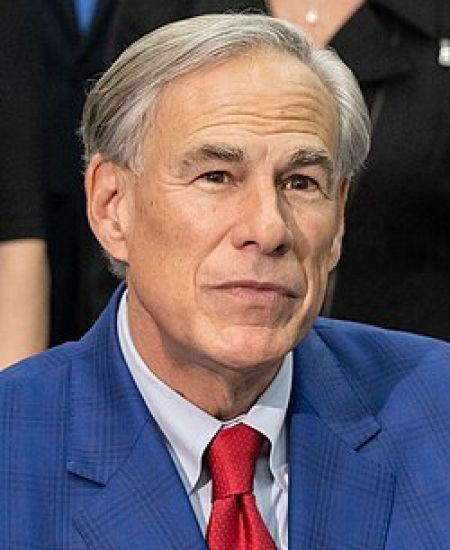
Gregory Abbott
“Today, Texas delivers on that promise. I am signing this law that will ensure Texas families, whose children can no longer be served by the public school assigned to them, have the choice to take their money and find the school that is right for them. ... Every parent, regardless of wealth, regardless of income, regardless of zip code, they're going to have the same opportunity that a wealthy person would have to choose a school that's right for their particular child.”
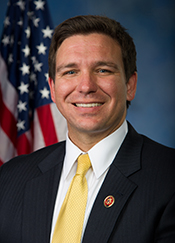
Ron DeSantis
“There will be a preference for low- and middle-income families, but at the end of the day, we fundamentally believe that the money should follow the student, and it should be directed based on what the parent thinks is the most appropriate education program for their child.”
Political Implications
School choice vouchers carry major political implications because they sit at the intersection of education funding, parental authority, public-school trust, and party coalition politics. Although the issue is most strongly associated with Republican support, it also creates tensions within the Democratic Party, where some elected officials have shown openness to charter or private-school choice while many others — along with teachers’ unions — remain strongly opposed. Public preference data reflects a meaningful partisan divide: according to the figures cited on this Biasly page, 53% of Democrats preferred public school compared with 47% preferring private or religious school, while only 27% of Republicans preferred public school and 71% preferred private or religious school.
For Republicans, voucher policy reinforces a broader political message around parental rights, educational freedom, and dissatisfaction with how public schools handle curriculum and values-based issues. For Democrats, the politics are more complicated because support for public education remains central to the party’s identity, but some Democratic leaders have become more open to alternative schooling models. That tension makes vouchers not only a general-election issue, but also an intraparty issue about labor alliances, education reform, and the limits of public-school exclusivity.
The issue also matters because education is one of the few policy areas where local concerns can quickly become national political flashpoints. Voucher proposals can mobilize parents, teachers, unions, religious-school advocates, governors, and state legislators all at once. As a result, school choice has become a durable political battleground over who controls education policy and whether public funding should follow students beyond the public-school system.
What the Future Holds
The future of school choice vouchers will likely depend on whether recent policy momentum toward broader private-school access continues at the state and federal levels. As noted on this Biasly page, the passage of the One Big Beautiful Bill Act in 2025 marked a significant step toward a national private school choice framework through tax-credit support for scholarship organizations. That development suggests voucher-style policies may continue to expand, especially where Republican lawmakers control legislatures or the presidency.
For Republicans, the future likely involves continued efforts to nationalize school-choice policy, expand voucher eligibility, and strengthen the idea that education funding should follow the student rather than remain tied exclusively to public-school systems. For Democrats, the future is likely to remain more divided. Some Democratic figures may continue moving toward limited openness on private or charter options, while others will remain firmly aligned with teachers’ unions and traditional public-school funding models. That internal split could make school choice an increasingly important issue in future Democratic primaries as well as in state-level policy fights.
More broadly, school choice vouchers are likely to remain politically salient as long as parents continue to debate school quality, curriculum, safety, and control over children’s education. The long-term direction of the issue will depend on whether voters come to see vouchers as a practical tool for expanding opportunity or as a threat to the financial and civic role of public education.
