









How News Sources Portray War on Terror Spending Policy
This chart shows how major news sources across the ideological spectrum frame war on terror spending policy, from left to right-leaning perspectives.











Several topics in contemporary politics have become increasingly partisan-based, and, while there can be unbiased news sources, more often than not, sources have their own bias and express that through media bias. One such topic concerns the War on Terror and the funding for it.
The War on Terror is an international, American-led military campaign following the 9/11 terrorist attacks, launched during the Bush Administration, to seek out and stop terrorists around the world. The Global War on Terror began by focusing on al-Qaeda, but quickly spread to other terrorist groups around the world. This campaign led to the issue of increased military spending to fight the War on Terror.
A Brief History of the War on Terror Spending
After the Global War on Terror campaign began in September 2001, President Bush announced that the U.S. had initiated military action in Afghanistan in October 2001 to continue to fight the War on Terror. The first strikes were focused on al-Qaeda and the Taliban military locations in Afghanistan. The U.S. then actively began to utilize a military base in Guantanamo Bay, Cuba, in 2002 as a detention facility for terrorists.
In late 2002/early 2003, the U.S. was exerting pressure on Iraq to ensure that its commitment to break ties with terrorists and destroy weapons of mass destruction was carried out. Saddam Hussein refused to disarm Iraq, and President Bush relayed this information to the UN to express the U.S.’s concerns. Military operations were activated in March 2003 to remove Saddam Hussein from power. The U.S. military captured Saddam Hussein in late 2003. The War on Terror continues to this day, but the U.S. has not participated in any wars concerning terrorism since the Iraq War.
The economic impact of the War on Terror has caused tens of billions of dollars worth of damage. The War on Terror significantly increased military spending and funding for U.S. troops. In 2000, military spending was $320 billion. In 2001, military spending slightly increased to $331 billion, but more dramatically increased in 2002 ($378 billion) and 2003 ($440 billion). Within the span of four years, annual military spending increased by $120 billion. For reference, from 1990 to 2000, military spending had decreased by $5 billion. Spending in 1990 was $325 billion versus $320 billion in 2000.
We can then conclude that the post-9/11 Global War on Terror has remarkably increased military spending and funding in the U.S. The Iraq War and efforts to capture Saddam Hussein in 2003 seemed to have the largest effect from 2000 to 2004.
Democratic Stance on Military Spending in the U.S.
The Democratic stance on military spending is more negative, as most Democrats believe that the government should cut military spending by a fair amount. Polling indicates that 31% of Democrats would increase federal spending on military defense, which was nearly the lowest percentage out of any category. (Other policies included Social Security, anti-terrorism, Education, etc.)
Democrats generally support funding the military enough to defend the United States, protect allies, and respond to real threats such as terrorism, cyberattacks, Russia, China, and other security challenges. However, they usually argue that military spending should not be unlimited and should be carefully reviewed. Democrats often emphasize accountability, transparency, audits, and oversight of the Pentagon to reduce waste, fraud, and unnecessary defense contracts. They tend to believe that simply increasing the defense budget does not always make the country safer.
Democrats also often view military spending as part of a broader national budget trade-off. They argue that money spent on defense must be balanced with domestic priorities like healthcare, education, infrastructure, climate policy, and veterans’ care. Many Democrats support targeted investments in areas like cybersecurity, intelligence, troop readiness, and modern technology rather than broad increases across the entire defense budget. Overall, their stance is that the U.S. should maintain a strong military, but military spending should be responsible, justified, and balanced with other national needs.
Politicians Who Oppose War on Terror Spending
31% of Democrats would increase federal spending on military defense.
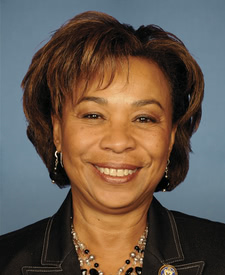
Barbara Lee
“The results today are a perpetual state of war and an ever-expanding military-industrial complex that consumes a greater and greater amount of our resources every year. Pentagon spending since 9/11 (adjusted for inflation) has increased by almost 50%. Each hour, taxpayers are paying $32m for the total cost of wars since 2001, and these wars have not made Americans safer or brought democracy or stability to the Middle East.”
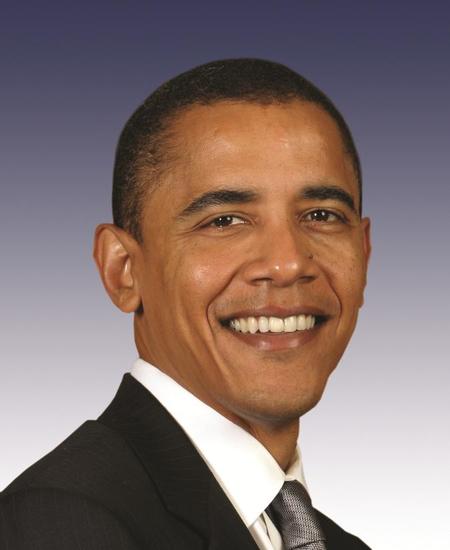
Barack Obama
“For over the last decade, our nation has spent well over a trillion dollars on war, exploding our deficits and constraining our ability to nation build here at home. ... America is at a crossroads. We must define the nature and scope of this struggle, or else it will define us, mindful of James Madison's warning that 'No nation could preserve its freedom in the midst of continual warfare.”
Republican Stance on Military Spending in the U.S.
The Republican stance on military spending is more positive, as most Republicans believe that the government should maintain or increase the current U.S. military spending. That same survey concludes that 71% of Republicans say they would increase federal spending on military defense, compared to just 31% of Democrats. Out of any policy area in this table, this was the second most polarizing policy issue, with a 40% difference between Democrat and Republican answers. The most polarizing issue was healthcare, with a 43% difference.
However, people supporting military defense in 2001 included both Democrats and Republicans. 64% of Republicans and 38% of Democrats said they would increase spending on military defense in 2001, and both increased in 2002 by similar percentage points (approximately 10%). 9/11 and the War on Terror caused a spike in military defense spending from both parties.
The Green Party’s stance on military spending calls for massive defense budget cuts. In 2000, Greens believed that the military budget should be around $300 billion, not the $320 billion it was in 2000. The Green Party advocates for a 50% reduction in military spending from 2000 to 2010, accompanied by increases in spending for social programs. This 50% has remained consistent over time, with Greens calling for at least a 50% cut in the military budget in 2018.
Politicians Who Support War on Terror Spending
71% of Republicans say they would increase federal spending on military defense.

George Bush
“Americans are asking: How will we fight and win this war? We will direct every resource at our command — every means of diplomacy, every tool of intelligence, every instrument of law enforcement, every financial influence, and every necessary weapon of war — to the disruption and to the defeat of the global terror network.”
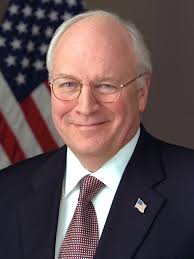
Richard Cheney
“The President has asked Congress for a one-year increase of more than $48 billion for national defense, the largest since Ronald Reagan lived in the White House... The job we have will require every tool at our means of diplomacy, of finance, of intelligence, of law enforcement, and of military power. But we will, over time, find and defeat the enemies of the United States.”
Policy of Containment
The War on Terror adopted a foreign policy of containment to prevent the spread of terrorism. The policy of containment was initially created and utilized during the Cold War, when the U.S. was attempting to prevent the spread of communism to other non-communist countries. In other words, it was an attempt to “contain” communism within the Soviet Union, rather than fixing communist regimes, hence the name.
This policy was then used during the War on Terror to contain terrorism in countries that the U.S. deemed as infected with terrorism, such as Afghanistan and Iran. However, this strategy was less successful and effective than when used during the Cold War, as the “enemy” was more clearly defined during the Cold War (the Soviet Union). Terrorism, on the other hand, has a more interconnected web between countries and continents that were considered the enemy. Terrorism was loosely defined and more difficult to contain, which made the policy of containment less effective.
War on Terror Policies
Democratic policies on military spending generally consist of forming strong relations and strategic alliances with other countries instead of solely relying on a strong military. Democrats support having a strong military, but also believe that the current military spending is more than what they would favor. Democrats tend to oppose the presence of nuclear weapons and support modernizing the current army, rather than expanding the army.
Republican policies on military spending consist of increasing military spending, and contend that increased funding is crucial for national security and combating the War on Terror. Most recently, Republicans in the House have announced new legislation that would increase Pentagon spending by $150 billion if passed. This increase would push the total defense budget over $1 trillion in 2025. The Trump Administration has also recently discussed a potential Golden Dome missile defense initiative, which would protect the entire continental U.S. against advanced missiles, similar to Israel’s Iron Dome.
To learn more about biases and party affiliation, Biasly also offers a Premium News Membership for an in-depth analysis of current news and access to bias analytics, discussions, and more.
