




-2% Center
Bias Meter
Extremely
Liberal
Very
Liberal
Somewhat Liberal
Center
Somewhat Conservative
Very
Conservative
Extremely
Conservative
-100%
Liberal
100%
Conservative
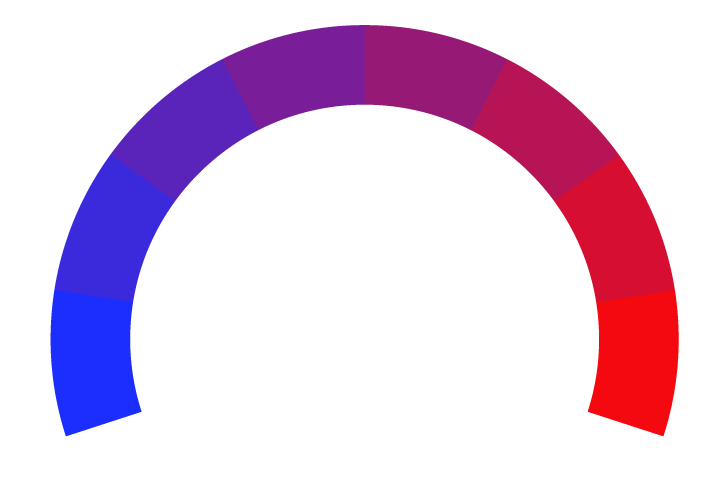
Biasly determines media bias ratings through a dual-layered approach combining artificial intelligence and analyst review. The platform’s proprietary bias detection engine, Bias Meter, evaluates sentiment, policy position alignment, and language framing across thousands of data points in news articles. Analysts then verify and interpret the AI’s findings, providing additional context where needed. Learn more about ratings
- Profile
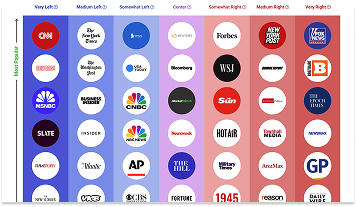
BBC on the media bias chart
BBC has a Bias Score of -2% Center which is based on a variety of factors including its policy and politician leanings, article ratings, and the use of biased language. Its Reliability is rated as Average, and additional analytical insights are available in the other tabs.
- Bias Rating
-2% Center
- Reliability68% Reliable AveragePolicy Leanings
-8% Center
Extremely
LiberalVery
LiberalModerately
LiberalSomewhat Liberal
Center
Somewhat Conservative
Moderately
ConservativeVery
ConservativeExtremely
Conservative-100%
Liberal100%
Conservative
Average Reliability
*Our bias meter rating uses data science including sentiment analysis, machine learning and our proprietary algorithm for determining biases in news articles. Bias scores are on a scale of -100% to 100% with higher negative scores being more liberal and higher positive scores being more conservative and 0% being neutral. The rating is an independent analysis and is not affiliated nor sponsored by the news source or any other organization.
Politician Portrayal35% positive
Continue For Free
Create your free account to see the in-depth bias analytics and more.
By creating an account, you agree to our Terms and Privacy Policy, and subscribe to email updates.
Log In
Log in to your account to see the in-depth bias analytics and more.
Policy Leanings Analysis
Policy | Bias score |
|---|
BBC Editorial Patterns
BBC’s coverage of political topics often reflects a Center bias, with consistent patterns in phrasing, source selection, and thematic focus that are Neutral. The UK-based publication demonstrates journalistic standards in most of its reports; the choice of issues, framing, and word usage is generally balanced between right and left-leaning issues. The following content analysis examines how BBC handles liberal and conservative issues and evaluates its language choices and editorial tendencies.
Coverage of Liberal vs. Conservative Topics
BBC’s articles include a mix of both progressive social causes, such as LGBTQ+ rights, racial justice, and clean energy, which tend to use non-partisan language. They also include more conservative issues such as taxation. For instance, its coverage of topics related to abortion rights is factually accurate, but can show support for policies adopting a more lenient abortion stance, as shown in the linked article. However, articles covering conservative figures or Republican-led initiatives often employ a non-partisan tone.
This news media bias manifests in subtle ways, such as through personal authorship bias or suggestive topic selection. Words like “abandoned” when discussing the issue of ‘greenhushing’ could appear more frequently in liberal-oriented reporting, but this depends solely on the author’s personal bias and does not favor one side or the other for BBC as a whole.
Policy and Issue Framing
When covering gender rights, BBC may reference inclusivity and representation but does not explicitly endorse movements for expanded legal protections. This aligns with the Center’s limited media bias, especially in England, where local culture tends to be more liberal. The rise of taxes is reported on, but remains non-partisan. Similarly, coverage of environmental issues reflects an urgency consistent with climate advocacy narratives favoring green legislation and critical of recent Trump administration policy changes, while overall, it is grounded in factual information.
BBC often presents issues in a non-partisan manner, but there are exceptions. For instance, its coverage of the latest issues in U.S. immigration policy is factual, but an underlying criticism is evident in certain articles. These stories may take a slightly liberal stance, emphasizing their impact on marginalized groups.
Even in neutral coverage, phrasing choices and topic selection shape perception. This consistent choice of words reflects an editorial direction that, even unintentionally, can contribute to bias in news media.
Coverage and Relevance
BBC’s reporting often touches on key issues central to the media political bias discussion, including newspaper bias, bias in journalism, and biased media narratives. Additionally, much of its coverage is regional to England and the United Kingdom. As such, it serves as a compelling case study for examining source bias and news media bias in country-focused reporting.
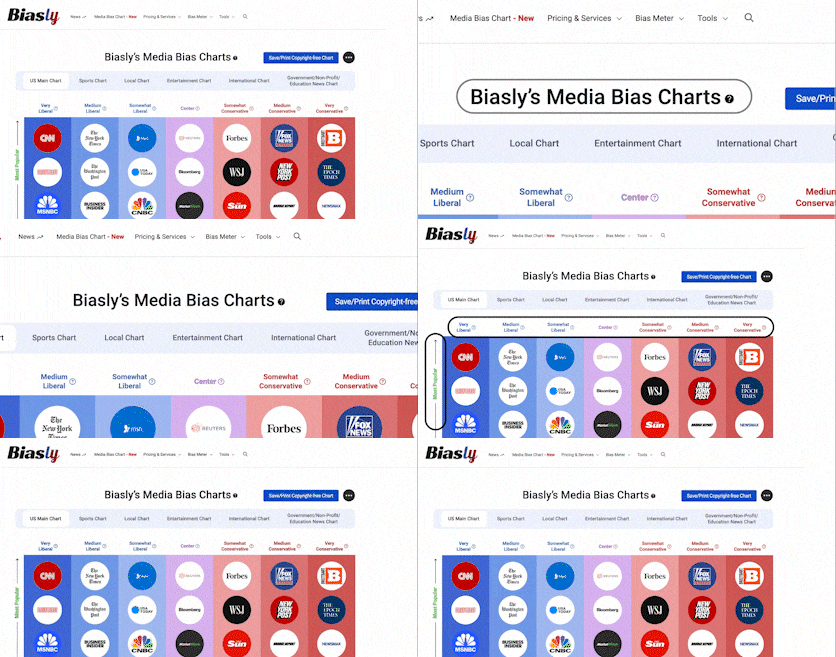
Readers who wish to further explore how BBC compares with other publications can visit Biasly’s Media Bias Chart to analyze tone and word choice in real time.
BBC Bias Analysis
BBC began as “The British Broadcasting Company” in October of 1922. Today, it functions as an innovative and collaborative news organization, operating as a nonprofit and partnering with other Europe-based outlets to share stories and resources. With a 2025 International Emmy Award and numerous other awards, BBC positions itself as a community asset focused on serving as an independent voice for the people of England.
According to its 2024 annual report, BBC reached an average of 442 million viewers per month in the previous year. When it comes to media bias, both AI and media analysts have evaluated its content, sources, and funding to determine its political leaning.
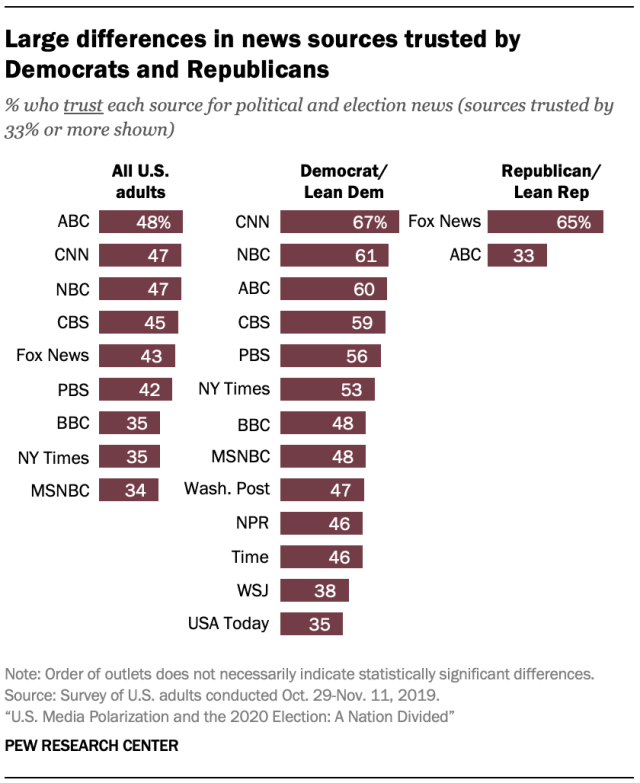
Source: Pew Research
As a leading media outlet in the UK and internationally, BBC plays a significant role in shaping public perception. Readers’ trust in the accuracy of local news may mirror the conclusions reached by Biasly’s media bias ratings. This article delves into BBC’s editorial tendencies to explore whether political bias is present and, if so, to what degree.
Is BBC Biased?
Based on Biasly’s evaluations, BBC is rated as Center.
By examining content patterns and the broader context of media influence, we aim to offer a balanced perspective on BBC’s political bias—and contribute to the ongoing discussion about bias in the news.
How Does Biasly Rate News Sources?
Biasly uses proprietary algorithms and a team of analysts to provide comprehensive bias evaluations across thousands of news outlets. Over 200,000 articles from more than 3,200 sources have been analyzed to identify the most accurate and unbiased stories.
Biasly assigns each outlet three key scores:
- Reliability Score – Reflects factual accuracy
- AI Bias Score – Generated via natural language processing
- Analyst Bias Score – Assessed by human political analysts
These scores are based on seven core metrics: Tone, Tendency, Diction, Author Check, Selection/Omission, Expediency Bias, and Accuracy. These elements help analysts and algorithms evaluate the political attitude conveyed by each article.
Biasly’s Bias Meter ranges from -100% (most left) to +100% (most right), with 0% indicating neutrality. The system evaluates individual articles based on political terms, policies, figures, and sentiment to calculate precise bias ratings.
Is BBC Politically Biased?
BBC earns a Center rating for its AI Bias Score and a Somewhat Left for its Analyst Bias Score. The Analyst Bias Score is generated by reviewers from liberal, moderate, and conservative backgrounds. Analysts reviewed 15 BBC articles and did not observe preferences in coverage of liberal politicians and policy topics such as abortion rights and clean energy, or of Republican politicians on topics such as gun laws or immigration. The paper maintained objectivity on most topics.
Pew Research shows that across the board, Liberals, Left-leaning, Center, and Right-leaning people trust the BBC, with the only group consistently distrusting being Conservatives. While Center-leaning news sources tend to offer more in-depth factual research and reporting, left-leaning or Right-leaning news sources can still provide insightful analysis despite moderate bias. As long as these news sources can distinguish between their journalistic opinions and objective facts, they can offer insight into the perspectives of those who hold opposing views on an event. Center-leaning news sources are better able to allow readers or viewers to interpret the news for themselves, but they can also be used alongside other perspectives.
This Bias score is determined through natural language processing that evaluates the tone, word choice, and opinion embedded in the reporting. Recent AI evaluations highlight liberal-leaning narratives in articles discussing the Republican Party and LGBTQ+ issues.
Analysis of Bias in BBC Online Articles
BBC has found that in-depth coverage of both England-specific and worldwide issues is one of the most effective ways to drive subscriptions. Given that much of its readership is England-based, where regional and European issues take precedence, it’s essential to ask: is BBC truly biased?
To evaluate this, we can analyze select BBC articles through several of Biasly’s bias rating criteria: Tone, Tendency, Author, Diction, and Expediency Bias.
- Tone: The overall attitude conveyed by the article
- Diction: Specific word choices made by the writer
- Author: The background and social presence of the journalist
- Tendency: Patterns of bias in the writer’s broader body of work
- Expediency Bias: Quick visual or textual indicators like headlines and photos that imply bias
Source: BBC
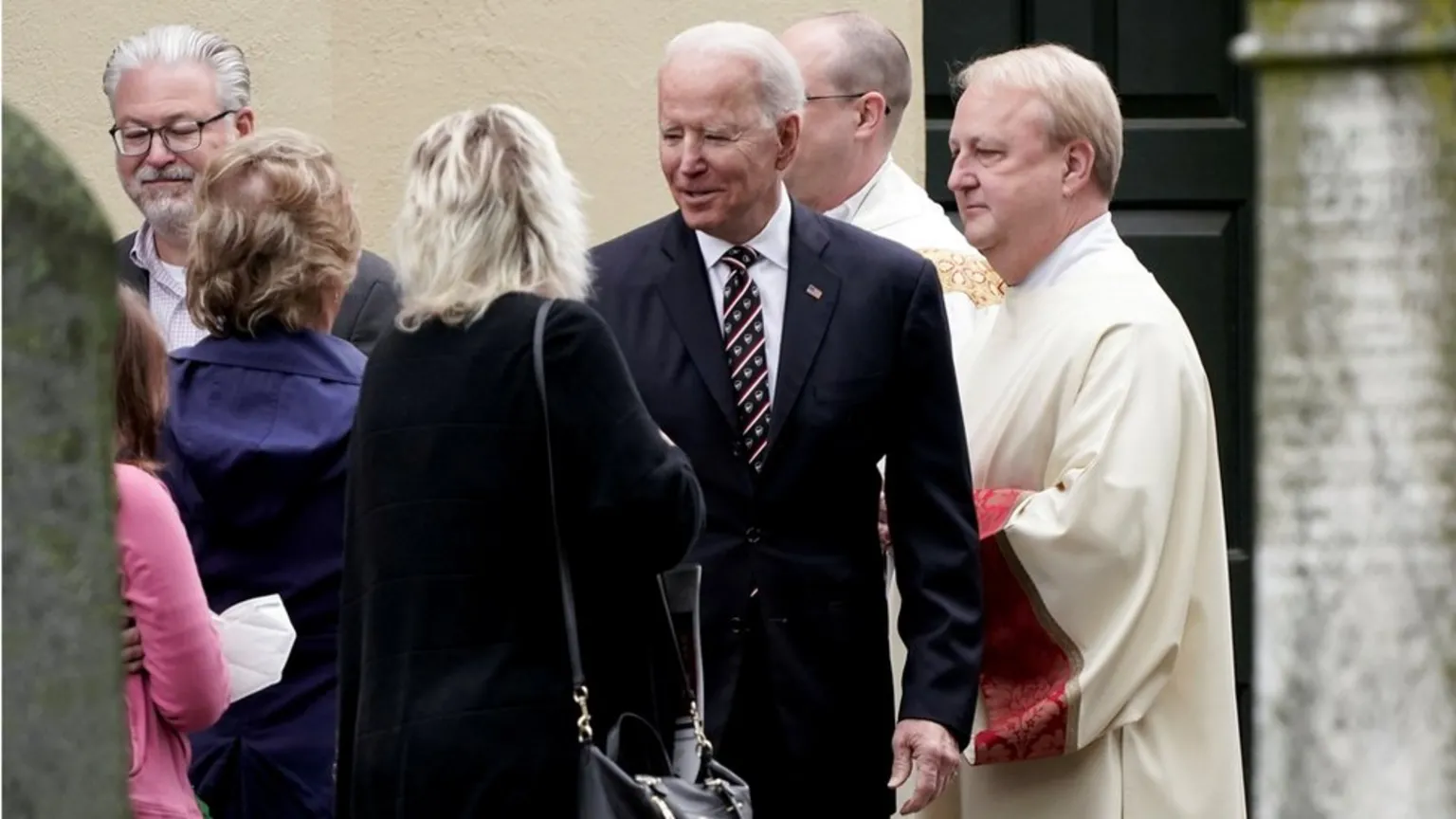
While the BBC monitors global events that affect people worldwide, it also tracks issues that are in the media spotlight in the United States. One of these examples is the current debate surrounding abortion rights, the complex relationship between church and state, and Joe Biden’s presidency as it relates to these topics.
Following the news, the BBC published an article by Anthony Zurcher, which will serve as an example of the BBC’s assessment of potential bias. This article, titled “Abortion rights: US Catholic bishops face a clash with Biden,” received a Liberal-leaning rating and an excellent, reliable accuracy score. This A.I. Bias Score has been assigned to the article based on the article’s tone, the author’s leanings, and diction regarding policies, politicians, and other political terms. As an example, the following can be used to inspect the author’s leanings in the article:
“… the decision to consider punishing perhaps the best-known American Catholic – a man who attends Mass weekly and regularly speaks of his faith – comes with considerable risk.”
The author, Anthony Zurcher, offers his insight toward the end of the article and uses phrases such as “best-known Catholic” and others that portray President Biden as a man of deep faith, who has somehow proven himself to be a devout Catholic. According to urcher scores a Liberal-Leaning score. This means he tends to favor the Left in his political opinions which is also evidenced from his Twitter profile:
Every time the Epstein saga seems to have fades from view, something brings it roaring back. This time is likely no different. https://t.co/xV1m1oKqSq
— Anthony Zurcher (@awzurcher) February 5, 2026
A Democratic win in conservative Tennessee could force Republicans to grapple more fully with the costs of sticking with Trump when he is not on the ballot. https://t.co/bcTzEHskeN
— Anthony Zurcher (@awzurcher) November 26, 2025
Despite his point of view toward the end of the article, the remainder of the article remains fairly impartial in its presentation of the events between the Vatican and President Biden. It is careful to mention the long and complex relationship between the two without inserting their own opinions. They allow each other’s statements against the other side to speak for themselves and simply serve as a conduit for the news, ensuring that those words are attributed to the specific individuals they discussed, rather than to the BBC. Additionally, this shows that news organizations can relay facts while allowing viewers to express their own opinions without compromising the impartiality of the reporting.
Another article we can analyze covers the shooting at Brown University in Providence, Rhode Island. The article is detailed and well supported by facts, but it demonstrates a left-leaning bias. Public officials such as Mayor Brett Smiley and the President of Brown University are quoted, which increases reliability. Increased gun control laws are supported by many liberals and democrats, and so this quote regarding how many mass shootings have occurred this year is important for determining the article’s bias.
“The attack on the Ivy League university brings the number of mass shootings to 389 in the US for this year, according to the Gun Violence Archive.”
The underlying message of the article, essentially that with stricter gun enforcement policies, there would be fewer mass shootings, comes through in this quote. While the information is factual, it is clear that the author exhibits a personal, left-leaning bias regarding the emotional subject. Many of BBC’s articles remain non-partisan and neutral, but this article is an example of how each piece must be examined individually to determine factual and non-biased reliability.
Analysis of BBC Opinion Articles
To fully understand political bias in the media, it’s important to distinguish between factual reporting and opinion pieces. While reporting aims to present facts and let readers form their own conclusions, opinion articles express personal viewpoints on current issues. Although the previous section examined factual reporting, this section turns to how bias surfaces through BBC’s selection and tone of opinion content.
One prominent example is the op-ed titled “We Must Stand Together for Immigrants, for Education, and for Justice.” The title itself signals a persuasive tone and a clear alignment with progressive values. It implies dissatisfaction with the political status quo, particularly under the Trump administration, and calls for collective action, suggesting that the author prioritizes persuasion over balanced information delivery.
In contrast, another opinion piece titled “Lessons from WWII to Avoid WWIII” employs more centrist language. Its title does not lean toward any political side and frames the issue around a shared desire to maintain peace. The subheading is neutral and avoids emotionally loaded phrasing, indicating that the piece may be less ideologically charged.
These examples show that while not all BBC opinion pieces are overtly liberal, the platform frequently publishes content that aligns with liberal media narratives. This consistent selection of opinion pieces can contribute to perceptions of systemic bias, particularly when the editorials predominantly support liberal views or causes.
This tendency underscores the importance of distinguishing subjective viewpoints from straight reporting, especially when interpreting the political leanings of any news organization.
Analysis of BBC Verify
BBC Verify is a section of their online publications dedicated to investigative journalism of recent issues, claims, videos, photographs, and all other situations reported on by BBC. The goal of Verify is to demonstrate the process of how BBC performs fact-checking and analysis. The transparency of their investigative process is intended to build reader trust and enhance reliability.
One recent BBC article investigates an unusual flight by US Air Force fighter jets off the coast of Venezuela. The article remains neutral, not taking a stance in favor of either Venezuelan President Nicholas Maduro’s claim that the flight was an attempt to create unrest within the country or United States President Donald Trump’s claim that the flight was routine and did not violate international airspace law. President Trump has also said the routine flights are due to concerns of national security and defense against drug trafficking for the US.
The article gains credibility through its extensive range of quotes and multiple sources, including U.S. defense officials, President Trump, Greg Bagwell, a former RAF air marshal and president of the Air and Space Power Association, and the U.S. Southern Command. It does not reach a definitive conclusion on whether or not the US flight series, which comes after a series of US strikes on ships in the Caribbean, was legal and/or ethical. It has an open ending, allowing readers to draw their own conclusions about the matter.
How to Evaluate Bias
Although Biasly rates BBC as Center, it’s important to remember that bias can vary from article to article. BBC also covers a liberal leaning country with objectivity on many issues, from regional to international. This complexity underscores the importance of examining each article individually. So, let’s learn how to evaluate media bias.
Recognizing media bias requires awareness and critical thinking. Often, readers trust news sources that affirm their existing beliefs—a psychological tendency known as confirmation bias. This makes it harder to identify slanted narratives or one-sided reporting.
To combat this, it’s essential to challenge your assumptions by consulting multiple viewpoints and verifying news through third-party analysis. Tools like Biasly’s media bias ratings allow readers to compare the same news story across the political spectrum.
Ultimately, bias isn’t always a matter of what is said—it’s also about what is left out, how topics are framed, and which stories are chosen for coverage. Learning to recognize these patterns can help readers make more informed decisions and develop greater media literacy.
To start comparing news outlets and gain a better understanding of bias, sign up for Biasly’s Media Bias & News Analytics Platform to see how stories vary between sources.
BBC Reliability Analysis
Is BBC Reliable?
BBC finds itself toward the middle of the spectrum, with neither high nor low accuracy. Its status as an international news outlet contributes to its average reputation for reliability. The Pew Research data shared earlier showed the % of people who trust certain new sources (such as the BBC) by political leanings. The BBC is trusted by most Left-leaning and a good % of all U.S. adults.
This suggests that BBC’s popularity among the people of England may not stem from the reliability of its political news coverage. Further investigation is needed to determine whether bias or other factors are affecting its accuracy. At Biasly, we specialize in evaluating not just bias but also the reliability of media outlets. Let’s explore the accuracy and trustworthiness of BBC.
How to Evaluate Reliability?
Reliability refers to how trustworthy or accurate a news source is. If we can’t trust what we read, then continuing to consume content from that outlet serves little purpose. So how do we evaluate a news outlet’s reliability?
There are several potential measures of reliability to consider when assessing whether a media source is reliable. Red flags of an unreliable article can include unsubstantiated claims, reliance on other unreliable sources, frequent use of opinionated language, and more. In contrast, hallmarks of a reliable source include:
- Absence of subjective language
- Citing credible sources (e.g., .gov, .edu, academic references)
- Verifiable facts and statistics from multiple outlets
- Use of primary sources, like interviews or transcripts
- Consistency with coverage across other platforms
Biasly’s reliability scores incorporate these elements in evaluating media outlets.
So How Does BBC Fare in Its Reliability?
The political reliability index developed by Biasly assesses both accuracy and trustworthiness. BBC currently holds Average Reliability Score, which is calculated as a weighted average of:
- Fact Analysis Score – Evaluates the accuracy of claims, facts, and evidence.
- Source Analysis Score – Assesses the number, diversity, and credibility of sources and quotes used.
BBC’s Source Analysis Score is Average at 36% Reliable. This suggests moderate trustworthiness in its sourcing practices. The score is AI-generated and considers quote length, frequency, diversity, and quality.
The Fact Analysis Score of BBC is Good at 77% Reliable. This further shows how well BBC supports its claims, addresses selection and omission bias, and presents verifiable evidence.
While BBC is reputable for factual reporting, infrequent lapses, such as unbalanced viewpoints or biased topic selection, can affect its reliability rating. These occasional missteps emphasize the importance of analyzing individual articles.
BBC’s Accuracy and Reliability
According to Biasly’s analysis, BBC maintains Average Reliability Score, but individual articles may vary significantly. Let’s dive into the details.
Political orientation plays a crucial role in how audiences perceive reliability. BBC has been accused of favoring a liberal narrative, potentially at the expense of factual reporting. However, they have acknowledged these claims and asserted their intention to address the bias issues to ensure reliability. To validate such claims, it’s essential to analyze whether the publication backs its assertions with sufficient evidence and diverse viewpoints.
Two common types of bias that affect factuality include:
- Selection Bias – Highlighting or omitting stories to fit a particular narrative.
- Omission Bias – Leaving out differing perspectives or relevant details to skew perception.
Biasly’s accuracy ratings use a scale from 1% (least accurate) to 100% (most accurate). Factors include the presence of supporting evidence, internal and external reliable sources, and balanced viewpoints.
For instance, Biasly gave The Siasat Daily a Center Bias and an Average Analyst Reliability Score. One Siasat article, titled “At least 11 more flotilla ships sailing for Gaza to break Israeli blockade,” showed an Average reliability rating for failing to include diverse viewpoints and for employing inflammatory language. This article provides no evidence supporting the Israeli perspective. No rationale is provided for continuing the blockade or for the capture of the flotilla ships. This absence creates a pro-Palestine bias, whether intended or not. In contrast, another piece from the outlet, titled “After a gap of 5 years, India, China to resume direct flight services this month,” comes after flights were suspended for multiple years due to poor India-China relations. The article refrains from editorial commentary, relying on quotations and fact-based language.
We will take a closer look at more examples like this below to provide a further investigation into the reliability of BBC’s articles. This will include its use of selection bias and omission bias, as well as the quality of its sources and the facts it relies on.
Analysis of Reliability in BBC’s Online News Articles
BBC aims to serve the people of the United Kingdom with objective, fact-based reporting. Its staff includes writers from varying ideological and geographic backgrounds, which can help balance coverage. However, readers should distinguish between news reporting and opinion pieces when evaluating credibility.
One example is the article titled “Ukraine talks ‘productive’ but more work needed, Rubio says.” Reporter Patrick Jackson covered Marco Rubio’s meeting in Florida with Rustem Umerov about negotiations to end the Russo-Ukrainian war. The article refrains from editorial commentary, sticking with fact-based language. In agreement with BBC’s Center rating, this piece illustrates factual neutrality.
Quality of Sources and Facts Used
BBC often uses credible sources from across the political spectrum. However, some articles skew in how comprehensively they present opposing viewpoints.
Consider the headline: “New US security strategy aligns with Russia’s vision, Moscow says.” While well-documented and supported by extensive quotations from political leaders, the article lacks insight into the potential downsides this bill could create for Ukraine. This absence creates a perception that the bill has no negatives, despite its benefits for Russia.
In contrast, the article “Russia hits Ukraine as US reports progress in talks with Kyiv” maintains a neutral tone. It features multiple world leaders and their views on the war, without any editorial slant. The author refrains from making any personal assessments. This allows readers to interpret differences in thought independently.
The article gains credibility through its 13 quotes from the peace meetings, 8 medium-length and 5 short. These extensive quotations strengthen reliability by providing full context and minimizing misrepresentation, thereby offering readers a more authentic and trustworthy account based on primary sources.
The article features more than fourteen sources, primarily from world leaders, along with data from Russia, Ukraine, and the United Nations. It encompasses internal diversity, as evidenced by the contrast between Ukrainian and Russian stances on the war.
- Ukrainian authorities
- Russian government officials
- Emmanuel Macron, French president
- Volodymyr Zelensky, Ukrainian president
- Sir Keir Starmer, UK Prime Minister
- Friedrich Merz, German Chancellor
- US and Ukrainian negotiators
- Ukraine’s energy ministry
- UN’s nuclear watchdog
- Steve Witkoff, US special envoy
- Rustem Umerov, secretary of Ukraine’s national security council
- Jared Kushner, US President Donald Trump’s son-in-law
- Vladimir Putin, Russian President
- Donald Trump, S. President
The BBC article employs a broad, relatively balanced mix of sources, attributing voices and claims to multiple sides and institutions rather than relying on a single ideological perspective. On the Ukrainian side, it cites Ukrainian authorities’ figures on drones/missiles and quotes President Volodymyr Zelensky on the strike’s military meaninglessness; on the Russian side, it includes the Kremlin’s stated justification that it targeted “military‑industrial sites” and infrastructure and reports the Kremlin’s position on negotiations (e.g., “no compromise” on a draft plan, readiness to keep meeting). It also draws on third-party and international sources—notably France’s President Emmanuel Macron and the UN’s nuclear watchdog regarding Zaporizhzhia—as well as US officials via a statement from US special envoy Steve Witkoff, and contextual references to Trump and the US-led talks. That mix helps distribute authority across government, international oversight, and diplomatic actors, rather than allowing any single camp to narrate the entire story.
In terms of how the author uses those sources, the piece generally follows a straight-news approach: it attributes claims clearly, uses neutral verbs (“said,” “posted,” “announced”), and frequently provides context or caveats when reporting contested positions (e.g., “Russia says…”, “widely seen as favourable… when an initial version leaked,” “has not been shared publicly”). Where the framing leans, it’s more in structure and evidentiary grounding than overt tone: Ukrainian casualty/attack details are supported with specific counts and named institutions, while Russian messaging appears mainly as official assertion (“Russia says it targeted…”), and skepticism about Moscow’s intentions is attributed to “Ukraine and its allies” rather than stated as the BBC’s conclusion. Overall, the sourcing is multi-voice and internationally anchored, and the author uses it to build a context-rich narrative more than to advocate for one side.
Selection and Omission Bias
BBC offers comprehensive coverage of world leaders, which is reasonable given the country’s political landscape and its involvement in international affairs. However, bias may still emerge through framing and story selection.
Below are two BBC articles that show the differences between bias and reliability, despite being from the same news source:
Article 1: Minimum wage fight: “There’s no recovery without raising it”
This article received a Medium Liberal analyst bias score and a “Fair” Reliability Score. This is because the issue covered is likely to attract the attention of those with Left-Leaning interests in these topics. The BBC was able to demonstrate one side- those who are fighting to raise the minimum wage, but did not depict any of the opinions, sources, or facts from the opposing side. This example of selection and omission bias is the reason why this article received a low score in this category. While the information presented may not be incorrect, it failed to present both sides of the discussion equally.
A specific example includes the demonstration of various groups, individuals, and politicians in favor of raising the minimum wage. However, only one person from the opposing side was discussed, “…Sean Kennedy, executive vice president of public affairs for the National Restaurant Association, which opposed the increase to $15 in the relief bill, including the expansion to tipped workers.” This presentation of the topic is unbalanced and even contains a few inaccuracies. The article discusses that corporations such as Walmart, Amazon, and Kroger “…have also set starting pay at that amount.” Walmart and Amazon still vary from state to state regarding their starting wages. While $15 per hour may be true in some States, it is not accurate across locations.
Article 2: Abortion Rights: US Catholic bishops face a clash with Biden
Despite receiving a Somewhat Liberal analyst bias score, this article received an “Excellent” Reliable score, in contrast to the previous example. So, what was the difference? What changed? This article effectively presented both sides of the conversation, from the concerns of religious officials to those of those around President Biden.
There is little to no omission bias in this article, which results in a higher accuracy rating. This once again demonstrates that bias does not always compromise a source’s reliability, as audiences can still obtain accurate information from this online publication. They have also done well to present both sides and to provide accurate quotations and claims, as in the case of Rev. Liam Cary, who stated that President Biden was “a Catholic president who is opposed to the teaching” of the Church. Having someone’s words presented without being distorted to push an agenda has helped this article accurately portray all sides of this controversial debate.
In opinion pieces, issues with factuality, sources, selection, and omission are frequently present. The articles we’ve covered so far reflect BBC’s Center views, but this is not detrimental to its reliability. Its nonpartisan story selection does not favor issues likely to concern liberals or conservatives, making it reasonable to assume it does not neglect issues in England that concern either group. Additionally, the contents of BBC’s article maintain accuracy and tend to cite evidence from numerous and varied sources.
So, is BBC Reliable?
Overall, BBC can be considered to be an outlet that is moderately reliable. It demonstrates a consistent goal of journalistic integrity and typically supports claims with sources and quotes. Occasional omissions and framing bias do appear, particularly on culturally sensitive or partisan issues.
As media literacy improves, readers can more easily detect issues with selection bias, omission bias, and factuality. To strengthen your ability to assess reliability across the political spectrum, use Biasly’s News Bias Checker to compare how multiple outlets report the same story.
This empowers you to consume more accurate, balanced, and dependable news
Funding and Ownership
Who Owns BBC?

Samir Shah, Chair, BBC – Source: Wikimedia
BBC operates under a nonprofit business model, overseen by a board of 11 members. Influential figures such as Muriel Grey, Tim Davie, Sir Damon Buffini, and Sir Robbie Gibb. As of March 4th, 2024, Samir Shah is the current chairman. BBC is a public corporation established by the Royal Charter.
The paper is committed to reporting on issues centered on the British public. This reinforces the paper’s public commitment to transparency in journalism, helping ensure that financial contributions do not bias editorial content. While some biases may still arise from staff perspectives or editorial practices, they are not readily attributable to external funding.
This nonprofit approach may provide added reassurance to readers seeking a news outlet that values British issues, independence, and editorial integrity.
Who Funds BBC?
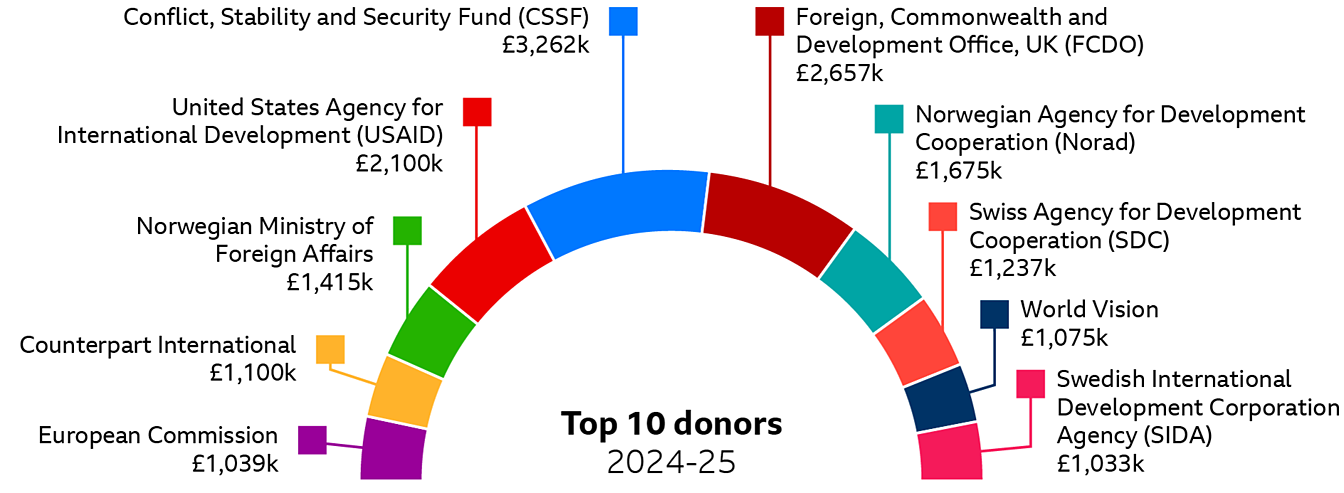
BBC is operated by a Royal Charter, and the British public funds it. The BBC board oversees it. Its main donors include multiple charities and corporations.
“Our significant donors include the UK Foreign, Commonwealth and Development Office, several UN agencies, the Bill and Melinda Gates Foundation, the Swedish International Development Cooperation Agency (Sida), the Norwegian Agency for Development Co-operation, and many others.”
Today, it solicits reader contributions and philanthropic support through its membership portal. Its funding now comes primarily from reader memberships, philanthropic foundations, corporate sponsorships, and advertising sales. BBC’s non-profit model allows it to stay non-partisan and report on issues with specificity regarding the British public.
Source: BBC
Additional Insights
News Source Comparison
When it comes to news site comparison, BBC is often evaluated alongside other regional and national outlets that lean center. Sources like The Financial Times or The Daily Record often present similar tones and editorial philosophies. While BBC exhibits a Center media bias, it differs from a strongly partisan source in that it often includes opposing viewpoints and strives to balance regional and international coverage.
This contrasts with more biased media outlets that consistently present one-sided narratives without providing factual counterpoints or evidence. Readers seeking balanced political coverage may compare BBC’s framing of issues with outlets rated as Lean Left or Lean Right on our Media Bias Chart, or explore other regional or international papers on our Similar Sources page.
Notable Contributors and Authors
BBC features a diverse range of reporters and columnists, many of whom are deeply familiar with England’s political and social climate. Reporters like Patrick Jackson, who frequently cover political controversies, such as the Russo-Ukrainian war, exemplify the site’s strength in local investigative journalism.
Other journalists focus on religion, environment, or elections, topics central to British communities. While some contributors may be perceived as leaning left or right in terms of tone or topic selection, their work is generally grounded in factual reporting. The presence of recurring bylines helps readers evaluate individual journalists’ bias over time.
Related Tools and Resource Pages
To better understand how BBC fits into the broader media landscape, we recommend exploring these helpful resources:
- Media Bias Chart: See where BBC ranks among hundreds of media outlets across the political spectrum.
- Political Bias Chart: Visualize political slants of news sources across various policy areas.
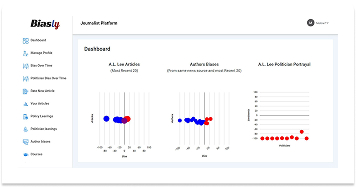
- Journalist Bias Analytics Platform: Explore how individual journalists contribute to bias within their publications.
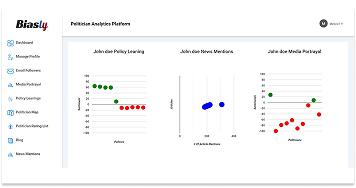
- Politician Bias Analytics Platform: Compare how politicians are framed differently by BBC and other outlets.
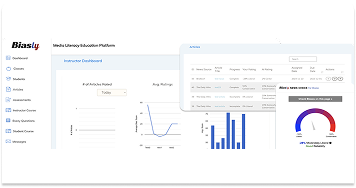
- Media Literacy Education Platform: Learn how to critically assess media sources, bias techniques, and news reliability.
Frequently Asked Questions
BBC is rated as Center based on Biasly’s media bias algorithm, which assesses sentiment, article framing, and policy favorability.
While BBC is not widely known for promoting fake news, some articles have been accused of misleading information, especially in political reporting. The Trump administration accused the BBC of fake news during its coverage of the January 6th events in Washington, DC. However, its factual reporting is generally sound.
Biasly uses a combination of AI sentiment analysis and human analyst review to assess tone, fact accuracy, source quality, and media bias indicators. Learn more on our Bias Meter page.
Generally, yes, though partisan framing and selective reporting can affect perceived reliability. It often includes diverse quotes of sufficient length to prove its claims.
Military Spending
| Date | Sentiment | Associated Article | Snippet |
|---|---|---|---|
| 08/25/2019 | 75% For | Trump Family Detentions Flores Agreement (link) | So, of course, the Trump administration is doing the opposite in a baldfaced |