




-50% Medium Left
Bias Meter
Extremely
Liberal
Very
Liberal
Somewhat Liberal
Center
Somewhat Conservative
Very
Conservative
Extremely
Conservative
-100%
Liberal
100%
Conservative
Biasly determines media bias ratings through a dual-layered approach combining artificial intelligence and analyst review. The platform’s proprietary bias detection engine, Bias Meter, evaluates sentiment, policy position alignment, and language framing across thousands of data points in news articles. Analysts then verify and interpret the AI’s findings, providing additional context where needed. Learn more about ratings
- Profile
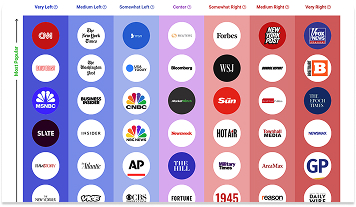
The Boston Globe on the media bias chart
- Bias Rating
-50% Medium Left
- Reliability75% Reliable GoodPolicy Leanings
-26% Somewhat Left
Extremely
LiberalVery
LiberalModerately
LiberalSomewhat Liberal
Center
Somewhat Conservative
Moderately
ConservativeVery
ConservativeExtremely
Conservative-100%
Liberal100%
Conservative
Average Reliability
*Our bias meter rating uses data science including sentiment analysis, machine learning and our proprietary algorithm for determining biases in news articles. Bias scores are on a scale of -100% to 100% with higher negative scores being more liberal and higher positive scores being more conservative and 0% being neutral. The rating is an independent analysis and is not affiliated nor sponsored by the news source or any other organization.
Politician Portrayal96% negative
Continue For Free
Create your free account to see the in-depth bias analytics and more.
By creating an account, you agree to our Terms and Privacy Policy, and subscribe to email updates.
Log In
Log in to your account to see the in-depth bias analytics and more.
Analysis of The Boston Globe Articles
Analysis of Bias in The Boston Globe Online Articles
To evaluate this, we can analyze select The Boston Globe articles through several of Biasly’s bias rating criteria: Tone, Tendency, Author, Diction, and Expediency Bias.
- Tone: The overall attitude conveyed by the article
- Diction: Specific word choices made by the writer
- Author: The background and social presence of the journalist
- Tendency: Patterns of bias in the writer’s broader body of work
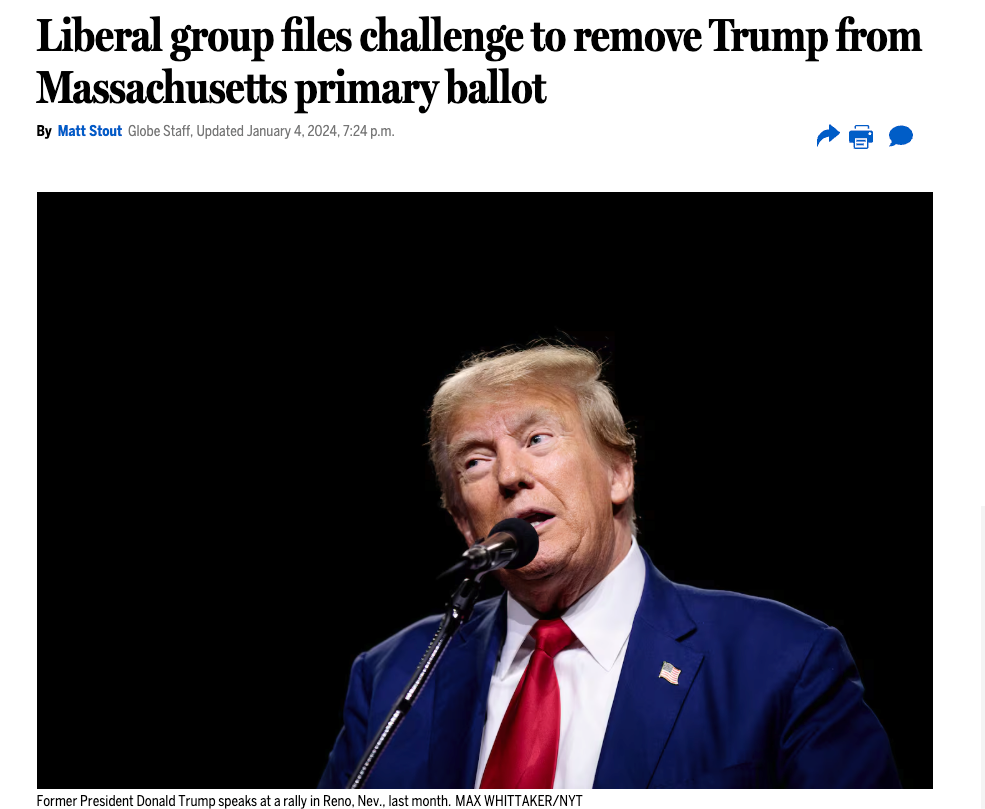
- Expediency Bias: Quick visual or textual indicators like headlines and photos that imply bias
Source: The Boston Globe
A good starting point is the article “Liberal group files challenge to remove Trump from Massachusetts primary ballot,” by Matt Stout. This is a straight news piece, and for the most part it simply presents the facts. It explains the 90-page objection filed by Free Speech For People and attorney Channon Liss-Riordan, gives context on how the Ballot Law Commission works, and includes Secretary of State William Galvin’s view on the ballot rules. Even so, small framing choices are worth noticing. The headline labels the challengers a “liberal group,” an ideological label, while the party opposing the challenge is described only by its name. The article also calls Liss-Riordan a “high-profile labor lawyer.” These are small things individually, but they add up across a publication’s body of work and contribute to its overall bias rating.
Expediency bias, the kind that hits you before you even read the article, is another area worth examining. The article “Trump remains on Mass. March 5 primary ballot after SJC ruling,” by Emma Platoff, is a good example. The subheadline says an attorney is “fighting to boot Trump from the ballot,” and “boot” is more charged than a neutral word like “remove.” The opening sentence says Trump will remain on the ballot “for now.” That is accurate, since an appeal was planned, but it still hits an instability.
Most of the factual content is solid, and the article does include a voice from Trump’s side: Marc Salinas, the attorney working for Trump and the state Republican Party. But Salinas is paraphrased, while Liss-Riordan gets a direct quote:
“Somehow, because this is Donald Trump, everyone seems to be bending over backwards”
Giving the more vivid, direct quote to one side while paraphrasing the other is a sourcing choice that can nudge a reader, even if unintentionally.
He joined the college Republicans and the Federalist Society — but also celebrated Trump’s defeat and helped advise the Democrats impeaching him.
Now, through DOGE, 28-year-old Jeremy Lewin is helping Trump dismantle USAID.
https://t.co/yclGwCnf8p with @sambrodey
— Emma Platoff (@emmaplatoff) April 2, 2025
Overall, The Boston Globe’s news coverage shows a moderate left-leaning tendency, most visible in headline wording, labeling, and framing choices in political reporting. The articles above also include opposing voices and largely accurate reporting. Readers who are aware of these patterns will be better equipped to read The Boston Globe critically and get real value from its otherwise strong journalism.
Analysis of The Boston Globe Opinion Articles
It’s worth drawing a clear line between news reporting and opinion content before diving into this section. News articles are supposed to be objective accounts of events. Opinion pieces, by contrast, are explicitly subjective; they’re the author’s take, not a neutral presentation of facts. The Boston Globe does a good job of keeping these separate on its website, with a clearly labeled opinion section. That said, the selection of opinion contributors and the tone of their pieces still tells you something about where a publication sits ideologically.
One of the Globe’s most prominent opinion writers is Joan Vennochi, whose pieces frequently illustrate the left-leaning character of the paper’s opinion section. Her article “Healy and Wu Feel the Squeeze over the Migrant Crisis” was rated Moderately Liberal by Biasly’s News Check Chrome Extension, and it’s easy to see why. Vennochi doesn’t pull punches when it comes to Republicans:
“Of course, in a presidential election year, Donald Trump doesn’t want anything to happen on the immigration front that Biden could categorize as a success. So Trump called upon his flunkies in Congress to scuttle a compromise immigration bill that a bipartisan Senate group was said to be finalizing. Subservient as ever to Trump. House Speaker Mike Johnson has made it clear that any immigration deal is dead on arrival. Meanwhile, House Republicans are also leading the charge on an impeachment effort against Homeland Security Secretary Alejandro Mayorkas for his handling of the border. It’s standard-issue Republican politics, for which Biden to date has no answer.”
Calling Republican lawmakers ‘flunkies’ and describing them as “subservient as ever to Trump” isn’t analysis; it’s simply rhetoric. There’s no attempt to engage with conservative arguments about border security on their own terms. Framing Republican inaction as “standard-issue Republican politics” dismisses an entire political position without addressing its substance. That’s a textbook example of omission bias in opinion writing.
Another opinion piece worth examining is “Politicians Look to God and the Bible to Do Their Heavy Lifting,” by Alex Beam, rated Moderately Liberal, which takes a similarly one-sided approach when discussing Speaker Mike Johnson’s religious views:
“It’s darkly comical that while Johnson claims that the Bible directly informs his worldview, he retains the right to edit the text as needed.”
Describing a politician’s religious worldview as “darkly comical” is editorial mockery, not political analysis. If a conservative columnist wrote something equally dismissive about a liberal politician’s religious or moral commitments, it would read as obviously biased. The same standard applies here. The absence of any equivalent treatment of liberal politicians’ use of religion or moral framing further highlights the one-directional nature of the critique.
Not every opinion piece in the Globe is this overt. But the pattern across its opinion section — heavy representation of progressive viewpoints, critical framing of conservative figures, limited engagement with right-leaning perspectives on their own terms — is consistent enough to reinforce the outlet’s Medium Left rating. Readers should keep this in mind and treat the Globe’s opinion section as a window into an ideological perspective rather than a balanced forum for political debate.
Analysis of Reliability in The Boston Globe’s Online News Articles
The Boston Globe’s 27 Pulitzer Prizes are a meaningful indicator of journalistic quality, and the paper’s straight news reporting generally reflects that reputation. Reliability and bias, though related, are distinct. A publication can be factually accurate while still framing stories in ways that systematically favor one side. Understanding both dimensions is key to reading the Globe critically.
A strong example of the Globe’s reliability in news reporting is the Lankford border security bill article discussed earlier. The piece draws on attributed statements from multiple officials, includes relevant procedural context, and avoids inserting the reporter’s personal opinion. It’s the kind of political journalism the Globe does well; it’s factual, well-sourced, and informative.
A more revealing test of reliability comes in “Biden to Start Campaign by Highlighting Trump as Threat to Democracy,” published by the Globe in January 2024. While the article covers a legitimate news story, Biden’s campaign kickoff strategy, it relies almost entirely on Democratic sources and their framing, with Republican perspectives presented only briefly and dismissively.
The article quotes Biden’s reelection campaign manager, Julie Chavez Rodriguez, making a sweeping claim about the stakes of the election:
“We are running a campaign like the fate of our democracy depends on it, because it does.”
It also quotes Biden’s campaign communications director, Michael Tyler, going even further:
“The leading candidate of a major party in the United States is running for president so that he can systematically dismantle and destroy our democracy.”
Both quotes are presented without a substantive Republican rebuttal. The only counterpoint offered comes buried in the middle of the article, where the Trump campaign is briefly noted to have argued that Biden and Democrats are themselves undermining democracy through legal proceedings. That response receives a single sentence, compared to multiple paragraphs dedicated to the Biden campaign’s framing.
The article also makes no attempt to present the perspective of Republican voters or officials who dispute the “threat to democracy” framing, despite that being one of the most contested claims in 2024 politics. Presenting one side’s campaign messaging at length while giving the opposing view minimal space clearly reflects omission bias from a left-leaning perspective for The Boston Globe. The article isn’t fabricating anything, but the selective use of sources consistently shapes the reader’s understanding in favor of the Democratic narrative.
Quality of Sources and Facts Used
The Boston Globe often draws from credible sources, but some articles are notably imbalanced in the viewpoints they represent. The opinion article “Is Nikki Haley Up to It, or Will She ‘Get Smoked’?,” by Joan Vennochi provides a useful case study in how sourcing choices can shape a narrative even when the number of sources appears reasonable on the surface.
Rather than presenting multiple perspectives equally, the article is structured around a central question: whether Nikki Haley is capable of becoming a serious alternative to Donald Trump in the Republican primary. The author uses recent campaign events, polling data, media coverage, and statements from political figures to evaluate Haley’s strengths and weaknesses. The tone is skeptical and analytical, with the author repeatedly questioning Haley’s ability to define a clear vision for voters while also highlighting the challenges she faces from both Trump and other Republican candidates.
The article contains 15 direct quotes in quotation marks, including partial quotes and quoted phrases. The shortest quote is 1 word long (“birdbrain”), while the longest quote is 15 words long (“The last time they were that relevant was the Civil War — which of course we know was caused by slavery.”). The average quote length is approximately 6 words. Most of the quotes come directly from identifiable public figures, including Chris Christie, Nikki Haley, Donald Trump, and Vivek Ramaswamy.
Because these quotes are attributed and often drawn from public remarks, they are generally reliable representations of what was said. Longer quotations tend to provide more context and reduce the risk of selective editing, while the shorter quotes in this article are often used to emphasize criticism or highlight controversial statements.
On linked sources, the article uses approximately 5 distinct referenced sources. These include two Suffolk University polls, reporting from The Washington Post, an article by Mark Leibovich in The Atlantic, and statements made by political candidates during campaign events. By ideological classification: Left = 2, Center = 2, Right = 1.
The Washington Post and The Atlantic are generally viewed as center-left publications, the Suffolk University polls and campaign event reporting function as relatively neutral informational sources, and the Republican candidates themselves provide right-leaning perspectives. While the article includes voices from multiple viewpoints, the supporting analysis relies more heavily on center and center-left media sources than on conservative sources.
- Joan Vennochi, Boston Globe columnist and article author (Center-Left)
- Nikki Haley, former South Carolina governor and Republican presidential candidate (Right)
- Chris Christie, former New Jersey governor and Republican presidential candidate (Center-Right)
- Donald Trump, former U.S. president and Republican presidential candidate (Right)
- Ron DeSantis, Florida governor and Republican presidential candidate (Right)
- Vivek Ramaswamy, Republican presidential candidate (Right)
- Suffolk University Poll, polling organization (Center)
- Suffolk University/Boston Globe/USA Today Poll, polling partnership (Center)
- The Washington Post, national newspaper (Center-Left)
- Hugh Hewitt, conservative radio host (Right)
- Mark Leibovich, staff writer and political journalist (Center-Left)
- The Atlantic, national magazine and publication (Center-Left)
- Benjamin Franklin, historical figure referenced through Christie’s remarks (Center/Historical)
- Joe Biden, then-President of the United States, referenced in polling discussion (Left)
The sourcing is somewhat unbalanced ideologically. Most of the individuals discussed or quoted are Republican candidates, but the author and center-left media sources such as The Washington Post and The Atlantic provide the interpretive framework. Right-leaning voices account for much of the quoted material, but center and center-left sources receive greater prominence because they help shape the narrative and analysis. In terms of quoted-word share, Christie receives a significant portion of the direct quotations, while Haley’s own voice is comparatively limited despite being the article’s main subject.
The author uses sources primarily to evaluate Haley’s campaign rather than simply report events. Christie’s remarks are used to introduce doubts about Haley’s readiness, while The Washington Post and The Atlantic are cited to reinforce concerns about her messaging and political identity. Skepticism is directed most strongly at Haley’s ability to explain her beliefs and distinguish herself from Trump.
Although Trump, DeSantis, and other Republicans are also criticized, the article consistently returns to questions about Haley’s weaknesses and the uncertainty surrounding her campaign. Based on the sourcing, framing, and overall tone, the author-bias rating would be left-leaning, as the column applies more scrutiny to Republican candidates while relying heavily on center-left media framing.
On factual accuracy, the article is generally consistent with reporting from other major news organizations during January 2024. Contemporary polling showed Trump holding substantial leads over Haley in both Iowa and New Hampshire, matching the figures cited in the article. Other outlets also reported Haley’s Civil War comments, Christie’s hot-mic remarks, and the growing attention on Haley as the leading alternative to Trump.
Most factual claims can be verified through independent reporting. The article’s strongest bias appears in its interpretation of events and candidate effectiveness rather than in its presentation of factual information, which largely aligns with reporting from other mainstream news sources.
Selection and Omission Bias
The Boston Globe selection and omission bias show up most clearly in how it covered the 2024 presidential race. The article “Biden to Soak Up Sunshine and Campaign Cash in Florida Trip,” rated Center by Biasly, is a good example of how omission can be subtle. The piece adequately covers the political dynamics of Biden’s Florida visit, but includes this line without explanation:
“The State Democratic Party has long been plagued by disorganization.”
That’s a significant claim about a major political party, and it gets no supporting evidence, no context, and no elaboration. A reader without prior knowledge of Florida Democratic Party history has no way to evaluate whether this is accurate, relevant, or fairly applied. It’s a framing choice that shapes perception without providing the full picture, which is exactly what omission bias looks like in practice.
The good news is that The Boston Globe’s factual accuracy is generally strong. The reliability concerns here are about framing and completeness, not fabrication. Readers who approach The Boston Globe with an awareness of its tendencies can still get real value from its reporting. However, it is important to actively seek out the perspectives that the paper doesn’t always provide on its own.
The Boston Globe Bias Overview
The Boston Globe was founded in 1872 by a group of Boston businessmen who saw the need for a publication that could serve as a voice for the city and its growing population. It is the oldest and largest daily newspaper in Boston, covering everything from local and national politics to business, sports, and culture. Today, the paper reaches an average of 9.3 million monthly visitors and has earned 27 Pulitzer Prizes, a record that reflects decades of impactful journalism. The Boston Globe also maintains a clearly labeled opinion section separate from its news reporting to distinguish between factual coverage and editorial commentary.
To understand The Boston Globe’s editorial orientation, it helps to understand the city it calls home. According to a 2014 study published by Pew Research by researchers Drew Desilver, Chris Tausanovitch, and Christopher Warshaw, Boston ranks among the top five most liberal major cities in the United States.
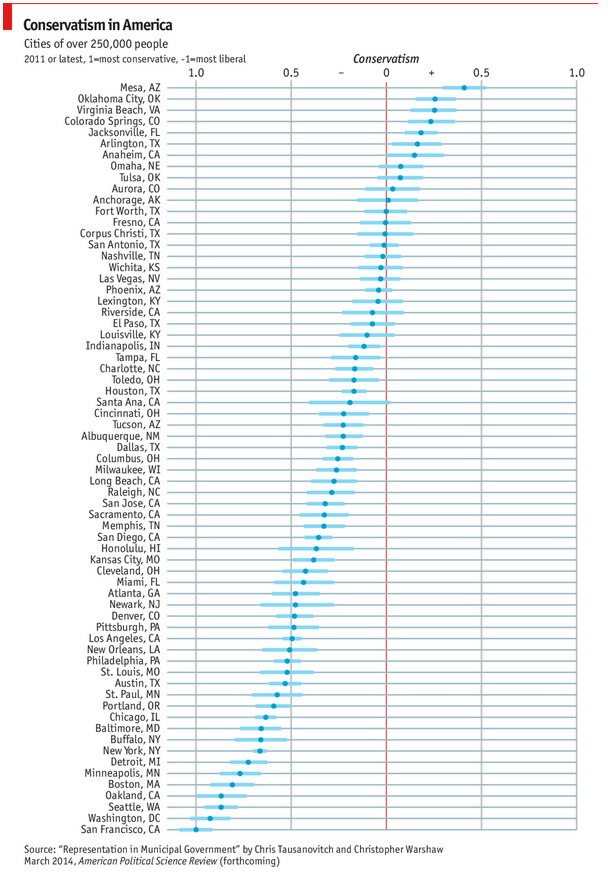
Source: Pew Research
That political environment matters when evaluating a local news outlet. The Boston Globe operates in a politically liberal metropolitan environment, which provides useful audience context but does not itself establish the publication’s political bias. As one of the most widely read news outlets in New England, The Boston Globe plays a meaningful role in shaping how readers understand political events at the local, state, and national levels. The question of whether, and to what degree, that coverage reflects a political bias is what this analysis aims to answer.
Is The Boston Globe Biased?
Based on Biasly’s evaluations, The Boston Globe is rated as Medium Left.
By examining content patterns and the broader context of media influence, we aim to offer a balanced perspective on The Boston Globe’s political bias—and contribute to the ongoing discussion about bias in the news.
How Does Biasly Rate News Sources?
Biasly uses proprietary algorithms and a team of analysts to provide comprehensive bias evaluations across thousands of news outlets. Over 200,000 articles from more than 3,200 sources have been analyzed to identify the most accurate and unbiased stories.
Biasly assigns each outlet three key scores:
- Reliability Score – Reflects factual accuracy
- AI Bias Score – Generated via natural language processing
- Analyst Bias Score – Assessed by human political analysts
These scores are based on seven core metrics: Tone, Tendency, Diction, Author Check, Selection/Omission, Expediency Bias, and Accuracy. These elements help analysts and algorithms evaluate the political attitude conveyed by each article.
Biasly’s Bias Meter ranges from -100% (most left) to +100% (most right), with 0% indicating neutrality. The system evaluates individual articles based on political terms, policies, figures, and sentiment to calculate precise bias ratings.
Is The Boston Globe Politically Biased?
The Boston Globe earns a Medium Left rating for its AI Bias Score and a Somewhat Left for its Analyst Bias Score. The Analyst Bias Score is generated by reviewers from liberal, moderate, and conservative backgrounds. This score reflects the assessments of reviewers from liberal, moderate, and conservative backgrounds who examined 15 Globe articles and identified consistent patterns favoring liberal politicians and policy positions, particularly around abortion rights, immigration, and coverage of Republican figures. The paper showed greater objectivity on topics like international affairs and some areas of local coverage.
What makes the Globe somewhat unusual is that it has been openly transparent about its institutional lean. Former editorial editor Renee Loth stated in the early 2000s:
“The Globe has a long and proud tradition of being a progressive institution, especially on social issues. We are pro-choice; we’re against the death penalty; we’re for gay rights. But if people read us carefully, they will find that on a whole series of other issues, we are not knee-jerk.”
That kind of institutional self-awareness is actually useful for readers. It’s easier to account for bias you know about, rather than bias that’s hidden. Even Jeff Jacoby, the Globe’s longtime conservative columnist, has made his own argument in the paper’s own pages:
“Better to have media bias than media that only pretend not to take sides. As long as news organizations don’t hide or deny their strong partisan leanings, viewers and readers can make up their own minds.”
The Boston Globe’s openness about its progressive institutional identity doesn’t eliminate the bias, but it does mean readers aren’t left guessing. That transparency, combined with the paper’s strong track record on factual accuracy, is part of why it still holds a good reliability rating from Biasly despite its left-of-center orientation.
How to Evaluate Bias
Although Biasly rates The Boston Globe as Medium Left, it’s important to remember that bias can vary from article to article. The Boston Globe also covers a liberal-leaning state with objectivity on many issues, from state legislation to social developments. This complexity underscores the importance of examining each article individually. So, let’s learn how to evaluate media bias.
Recognizing media bias requires awareness and critical thinking. Often, readers trust news sources that affirm their existing beliefs—a psychological tendency known as confirmation bias. This makes it harder to identify slanted narratives or one-sided reporting.
To address this, it’s essential to challenge your assumptions by consulting multiple perspectives and verifying information through third-party analysis. Tools like Biasly’s media bias ratings allow readers to compare the same news story across the political spectrum.
Ultimately, bias isn’t always a matter of what is said—it’s also about what is left out, how topics are framed, and which stories are chosen for coverage. Learning to recognize these patterns can help readers make more informed decisions and develop greater media literacy.
To start comparing news outlets and gain a better understanding of bias, sign up for Biasly’s Media Bias & News Analytics Platform to see how stories vary between sources.
The Boston Globe Reliability Overview
Is The Boston Globe Reliable?
The Boston Globe has a strong reputation for reliability, built over more than 150 years of journalism and cemented by 27 Pulitzer Prizes. According to Pew Research, 85% of Americans consider local journalism at least somewhat important to their communities, and the Globe’s longevity and readership suggest it has earned a significant degree of public trust. That said, trust and reliability aren’t always the same thing, and satisfaction with political news coverage, per Pew, tends to run lower than overall trust in local journalism.
Biasly’s analysis puts The Boston Globe’s overall reliability at 75%, or good. That score reflects a publication that generally supports its claims with evidence and credible sourcing, while acknowledging that framing choices and omissions, particularly in political coverage, can affect the completeness of the picture readers receive. Understanding both the strengths and the limitations of the Globe’s reliability is key to getting the most out of its reporting.
How to Evaluate Reliability?
Reliability refers to how trustworthy or accurate a news source is. If we can’t trust what we read, then continuing to consume content from that outlet serves little purpose. So how do we evaluate a news outlet’s reliability?
There are several key indicators of reliability to consider when assessing a media source. Red flags of an unreliable article can include wild, unsubstantiated claims, facts that depend on other unreliable sources, heavy use of opinionated language, and more. In contrast, hallmarks of a reliable source include:
- Absence of subjective language
- Citing credible sources (e.g., .gov, .edu, academic references)
- Verifiable facts and statistics from multiple outlets
- Use of primary sources, like interviews or transcripts
- Consistency with coverage across other platforms
Biasly’s reliability scores incorporate these elements in evaluating media outlets.
So How Does The Boston Globe Fare in Its Reliability?
The political reliability index developed by Biasly assesses both accuracy and trustworthiness. The Boston Globe currently holds Good Reliability Score, which is calculated as a weighted average of:
- Fact Analysis Score – Evaluates the accuracy of claims, facts, and evidence.
- Source Analysis Score – Assesses the number, diversity, and credibility of sources and quotes used.
The Boston Globe’s Source Analysis Score is Average at 33% Reliable. This suggests moderate trustworthiness in its sourcing practices. The score is AI-generated and considers quote length, frequency, diversity, and quality.
The Fact Analysis Score of The Boston Globe is Good at 86% Reliable. This further shows how well The Boston Globe supports its claims, addresses selection and omission bias, and presents verifiable evidence.
While The Boston Globe leans toward factual reporting, occasional lapses—such as unbalanced viewpoints or incomplete data—can affect its reliability rating. These nuances emphasize the importance of analyzing individual articles.
The Boston Globe’s Accuracy and Reliability
According to Biasly’s analysis, The Boston Globe maintains Good Reliability Score, but individual articles may vary significantly. Let’s dive into the details.
The Boston Globe holds a Good Reliability Score according to Biasly, though individual articles vary more than that single rating may suggest. The two most common reliability concerns in the Globe’s political coverage are:
- Selection Bias – choosing which stories and facts to highlight in ways that favor a particular narrative
- Omission Bias – leaving out perspectives or context that would complicate or contradict the dominant framing
The Biden anti-Trump campaign article is a strong example of both. Relying almost exclusively on Democratic sources and presenting the January 6 comparison without rebuttal reflects selection choices that systematically favor one side. The Nikki Haley opinion pieces show similar patterns; sources are diverse, but every quote chosen reinforces the same negative portrait of conservative figures.
On the other hand, the Globe’s international reporting and some of its domestic political coverage hold up well under scrutiny. The Pakistan-Iran piece and the Lankford border bill article both demonstrate that the paper is capable of strong, balanced, and reliable journalism when its reporters approach a story without an obvious ideological frame. The variability is real, and it means individual article ratings matter just as much as outlet-level scores.
Overall, The Boston Globe is a very reliable news source. It consistently supports its claims with sources and evidence, and its factual accuracy is generally strong. The main reliability concerns center on framing and omission rather than fabrication, which means readers who approach it critically can still get substantial value from its reporting.
So, is The Boston Globe Reliable?
Overall, The Boston Globe can be considered to be an outlet that is very reliable. It demonstrates a consistent goal of journalistic integrity and typically supports claims with sources and quotes. Occasional omissions and framing bias do appear, particularly on culturally sensitive or partisan issues.
As media literacy improves, readers can more easily detect issues with selection bias, omission bias, and factuality. To strengthen your ability to assess reliability across the political spectrum, use Biasly’s News Bias Checker to compare how multiple outlets report the same story.
This empowers you to consume more accurate, balanced, and dependable news.
The Boston Globe Editorial Patterns
The Boston Globe’s coverage of political topics often reflects a Medium Left bias, with consistent patterns in phrasing, source selection, and thematic focus that are Moderately Liberal. While the Globe maintains strong journalistic standards in many areas, its editorial tendencies are visible enough across its political reporting to merit close attention from readers who want a complete picture of the issues being covered.
Coverage of Liberal vs. Conservative Topics
The Boston Globe’s coverage of progressive causes, immigration reform, LGBTQ+ rights, abortion access, and criticism of Republican leadership tends to be sympathetic and detailed, with ample space given to advocates and Democratic officials to make their case. Coverage of conservative positions on the same issues is more likely to be framed through the lens of opposition or controversy rather than substantive policy argument.
This shows up in the language choices reporters make, even in relatively neutral articles. Words like “blasted,” “bragged,” and “unlikely to defy” show up in coverage of Trump and Republicans, framing their actions negatively without technically crossing into editorializing. Meanwhile, Democratic officials and their strategies tend to receive more neutral or favorable language, like “Biden fought to save” a deal rather than “pushed” or “maneuvered.” These aren’t dramatic differences, but they accumulate across hundreds of articles into a consistent directional tilt.
The globe’s opinion section makes this pattern even more explicit. Contributors like Joan Vennochi apply sharp, and often mocking criticism to conservative figures while showing considerably more sympathy for liberal ones. The absence of comparable critical commentary directed at Democratic politicians reinforces the one-directional nature of the editorial slant.
Policy and Issue Framing
Immigration is one of the clearest examples of the Globe’s policy framing tendencies. It consistently centers the humanitarian dimensions of immigration policy and Democratic reform proposals, while Republican border security arguments are more likely to be characterized as politically motivated or obstructionist rather than substantively engaged. The Venochi immigration piece calling Republican lawmakers ‘flunkies’ is an extreme version of this, but the tendency shows up in subtler ways across straight news coverage as well.
During the 2024 presidential race, the Globe’s framing consistently upholds the Democratic narrative. Examples include presenting a January 6 comparison to September 11 without an immediate rebuttal and quoting Governor Walz’s democracy versus extremism framing without a corresponding counterpoint.
Even in more neutral coverage, the Globe’s language choices tend to describe Democratic proposals as protecting or expanding rights, while Republican legislation is more often described as restricting or rolling back existing protections. This kind of framing, even when subtle, contributes to the Globe’s overall political lean.
Coverage and Relevance
The Boston Globe’s reporting touches on many of the central issues in the current conversation about media political bias, including how major newspapers cover immigration, elections, and partisan conflict. It serves as a useful case study for examining how source bias and news media operate in practice.
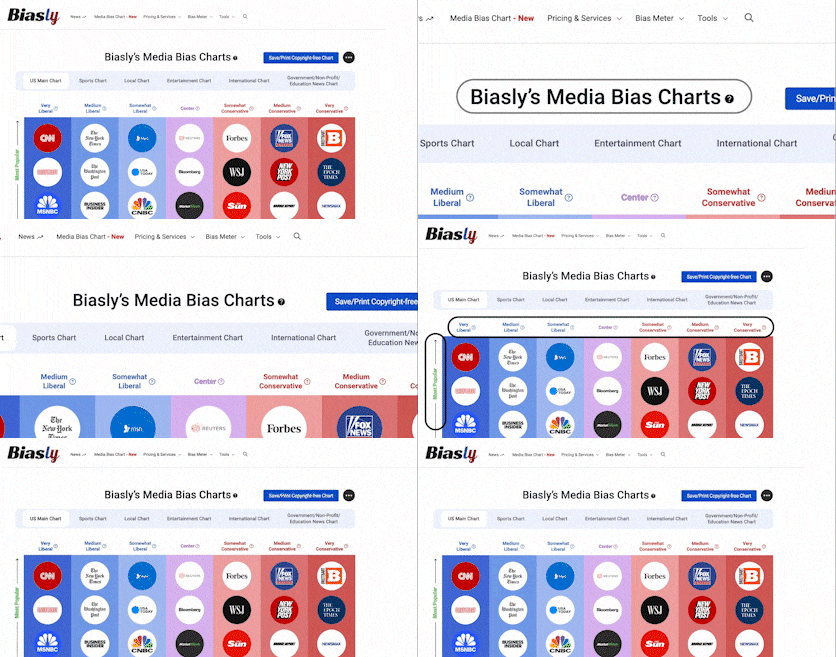
Readers who want to explore how The Boston Globe’s coverage compares to outlets with different political orientations can visit Biasly’s Media Bias Chart to see where it sits relative to other publications and analyze specific articles in real time.
Funding and Ownership
Who Owns The Boston Globe?

John W. Henry, publisher and owner of The Boston Globe – Source: Wikipedia
The Boston Globe is owned by John W. Henry, a businessman best known as the principal owner of the Boston Red Sox and Liverpool F.C. Henry purchased the Globe in 2013 from The New York Times for $70 million, making him only the third owner in the paper’s history. His acquisition also included other New England Media Group properties. Henry has maintained a business relationship with The New York Times since the purchase. This is notable because the Times itself carries a left-leaning bias rating from Biasly, a connection that may explain some of the institutional similarities between the two outlets.
Under Henry’s ownership, the Globe has maintained its editorial independence and continued to reflect the progressive orientation it has held for decades, one that its own editors have openly acknowledged. Henry has not been known to interfere directly in editorial decisions, but as with any privately owned outlet, the values and priorities of ownership are worth keeping in mind when evaluating editorial direction over time.
Who Funds The Boston Globe?
Unlike some regional outlets that have transitioned to nonprofit models, The Boston Globe operates under Boston Globe Media Partners, the holding company controlled by John W. Henry. Its revenue comes primarily from digital and print subscriptions, advertising sales, and commercial partnerships. The Globe has invested significantly in growing its digital subscriber base over the past decade as part of a broader shift away from print revenue dependence.
No direct evidence suggests that Henry dictates coverage, but the paper’s consistent progressive institutional identity reflects an editorial culture that both predates and continues under his ownership. Readers should factor this context into their assessment of the Globe’s political framing, particularly on issues where media ownership interests and editorial perspectives can quietly intersect.
Additional Insights
News Source Comparison
When it comes to comparing The Boston Globe to similar outlets, it falls into a category of well-established regional and national papers with a Medium Left orientation. Outlets like The Washington Post, The Los Angeles Times, and The Guardian are comparable. These publications share a similar editorial culture: clear institutional progressive values, strong investigative journalism, and a tendency to frame political coverage in ways that favor Democratic perspectives while applying more criticism to Republican ones.
What distinguishes the Globe from more overtly partisan outlets is that it does maintain a genuine journalistic standard in its straight news reporting, occasionally producing coverage that earned a Center rating. This places it closer to the center of the left-leaning media landscape than outlets that consistently push further left. Readers seeking a fuller picture of political events may benefit from comparing the Globe’s coverage to outlets rated as Center or Somewhat Conservative on Biasly’s Media Bias Chart to see how the same stories are framed from different ideological vantage points.
Notable Contributors and Authors
The Boston Globe features a range of reporters and columnists who bring distinct perspectives to the publication. On the news side, Matt Stout, Emma Platoff, and Samantha J. Gross report on politics. Their work is generally factual and well-sourced, and it includes voices from both parties. Subtle framing choices in headlines and labels still reflect the paper’s overall left lean. The Boston Globe also runs articles from other outlets, so it’s worth checking the byline before treating a piece as The Boston Globe’s own reporting.
On the opinion side, Joan Vennochi is one of The Boston Globe’s most prominent political columnists and one of its most clearly partisan voices. She has a track record of sharp criticism directed at Republican figures and conservative policy positions. Alex Beam, another The Boston Globe columnist, brings a similarly critical tone to some of his political writing.
By contrast, Jeff Jacoby is The Boston Globe’s longtime conservative columnist. He provides a right-of-center perspective within the publication’s opinion pages.
Related Tools and Resource Pages
To better understand how The Boston Globe fits into the broader media landscape, we recommend exploring these helpful resources:
- Media Bias Chart: See where The Boston Globe ranks among hundreds of media outlets across the political spectrum.
- Political Bias Chart: Visualize political slants of news sources across various policy areas.
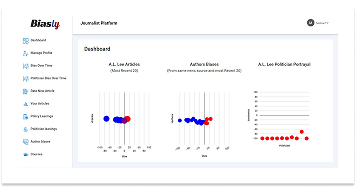
- Journalist Bias Analytics Platform: Explore how individual journalists contribute to bias within their publications.
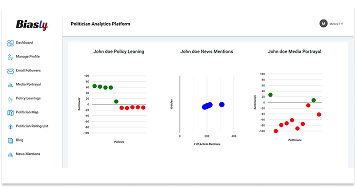
- Politician Bias Analytics Platform: Compare how politicians are framed differently by The Boston Globe and other outlets.
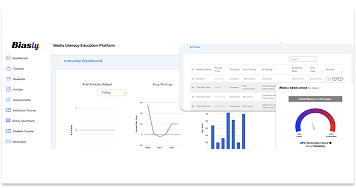
- Media Literacy Education Platform: Learn how to critically assess media sources, bias techniques, and news reliability.
Frequently Asked Questions
The Boston Globe is rated as Medium Left based on Biasly’s media bias algorithm, which assesses sentiment, article framing, and policy favorability.
While The Boston Globe is not widely known for promoting fake news, it has faced notable accusations of bias. In April 2016, The Boston Globe published a satirical front page on its Ideas/Opinion section imagining what a Trump presidency might look like, featuring fabricated headlines about mass deportations and a trade war with China. The piece was labeled as opinion and satire, but it drew significant backlash and accusations of anti-Trump bias from conservatives who argued it crossed an ethical line for a major newspaper.
That same year, Donald Trump publicly singled out The Boston Globe as an example of biased media coverage during his 2016 presidential campaign. Despite this history, The Boston Globe’s straight news reporting is generally considered reliable by Biasly, and it is not known for publishing deliberate misinformation.
Biasly uses a combination of AI sentiment analysis and human analyst review to assess tone, fact accuracy, source quality, and media bias indicators. Learn more on our Bias Meter page.
Generally, yes, though partisan framing and selective reporting can affect perceived reliability.
Military Spending
| Date | Sentiment | Associated Article | Snippet |
|---|---|---|---|
| 08/25/2019 | 75% For | Trump Family Detentions Flores Agreement (link) | So, of course, the Trump administration is doing the opposite in a baldfaced |