




2% Center
Bias Meter
Extremely
Liberal
Very
Liberal
Somewhat Liberal
Center
Somewhat Conservative
Very
Conservative
Extremely
Conservative
-100%
Liberal
100%
Conservative
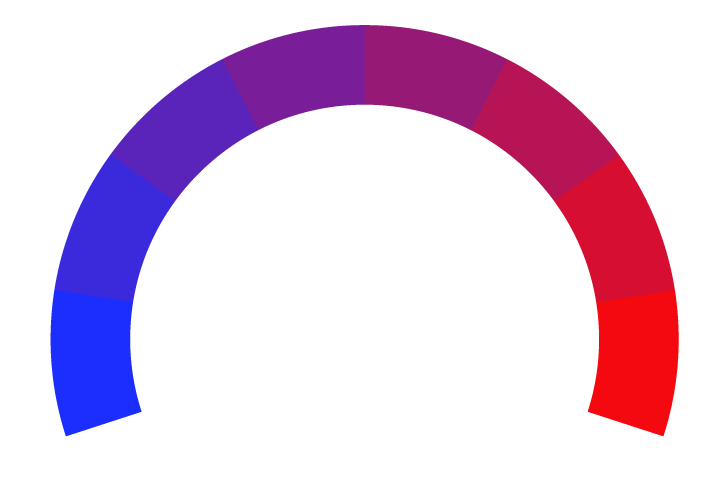
Biasly determines media bias ratings through a dual-layered approach combining artificial intelligence and analyst review. The platform’s proprietary bias detection engine, Bias Meter, evaluates sentiment, policy position alignment, and language framing across thousands of data points in news articles. Analysts then verify and interpret the AI’s findings, providing additional context where needed. Learn more about ratings
- Profile
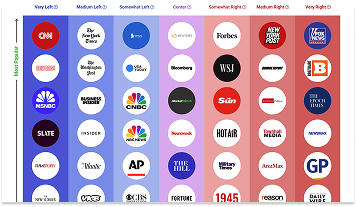
Ventura County Star on the media bias chart

- Bias Rating
2% Center
- Reliability65% Reliable AveragePolicy Leanings
10% Center
Extremely
LiberalVery
LiberalModerately
LiberalSomewhat Liberal
Center
Somewhat Conservative
Moderately
ConservativeVery
ConservativeExtremely
Conservative-100%
Liberal100%
Conservative
Average Reliability
*Our bias meter rating uses data science including sentiment analysis, machine learning and our proprietary algorithm for determining biases in news articles. Bias scores are on a scale of -100% to 100% with higher negative scores being more liberal and higher positive scores being more conservative and 0% being neutral. The rating is an independent analysis and is not affiliated nor sponsored by the news source or any other organization.
Politician Portrayal97% negative
Continue For Free
Create your free account to see the in-depth bias analytics and more.
By creating an account, you agree to our Terms and Privacy Policy, and subscribe to email updates.
Log In
Log in to your account to see the in-depth bias analytics and more.
Analysis of Ventura County Star Articles
Analysis of Bias in Ventura County Star Online Articles
One of the best ways to assess Ventura County Star media bias is to look at how the paper handles politically sensitive local stories. In routine local reporting, the outlet often stays close to facts, residents, public officials, and immediate community impact. That gives much of the coverage a moderate tone.
To evaluate this, we can analyze select Ventura County Star articles through several of Biasly’s bias rating criteria: Tone, Tendency, Author, Diction, and Expediency Bias.
- Tone: The overall attitude conveyed by the article
- Diction: Specific word choices made by the writer
- Author: The background and social presence of the journalist
- Tendency: Patterns of bias in the writer’s broader body of work
- Expediency Bias: Quick visual or textual indicators like headlines and photos that imply bias
Source: Ventura County Star
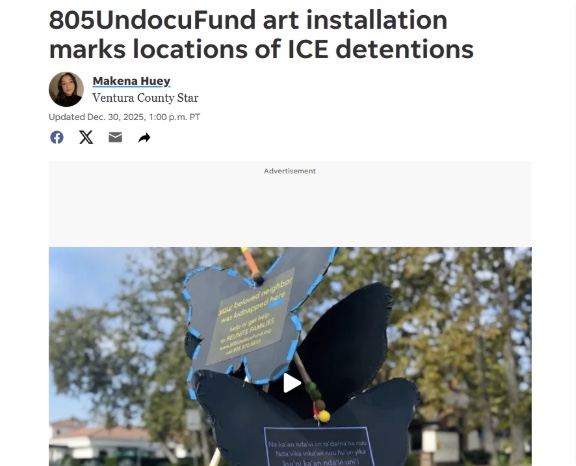
The article called “805UndocuFund art installation marks locations of ICE detentions” from Ventura County Star about volunteers creating art to honor detained neighbors demonstrates a clear effort to present the topic with minimal bias, largely through its structure, sourcing, and tone.
The headline immediately emphasizes “ICE detentions,” a politically charged term that frames the story around immigration enforcement. While “art installation” adds a neutral element, the phrasing still primes readers to view the topic through a serious, policy-driven lens. The image reinforces this by showing a symbolic art piece rather than a neutral scene. This visual centers emotion and community impact, which can shape the reader’s first impression toward empathy and concern rather than neutral observation.
The article focuses primarily on describing actions rather than arguing positions. It reports that volunteers created visual markers (such as butterfly art) at locations where residents were detained by federal immigration agents, aiming to raise awareness in the community. Instead of explicitly telling readers how to feel about immigration policy, the piece centers on what happened, who was involved, and why the participants say they acted.
“It was 5:30 a.m. Sept. 16. A man had just dropped his wife off at work, and he was on his way home to get his children ready for school when three Immigration and Customs Enforcement vehicles surrounded his car at Camarillo’s Constitution Park.”
Second, the article relies on attributed perspectives rather than the author’s opinion. Statements about the purpose of the art, such as honoring detained individuals or highlighting the frequency of detentions, are framed as the views of volunteers or organizers, not the journalist. This attribution helps maintain neutrality by positioning the reporter as a conduit for viewpoints rather than endorsing them.
Additionally, the tone is largely informational and non-inflammatory. The language avoids emotionally charged or loaded terms, instead sticking to straightforward descriptions like “mark locations” or “raise awareness.” Even though the subject of immigration enforcement can be politically divisive, the article does not use exaggerated rhetoric or moral judgments.
Another indicator of limited bias is the article’s narrow scope. It does not attempt to debate immigration policy broadly or include extensive commentary about federal agencies. By keeping the focus on a specific local initiative, it reduces the likelihood of ideological framing and instead functions more as a community-interest story.
The author, Makena Huey, is an award-winning journalist who focuses on investigative and watchdog pieces. On social media, she largely just reposts her articles.
Overall, the article shows a lack of strong bias through balanced reporting techniques. It presents facts, attributes opinions to sources, avoids charged language, and focuses on a localized event rather than a broader political argument.
However, not all Ventura County Star articles are free of bias. “Raid, arrest in Oxnard tied to ICE Glass House operation” has much more noticeable bias.
Coverage of the October 29, 2025, raid tends to highlight how residents reacted with fear, confusion, and disruption rather than leading with the operation’s legal purpose. Other reporting indicates that agents were serving warrants tied to alleged crimes against federal officers.
In similar coverage of the raid, protesters and local residents are frequently quoted expressing anger or concern, while federal agencies are often represented through brief statements or summaries.
Words like “raid,” “descend,” or descriptions of armored vehicles and tear gas can make the operation feel aggressive or militarized. While these details may be accurate, emphasizing them without equal focus on the legal justification (e.g., arrest warrants, prior alleged violence) can subtly shape reader interpretation.
The author, Tony Biasotti, showcases liberal bias on his X, formerly known as Twitter. He reposts tweets about anti-AI movements and wealth inequality.“Some posts reflect interest in social and economic issues, though this alone is not definitive evidence of ideological bias”.
He’s also an avid Golden State Warriors fan. He has reported extensively on the epidemic of sports gambling.
I’m with Draymond. Sure it’s important to fix the incentives but people will always look for ways to cheat. Gotta have some consequences. https://t.co/0R4qGbqa0Q
— Tony Biasotti (@TonyBiasotti) April 8, 2026
The article likely shows framing bias rather than explicit ideological bias. It leans toward a community-centered narrative (associated with liberal framing). However, it still reports verifiable facts about the raid and does not openly advocate a political position.
Analysis of Ventura County Star Opinion Articles
Opinion content is where the outlet’s ideological range becomes easier to see. Like many local papers, the Ventura County Star can host sharply opinionated guest commentary alongside more measured analysis.
One example is “Mathews: An obituary for the American Republic (1789-2025)”. The premise alone is highly charged. By calling the piece an “obituary” for the American republic, the writer turns political analysis into symbolic moral judgment.
The article places much of the blame for democratic decline on figures and movements associated with the political right. It offers little sustained engagement with counterarguments or with liberal institutional failures. That makes it a strong example of ideological commentary rather than balanced opinion writing.
By contrast, “Walters: New California school data project fulfills campaign promise Newsom made” is more measured. The column supports the value of the new system, but it does not treat Gov. Newsom as beyond criticism. It gives the piece more balance and analytical credibility.
This contrast matters for understanding Ventura County Star’s bias. The outlet’s opinion section can clearly publish center-left or liberal arguments, but not every opinion piece is equally ideological. Some columns are sharply moralized. Others are more analytical and policy-focused.
Analysis of Reliability in Ventura County Star’s Online News Articles
For readers asking is Ventura County Star reliable, the answer is generally yes — especially in straight-news reporting built around public records, official statements, and local developments. The paper’s reliability is usually stronger than its ideological framing.
A good example is “4 takeaways from Trump’s State of the Union Californians should know”. The article draws heavily from a primary source — the speech itself — which usually strengthens reliability. Even if the framing leans slightly, the factual base is still strong because readers are close to the original material.
Similarly, “What districts does Prop 50 impact? See Republicans at risk in 2026” appears to use multiple political voices and explain the policy stakes clearly. The article may still be shaped by the political motivations of its sources, but it remains grounded in verifiable electoral and legislative realities.
The bigger reliability risk for the Ventura County Star is usually not fabrication. It is selection and framing. Some stories may feel one-sided because they give more space to one community, one set of consequences, or one policy concern than to the strongest available counterargument.
Quality of Sources and Facts Used
Ventura County Star usually relies on credible local and institutional sources. In straight-news coverage, that often means public officials, court records, police statements, and direct accounts from people involved.
A good example is “U.S. Marine Osprey aircraft with 5 aboard crashes in Southern California just north of Mexico border”. It reads like a standard breaking-news report.
The story opens with the crash itself. It then adds verified details from military officials and background on the aircraft and location.
The article contains no direct quotes in quotation marks. Instead, it relies on paraphrased statements from military and emergency-response officials.
That is common in early breaking coverage. Reporters often work from briefings and public affairs updates rather than long interviews.
This approach has a tradeoff. It helps deliver facts quickly, but it gives readers less access to a source’s exact wording or tone.
The article also appears to use few or no explicit hyperlinks in the body. That means it depends mostly on direct attribution rather than linked documents or outside reporting.
In ideological terms, the source base is not meaningfully left, right, or center. It is overwhelmingly institutional.
Sources referenced in the article include:
- Kristopher Haugh, Public Affairs Officer, Naval Air Facility El Centro
- First Lt. Duane Kampa, U.S. Marine Corps spokesperson
- Imperial County Fire Department
- Naval Air Facility El Centro
- 3rd Marine Aircraft Wing
- Marine Aircraft Group 39
- Marine Corps Air Station Camp Pendleton
- U.S. Navy
- Naval Air Station Lemoore
That makes the article controlled, but still credible for immediate incident coverage. At this stage, outside analysts or competing perspectives are not usually the priority.
A second example is “Flock license reader flaw opened Ventura County’s data to non-state agencies”.
This article also uses strong sourcing. But it depends heavily on law enforcement officials across Ventura County.
That helps support the central claim that the data-access issue was widespread. It also means the story is shaped mostly by official voices.
That matters because official sources usually focus on audits, safeguards, compliance, and technical fixes. Those are important facts.
But they can also crowd out other angles. Privacy concerns, civil-liberties questions, and outside criticism may receive less attention.
So the article is reliable for understanding what happened. It is less complete when it comes to the broader public-interest debate.
Overall, The Ventura County Star tends to use solid and locally credible sources. Its main weakness is not bad sourcing. It is overreliance on official voices, which can narrow the reader’s view even when the facts themselves are accurate.
Selection and Omission Bias
Selection and omission bias in the Ventura County Star usually appears subtly. The paper often covers local or California-specific issues through the lens of community impact, institutional response, or public concern. That is normal for a regional newspaper, but it can still shape how readers interpret events.
A good example is “Law provides DA in Ventura County tool against gun violence”. The article explains a California law that expands access to Gun Violence Restraining Orders.
The source base appears to lean heavily toward supporters of the law, including lawmakers and prosecutors. Those voices stress prevention, public safety, and the potential to save lives. That gives the story a clear institutional and pro-policy frame.
What is less developed are the strongest objections. Concerns about wrongful petitions, due-process standards, misuse, or enforcement complications do not appear to receive equal weight. That does not make the article misleading, but it does make the framing more optimistic than fully contested.
This kind of omission is common in local policy coverage. The story works well as an informational piece. It works less well as a full debate over the policy’s tradeoffs.
Another example is “Voters in San Francisco and Los Angeles voice their disgust”. This is a column, not a straight news article, so stronger selection bias is expected.
The piece centers high-profile elections and recalls to argue that voters are rejecting progressive criminal-justice policies. Those examples are real, but they are also selectively powerful. They support a clear narrative while leaving out the broader context of why voters may have acted, what competing policy evidence exists, or whether the outcomes reflect lasting ideological change.
Overall, the Ventura County Star’s selection bias is usually not dramatic. It tends to come from the choice to foreground the most locally compelling angle — residents affected, officials responding, visible conflict — while leaving broader ideological or policy context underdeveloped.
Ventura County Star Bias Overview
Founded in 1926, Ventura County Star was established to provide local news to the residents of Ventura County, California. The idea came from a group of journalists who wanted to create a reliable source of news that would cover the important events and issues affecting the community.
Source: Pew Research
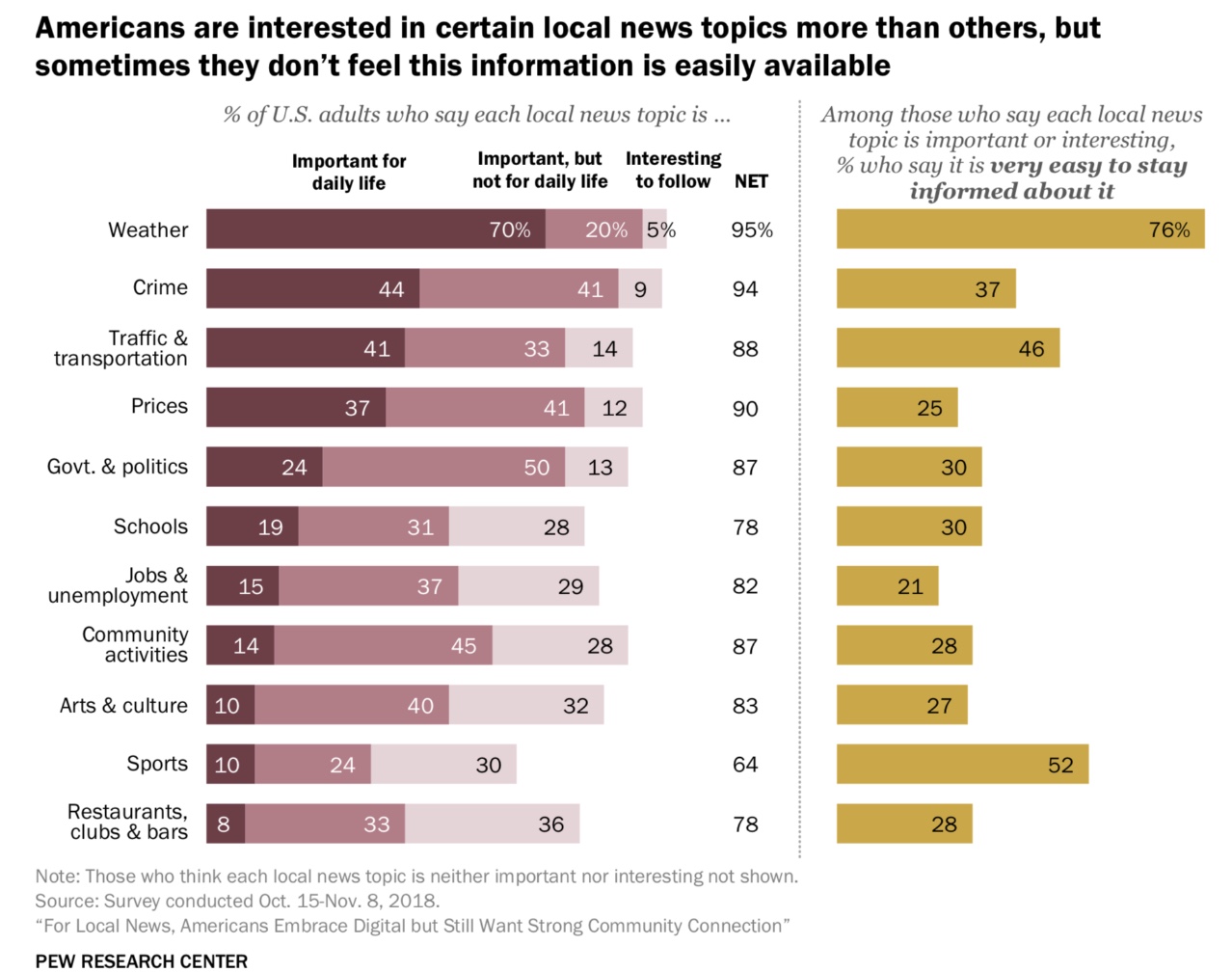
The chart above showcases how local news is still valued, even if it isn’t always accessible.
The publication focuses on issues that matter to the residents of Ventura County, providing timely updates and in-depth reporting. Based in Ventura, California, the Ventura County Star serves as an essential source of information for locals, keeping them informed about the latest developments in their area.
Is Ventura County Star Biased?
Based on Biasly’s evaluations, Ventura County Star is rated as Center.
By examining content patterns and the broader context of media influence, we aim to offer a balanced perspective on Ventura County Star’s political bias—and contribute to the ongoing discussion about bias in the news.
How Does Biasly Rate News Sources?
Biasly uses proprietary algorithms and a team of analysts to provide comprehensive bias evaluations across thousands of news outlets. Over 200,000 articles from more than 3,200 sources have been analyzed to identify the most accurate and unbiased stories.
Biasly assigns each outlet three key scores:
- Reliability Score – Reflects factual accuracy
- AI Bias Score – Generated via natural language processing
- Analyst Bias Score – Assessed by human political analysts
These scores are based on seven core metrics: Tone, Tendency, Diction, Author Check, Selection/Omission, Expediency Bias, and Accuracy. These elements help analysts and algorithms evaluate the political attitude conveyed by each article.
Biasly’s Bias Meter ranges from -100% (most left) to +100% (most right), with 0% indicating neutrality. The system evaluates individual articles based on political terms, policies, figures, and sentiment to calculate precise bias ratings.
Is Ventura County Star Politically Biased?
Ventura County Star earns a Center rating for its AI Bias Score and a Center for its Analyst Bias Score. The Analyst Bias Score is generated by reviewers from liberal, moderate, and conservative backgrounds. Analysts reviewed Ventura County Star articles and noted minimal bias.
How to Evaluate Bias
Although Biasly rates Ventura County Star as Center, it’s important to remember that bias can vary from article to article. Ventura County Star also covers a liberal-leaning state with objectivity on many issues, from state legislation to social developments. This complexity underscores the importance of examining each article individually. So, let’s learn how to evaluate media bias.
Recognizing media bias requires awareness and critical thinking. Often, readers trust news sources that affirm their existing beliefs—a psychological tendency known as confirmation bias. This makes it harder to identify slanted narratives or one-sided reporting.
To address this, it’s essential to challenge your assumptions by consulting multiple perspectives and verifying information through third-party analysis. Tools like Biasly’s media bias ratings allow readers to compare the same news story across the political spectrum.
Ultimately, bias isn’t always a matter of what is said—it’s also about what is left out, how topics are framed, and which stories are chosen for coverage. Learning to recognize these patterns can help readers make more informed decisions and develop greater media literacy.
To start comparing news outlets and gain a better understanding of bias, sign up for Biasly’s Media Bias & News Analytics Platform to see how stories vary between sources.
Ventura County Star Reliability Overview
Is Ventura County Star Reliable?
Ventura County Star finds itself toward the middle of the spectrum, with neither high nor low accuracy. Its status as a local news outlet contributes to its moderate reputation for reliability. According to Pew Research, Americans generally hold less politically polarized views of local news than of national media. In fact, 85% of adults regard local journalism as at least somewhat important to their community. However, another Pew study reports that satisfaction with local political news coverage remains disproportionately low relative to its airtime.
This suggests that Ventura County Star’s popularity among California residents may not stem from the reliability of its political news coverage. Further investigation is needed to determine whether bias or other factors are affecting its accuracy. At Biasly, we specialize in evaluating not just bias but also the reliability of media outlets. Let’s explore the accuracy and trustworthiness of Ventura County Star.
How to Evaluate Reliability?
Reliability refers to how trustworthy or accurate a news source is. If we can’t trust what we read, then continuing to consume content from that outlet serves little purpose. So how do we evaluate a news outlet’s reliability?
There are several key indicators of reliability to consider when assessing a media source. Red flags of an unreliable article can include wild, unsubstantiated claims, facts that depend on other unreliable sources, heavy use of opinionated language, and more. In contrast, hallmarks of a reliable source include:
- Absence of subjective language
- Citing credible sources (e.g., .gov, .edu, academic references)
- Verifiable facts and statistics from multiple outlets
- Use of primary sources, like interviews or transcripts
- Consistency with coverage across other platforms
Biasly’s reliability scores incorporate these elements in evaluating media outlets.
So How Does Ventura County Star Fare in Its Reliability?
The political reliability index developed by Biasly assesses both accuracy and trustworthiness. Ventura County Star currently holds Average Reliability Score, which is calculated as a weighted average of:
- Fact Analysis Score – Evaluates the accuracy of claims, facts, and evidence.
- Source Analysis Score – Assesses the number, diversity, and credibility of sources and quotes used.
Ventura County Star’s Source Analysis Score is Average at 65% Reliable. This suggests moderate trustworthiness in its sourcing practices. The score is AI-generated and considers quote length, frequency, diversity, and quality.
The Fact Analysis Score of Ventura County Star is Pending at N/A. This further shows how well Ventura County Star supports its claims, addresses selection and omission bias, and presents verifiable evidence.
While Ventura County Star leans toward factual reporting, occasional lapses—such as unbalanced viewpoints or incomplete data—can affect its reliability rating. These nuances emphasize the importance of analyzing individual articles.
Ventura County Star’s Accuracy and Reliability
According to Biasly’s analysis, Ventura County Star maintains Average Reliability Score, but individual articles may vary significantly. Let’s dive into the details.
Political orientation plays a crucial role in how audiences perceive reliability. Ventura County Star has been accused of favoring a liberal narrative, potentially at the expense of factual reporting. To validate such claims, it’s essential to analyze whether the publication backs its assertions with sufficient evidence and diverse viewpoints.
Two common types of bias that affect factuality include:
- Selection Bias – Highlighting or omitting stories to fit a particular narrative.
- Omission Bias – Leaving out differing perspectives or relevant details to skew perception.
Biasly’s accuracy ratings use a scale from 1% (least accurate) to 100% (most accurate). Factors include supporting evidence, reliable internal and external sources, and balanced viewpoints.
According to Biasly, the Richmond Times-Dispatch has average reliability. This means the newspaper is generally considered trustworthy and provides mostly factual reporting, but it is not among the most highly reliable news sources. An average rating suggests that while the information is usually accurate, there may be occasional issues with depth, balance, or consistency, so readers are encouraged to verify important information with additional sources.
The same evaluation also notes that the publication has a slight center bias, which can influence how stories are framed or which topics are emphasized. However, bias does not necessarily make a source unreliable; rather, it highlights the importance of reading multiple perspectives. Overall, the Richmond Times-Dispatch is viewed as a moderately reliable outlet that can be useful for news, especially at the local level, but should ideally be supplemented with other sources for a more complete understanding.
So, is Ventura County Star Reliable?
Overall, Ventura County Star can be considered an outlet that is moderately reliable. The site often prioritizes opinion-driven content, with variable sourcing and occasional editorial framing on sensitive international topics. While some claims are supported with evidence, consistency in sourcing and balance could be improved to meet stronger journalistic standards.
Ventura County Star Editorial Patterns
Ventura County Star’s coverage of political topics often reflects a Center bias, with consistent patterns in phrasing, source selection, and thematic focus that are Neutral. Ventura County Star does not show a strong bias in its editorial patterns.
Coverage of Liberal vs. Conservative Topics
Based on recent election results, Ventura County tends to lean towards supporting Democratic politicians and policies. This means Ventura County Star tends to cover liberal topics more often. This isn’t the result of “bias”, but rather meeting the demands of the readers.
However, Ventura County does have some notable conservative areas. Ventura County Star covers conservative topics occasionally. When conservative topics are covered, minimal bias is shown.
Policy and Issue Framing
Ventura County Star shows minimal bias when covering most issues. Abortion, government regulation, and the Trump impeachment are some of the issues that Ventura County Star covers with minimal bias. Abortion is not covered extensively by Ventura County Star, since California has relatively strong abortion protections compared to many states, meaning this issue doesn’t come up as much compared to other states. The Trump impeachment was covered extensively from 2019 to 2021, and readers were able to learn about the impeachment with minimal bias.
However, other issues are covered with bias. Ventura County Star shows left-leaning bias when covering labor unions and taxes. Neither of these issues gets consistent coverage from Ventura County Star. Taxes not getting coverage from Ventura County Star is surprising, since taxation is generally a hot-button issue in California. Meanwhile, LGBTQ rights are covered with right-leaning bias. California is known for having more protections for LGBTQ people than most states. This issue isn’t covered often by Ventura County Star, but the bias should still be noted.
Coverage and Relevance
Ventura County Star’s reporting often touches on key issues central to California politics. As such, it serves as a compelling case study for examining source bias and news media bias in state-focused reporting.
Readers who wish to further explore how Ventura County Star compares with other publications can visit Biasly’s Media Bias Chart to analyze tone and word choice in real time.
Funding and Ownership
Who Owns Ventura County Star?

Gannett Publishing Headquarters, Source: Wikimedia Commons
Ventura County Star is owned by Gannett Publishing, the largest newspaper publisher in the United States. They are part of the larger USA Today Network, which is also owned by Gannett. Ventura County Star will often republish content from other USA Today publications. However, this republished content is generally still edited by Ventura County Star staff members.
Who Funds Ventura County Star?
Ventura County Star still primarily relies on subscriptions. They have both digital and print subscriptions. Most articles on Ventura County Star are paywalled, although there are plenty of articles that can be viewed by non-members. Most of their advertising is focused on local advertising in California on billboards and posters. Gannett Publishing gives them an unknown amount of financial support.
Additional Insights
News Source Comparison
When it comes to news source comparison, Ventura County Star is often evaluated alongside other regional and that lean center. Sources like ABC 7 NewYork, The San Diego Union-Tribune, or Mass Live often present similar tones and editorial philosophies. While Ventura County Star maintains a Center media bias, it differs from strongly partisan sources in that it occasionally includes opposing viewpoints and strives for regional coverage balance.
This contrasts with more biased media outlets that present consistently one-sided narratives without factual counterpoints. Readers seeking balanced political coverage may compare Ventura County Star’s framing of issues with outlets rated as Center or Lean Right on our Media Bias Chart, or explore other regional papers on our Similar Sources page.
Notable Contributors and Authors
Ventura County Star features a diverse range of reporters and columnists, many of whom are deeply familiar with California’s political and social climate.
Cheri Carlson is one of Ventura County Star’s most active reporters. She got her first job in journalism in 2001 as a senior reporter for McClatchy Media. She was hired by Ventura County Star in 2004. She focuses on investigative pieces, but has also expanded into data journalism. Her data journalism article about juveniles in prison won multiple awards.
Ernesto Centeno Araujo is the breaking news reporter for Ventura County Star. Araujo worked several jobs outside of journalism, like at Barnes & Noble and his family’s masonry company. He self-published articles while he was working these jobs. Ventura County Star hired him in 2024 as the breaking news reporter. Araujo covers breaking news as it happens, often making fast-paced updates to his work.
Related Tools and Resource Pages
To better understand how Ventura County Star fits into the broader media landscape, we recommend exploring these helpful resources:
- Media Bias Chart: See where Ventura County Star ranks among hundreds of media outlets across the political spectrum.
- Political Bias Chart: Visualize political slants of news sources across various policy areas.
- Journalist Bias Analytics Platform: Explore how individual journalists contribute to bias within their publications.
- Politician Bias Analytics Platform: Compare how politicians are framed differently by Ventura County Star and other outlets.
- Media Literacy Education Platform: Learn how to critically assess media sources, bias techniques, and news reliability.
Frequently Asked Questions
Ventura County Star is rated as Center based on Biasly’s media bias algorithm, which assesses sentiment, article framing, and policy favorability.
While Ventura County Star is not widely known for promoting fake news, some articles have shown selection and omission bias, especially in political reporting. Its factual reporting is generally sound. Ventura County Star, along with other publications, faced public backlash and were accused by some community members of being “shameful” after it filed a lawsuit to obtain autopsy records of victims from the Borderline mass shooting. Critics argued this was a violation of the families’ privacy and “caused extreme anguish,” while the paper maintained it was investigating the police response to the incident. The Ventura County Board of Supervisors passed a bill that limits access to autopsies related to mass shootings.
Biasly uses a combination of AI sentiment analysis and human analyst review to assess tone, fact accuracy, source quality, and media bias indicators. Learn more on our Bias Meter page.
Generally, yes, though partisan framing and selective reporting can affect perceived reliability.
Military Spending
| Date | Sentiment | Associated Article | Snippet |
|---|---|---|---|
| 08/25/2019 | 75% For | Trump Family Detentions Flores Agreement (link) | So, of course, the Trump administration is doing the opposite in a baldfaced |