









How News Sources Portray Covid-19 Vaccine Mandate Policy
This chart shows how major news sources across the ideological spectrum frame covid-19 vaccine mandate policy, from left to right-leaning perspectives.










The Covid-19 Pandemic has been a point of contention with respect to the government’s handling of the situation. At the center of this dispute is whether or not vaccines and mandates are effective, and whether or not they can be imposed by the government enforcement power. Partisan affiliation remains one of the widest differences in vaccination status: 86% of Democrats and independents who lean toward the Democratic Party have received at least one dose of a COVID-19 vaccine, compared with 60% of Republicans and Republican leaners. Despite this schism between political parties, 73% of Americans say the statement “vaccines are the best way to protect Americans from COVID-19” accurately describes their beliefs. A KFF survey in July 2021 found a partisan divide on whether the federal government should recommend employers mandate vaccines among employees. 75% of Democrats were in favor, while 67% of Republicans were opposed.
As Covid-19 has become a political issue, it comes as no surprise that the Representatives of the Democrat and Republican parties share the same views as their supporters when it comes to the vaccine.
Democratic Stance on COVID-19 Vaccine Mandate
Democrats generally supported COVID-19 vaccine mandates as a public-health measure intended to reduce transmission, prevent severe illness, and protect vulnerable populations. That support was reflected in public opinion data: 75% of Democrats said they favored the federal government recommending that employers require vaccines among employees, according to the KFF COVID-19 Vaccine Monitor: July 2021. Vaccination rates also showed stronger Democratic alignment with the policy, with 86% of Democrats and Democratic-leaning independents reporting that they had received at least one dose, according to Pew Research Center.
Throughout the pandemic, Democratic leaders tended to support vaccine requirements in settings such as federal employment, healthcare systems, schools, and large workplaces. Their argument was that vaccination was not only a matter of personal health, but also part of a collective effort to reduce hospital strain, protect high-risk populations, and allow economic and social life to recover more safely. In this framework, temporary government intervention during a public-health emergency was viewed as both justified and necessary.
This position aligned with a broader Democratic view that government has a legitimate role in responding to large-scale crises when individual decisions can affect community safety. In practice, Democrats treated vaccine mandates as a temporary but lawful emergency-response tool grounded in public-health guidance, institutional trust, and majority support within the party.
Politicians Who Support Covid-19 Vaccine Mandate
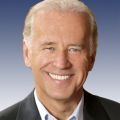
Joe Biden
“We now have immunizations for all three major seasonal respiratory virusesCOVID-19, flu, and RSV. I encourage all Americans to stay up-to-date on their vaccines.”

Kamala Harris
“The COVID-19 vaccine requirements are already working as intended–getting people back to work and strengthening our economy. Let’s keep going.”
Republican Stance on COVID-19 Vaccine Mandate
Republicans generally opposed COVID-19 vaccine mandates, even though many Republicans did not categorically oppose the vaccines themselves. Their position focused primarily on individual liberty, bodily autonomy, and resistance to federal overreach. This divide appeared clearly in public opinion data: 67% of Republicans said they opposed the federal government recommending that employers mandate vaccines, according to the KFF COVID-19 Vaccine Monitor: July 2021. Vaccination behavior also reflected greater skepticism within the party, with 60% of Republicans and Republican-leaning independents reporting that they had received at least one dose, according to Pew Research Center.
Rather than opposing vaccination in every case, many Republicans framed the issue around the right of individuals to decide for themselves based on personal risk, medical judgment, and constitutional principle. Their argument was that the government should not compel private citizens or broad segments of the workforce to undergo a medical procedure as a condition of employment or participation in public life. In that sense, the Republican objection was directed more toward coercion than toward vaccine availability itself.
This stance fit within a broader Republican preference for limited government and decentralized authority, particularly during emergencies. Opposition to mandates became a way to defend personal agency and challenge the expansion of federal power, making the issue a symbol of larger constitutional and ideological concerns beyond the vaccine itself.
Politicians Who Oppose Covid-19 Vaccine Mandate
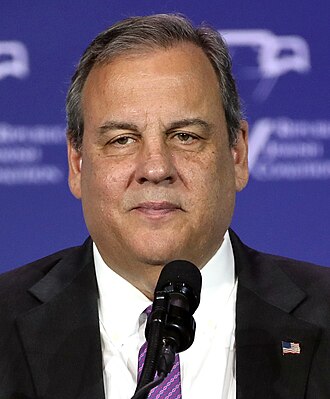
Chris Christie
“Working for the government and ordering government workers to have a mandate, there is one thing, extending that to two-thirds of all the jobs and make it either get vaccinated or not, it’s also contradictory logically ”
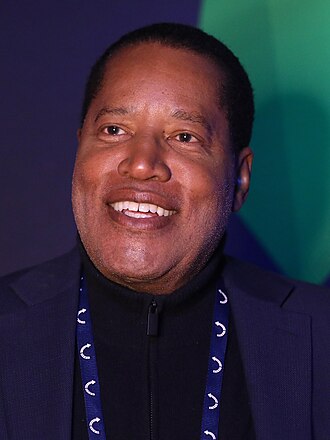
Larry Elder
“I dont believe the science suggests that young people should be vaccinated. I dont believe the science suggests that young people should have to wear masks at school.”
Political Implications
The politics of COVID-19 vaccine mandates revealed one of the clearest partisan divides of the pandemic era. The split between 75% Democratic support for employer vaccine mandates and 67% Republican opposition, as measured by KFF, showed that the issue had become about more than public health alone. It evolved into a broader debate over the role of government, the meaning of personal liberty, and the legitimacy of emergency powers in times of crisis.
Vaccination behavior itself also reflected that divide. According to Pew Research Center, 86% of Democrats had received at least one vaccine dose compared with 60% of Republicans, reinforcing how closely public-health behavior had become tied to party identity. As discussed in Pew’s broader analysis of COVID restrictions and public opinion, partisan affiliation remained one of the widest differences in vaccination status and attitudes toward pandemic-related rules, including mandates and restrictions on daily life (Pew Research Center, September 2021).
As a result, vaccine mandates influenced campaign messaging, legal challenges, media framing, and public trust in institutions. The issue became a proxy for deeper ideological disagreements over expertise, federal authority, and the balance between individual rights and collective safety.
What the Future Holds
Although COVID-19 vaccine mandates are no longer as politically central as they were at the height of the pandemic, the debate surrounding them is likely to have lasting effects. Future public-health emergencies may revive many of the same questions about executive authority, workplace regulation, school requirements, and the extent to which governments can intervene in private decision-making for the sake of public welfare. The legal and policy disputes that emerged during COVID-19 — including challenges to federal workplace rules and differing state responses — will likely shape how future emergency measures are designed and defended (Congressional Research Service).
For Democrats, the mandate debate is likely to reinforce support for targeted emergency powers and science-based interventions when public-health conditions warrant them. For Republicans, it is likely to reinforce skepticism toward broad federal mandates and strengthen arguments for voluntary compliance, decentralized authority, and stronger protections for individual choice. Public opinion research also suggests that pandemic-era attitudes toward vaccines, boosters, and institutional trust may continue to diverge by party over time, shaping future health-policy debates beyond COVID-19 itself (Pew Research Center, 2022).
