









How News Sources Portray Shelter-in-place Mandate Policy
This chart shows how major news sources across the ideological spectrum frame shelter-in-place mandate policy, from left to right-leaning perspectives.
















Shelter-in-place mandates refer to government orders for citizens to remain in their homes during the 2020 coronavirus pandemic. Beginning in late 2019 and continuing through 2025, a deadly coronavirus originated from China and spread around the world. From 2019 to August 2024, when many nations stopped publishing regular statistics on the pandemic, approximately 705 million people contracted the virus, resulting in over 7 million deaths.
Given the highly contagious nature of the virus, public health officials advocated for a shelter-in-place policy or similar initiatives to contain the spread. These shelter-in-place guidelines strictly required citizens to remain in their homes. They differed from stay at home orders, which allowed for essential activities, and safer at home policies, which allowed non-essential businesses to remain open.
The severity of coronavirus policies varied. In some cases, public gatherings were allowed if the total number of participants was capped. In other cases, particularly in the virus’ origin country of China, lockdowns were much more severe, with very restricted movement of citizens.
In the United States, the coronavirus pandemic became highly polarized, with divisions over shelter-in-place mandates, vaccine requirements, and even COVID-19 stimulus relief.
The Democratic Response on Shelter-in-Place Mandates
Democrats strongly favored the shelter-in-place mandates. Democratic leaders prioritized the advice of public health officials, arguing that lockdown orders were necessary to stop the spread of the virus and prevent more Americans from dying. Support for shelter-in-place mandates was nearly universal among Democrats, at 94 percent, in an April 2020 KFF tracking poll.
In 2024, Harvard University polled Americans’ views on four coronavirus policies: mask requirements in stores and businesses, vaccination requirements for healthcare workers, indoor dining closures, and K-12 public school closures. In all, 42 percent of Americans responded that all four policies were a good idea, and this included 71 percent of Democrats.
Politicians Who Support Shelter-in-place Mandate
71% of Democrats responded that all four policies were a good idea, and this included.
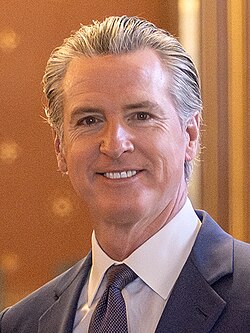
Gavin Newsom
“A state as large as ours, a nation state, is many parts. But at the end of the day, we're one body. There's a mutuality and there's a recognition of our interdependence that requires of this moment, that we direct a statewide order for people to stay at home. ... I can assure you, home isolation is not my preferred choice. I know it's not yours, but it's a necessary one.”
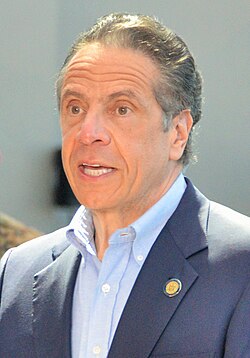
Andrew Cuomo
“We know the most effective way to reduce the spread of this virus is through social distancing and density reduction measures. ... So we're going to put out an Executive Order today. New York State on pause. Policies that assure uniform safety for everyone. ... Why? Because what I do will affect you and what you do will affect me. Talk about community and interconnection and interdependence. This is the very realistic embodiment of that.”
The Republican Response on Shelter-in-Place Mandates
The Republican position on shelter-in-place mandates shifted over time. In the pandemic’s early days, Americans were in strong agreement that lockdowns were necessary to protect people. In an April 2020 KFF tracking poll, 80 percent of Americans agreed with that viewpoint, including 61 percent of Republicans. However, as the pandemic persisted, the GOP became significantly less amicable to lockdown policies.
The GOP shift centered around debate between individual freedoms versus government intervention. Conservatives argued that the government should not be allowed to tell citizens how to live their lives even during a public health emergency. Once the coronavirus vaccine was developed and vaccines became mandatory in some cases, Republicans argued that Democrats were behaving unconstitutionally and restricting personal rights.
In 2024, Harvard University polled Americans’ views on four coronavirus policies: mask requirements in stores and businesses, vaccination requirements for healthcare workers, indoor dining closures, and K-12 public school closures. In all, 42 percent of Americans responded that all four policies were a good idea, but this only included 18 percent of Republican voters.
Politicians Who Support Shelter-in-place Mandate
61% of Republicans were in strong agreement that lockdowns were necessary to protect people.
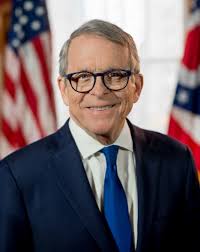
Michael DeWine
“We haven't faced an enemy like we are facing today in 102 years — we are at war. In the time of war, we must make sacrifices, and I thank all of our Ohio citizens for what they are doing and what they aren't doing. You are making a huge difference, and this difference will save lives. Right now, we are in a crucial time in this battle. What we do now will slow this invader so that our healthcare system will have time to treat those who have contracted COVID-19 and also have time to treat those who have other medical problems. Time is of the essence.”
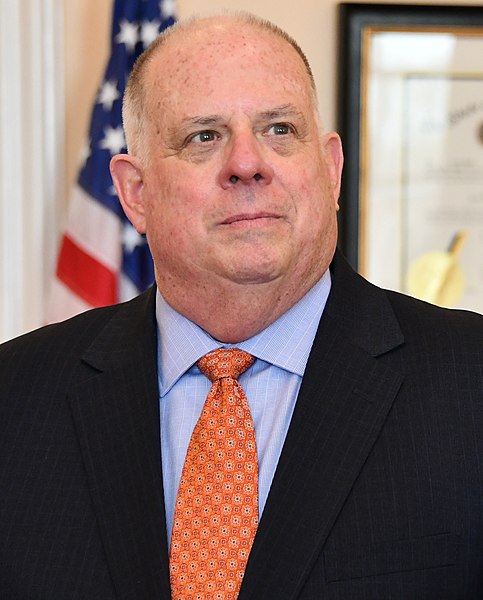
Larry Hogan
“This is a deadly public health crisis — we are no longer asking or suggesting that Marylanders stay home, we are directing them to do so. No Maryland resident should be leaving their home unless it is for an essential job or for an essential reason such as obtaining food or medicine, seeking urgent medical attention, or for other necessary purposes.”
The Evolution of Shelter-in-Place Mandates
During the coronavirus pandemic, 43 states issued statewide shelter-in-place, stay-at-home, closure, or shutdown orders, including 19 Republican governors and 24 Democratic governors. These orders were introduced in March or April 2020 during the early days of the coronavirus pandemic in the United States.
The first state to introduce a statewide shelter-in-place order was California on March 19. This was followed by Alaska on March 28, then Georgia and Mississippi on April 3. Many other states issued the less restrictive stay-at-home or safer-at-home policies in the surrounding weeks.
The other 7 remaining states – Arkansas, Iowa, Nebraska, North Dakota, South Dakota, Utah, and Wyoming – never issued statewide orders during the pandemic.
Abroad, coronavirus lockdown policies first began in the origin country of China. The first localized lockdown was implemented on Wuhan and surrounding cities on January 23, and it is attributed with slowing the spread of the pandemic in 2020. However, resurgent variants of the virus required additional lockdowns over the next two years. In the most extreme cases, entry and exit points to Chinese cities were limited, and only one person per household was allowed to leave the residency.
Following the spread of the virus from China to Italy, the prime minister of Italy implemented a nationwide lockdown on March 9, the first national order in the world during the pandemic. The lockdowns, though popular among citizens, were characterized as the largest suppression of constitutional rights in the history of Italy.
On March 24, India implemented a nationwide lockdown order for its entire 1.38 billion, marking the largest lockdown of the COVID-19 pandemic. Although the order was initially set for three weeks, subsequent extensions left the lockdowns in place for many months afterward.
In sum, shelter-in-place mandates and similar initiatives affected more than 3.9 billion people in more than 90 countries by April 2020, encompassing about half of the world’s population. The policies were positively attributed to reducing crime and violence, lowering air pollution, and promoting remote work. However, they were criticized for restricting personal freedoms, severely affecting economies, and hampering student academic performance over the years.
