









How News Sources Portray United Nations Policy
This chart shows how major news sources across the ideological spectrum frame united nations policy, from left to right-leaning perspectives.










Whether due to media bias or biased news, many topics are becoming increasingly polarizing and defining political parties in contemporary politics, one of which surrounds the United Nations. Many countries have mixed beliefs concerning the UN, which also vary across political parties in the U.S. Many Democrats tend to view the UN favorably, while Republicans view the opposite.
The United Nations is an international organization consisting of 193 member states that works to promote peace, security, human rights, and deliver humanitarian aid. All member states are members of the General Assembly. To become a member, the General Assembly must approve a state upon the recommendation of the Security Council. The UN promotes itself as a place where nations can gather together, discuss common problems, and find shared solutions that benefit all of humanity. The UN is a rather divisive issue in the U.S. – Democrats and Republicans tend to disagree in their thoughts and opinions on the UN and the United States’ membership in it.
The United Nations’ political purpose is to maintain international peace and security, promote cooperation among nations, and foster respect for human rights. They seek to prevent conflict through diplomacy and assist parties in conflict to come to a resolution. The UN promotes equal rights and self-determination of people and advocates for fundamental freedoms.
Polling suggests that the majority (77%) of Democrats view the UN favorably, compared to 36% of Republicans in 2019.
United Nations’ Political Strengths and Weaknesses
The United Nations’ strengths include its ability to help entire nations save millions of dollars on conducting peacekeeping operations, as its budget is dependent on the countries that require assistance. Additionally, the UN plays an important role in de-escalating conflicts between countries. They helped relieve tension between the U.S. and USSR during the Cold War to prevent a third world war. The UN is valuable in maintaining international peace and security, promoting human rights, and fostering international cooperation. These strengths are evident in succeeding in reaching its goals and assisting other countries in times of need.
The United Nations’ weaknesses revolve around its overall structure, lack of accountability, and competing interests. The structure of the UN can be quite ineffective and some sectors have more power over others. More specifically, the structure of the Security Council allows permanent members (the U.S., UK, France, China, and Russia) to hold veto powers over the Council that render it powerless. Furthermore, the UN appears to favor some countries over others, with power concentrated in the hands of a few powerful nations. The UN has never addressed these accusations, and the lack of accountability can lead to increased conflicts, as the UN is favoring certain member states. The UN also has competing interests that allow powerful nations to use the UN to benefit themselves rather than for the greater good, which defeats the purpose that the United Nations serves.
Republican Stance on Foreign Policy
The Republican Party’s stance on foreign policy often highlights how international activity should reflect the promotion of American economic, security, and cultural interests. Republicans emphasize a strong military that can serve as a deterrent and a solution to foreign threats, as opposed to peacekeeping and nation-building. Currently, they stress the importance of border security and deporting illegal immigrants.
Republicans generally approach foreign policy through the ideas of national interest, national security, sovereignty, and American strength. The party has included different foreign-policy groups over time, including isolationists, realists, and interventionists, so Republicans do not always agree on how active the U.S. should be overseas. However, they usually argue that American foreign policy should protect U.S. interests first, maintain a strong military, defend American allies when useful, and avoid international agreements or commitments that weaken U.S. independence.
Regarding the United Nations, Republicans are often skeptical of UN authority when they believe it limits American freedom of action or promotes policies they oppose, such as global climate rules or broad international governance. They may still support working with the UN or other international organizations when it clearly serves U.S. security or diplomatic goals, but they generally prefer U.S.-led action over UN-led decision-making. Overall, Republicans tend to favor selective cooperation with international institutions while keeping American sovereignty and power at the center of foreign policy.
Politicians Who Oppose United Nations
36% of Republicans view the UN favorably.
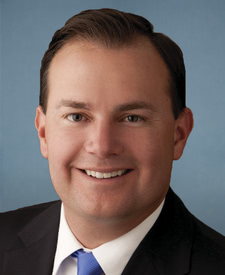
Mike Lee
“No more blank checks for the United Nations. Americans’ hard-earned dollars have been funneled into initiatives that fly in the face of our values, enabling tyrants, betraying allies, and spreading bigotry. With the DEFUND Act, we’re stepping away from this debacle. If we engage with the UN in the future, it will be on our terms, with the full backing of the Senate and an iron-clad escape clause.”
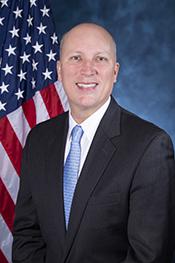
Chip Roy
“The UN doesn’t deserve one single dime of American taxpayer money or one bit of our support; we should defund it and leave immediately. ... [The UN's] internal rot once again raises the question of why we are participating in this at all.”
Democratic Stance on Foreign Policy
The Democratic Party’s stance on foreign policy generally emphasizes international cooperation, diplomacy, human rights, and the promotion of democracy. They advocate for active U.S. engagement in global affairs and view negotiation and diplomacy as the primary tools for resolving international conflicts. Democrats often promote the importance of democracy, human rights, and the rule of law. They seek to have multiple allies with other countries and deeply value relationships with allies.
Democrats generally approach foreign policy through international cooperation, diplomacy, alliances, human rights, and global engagement. They tend to believe the United States should work closely with allies and international organizations to address global problems such as war, terrorism, climate change, pandemics, refugee crises, and economic instability. Democrats usually support diplomacy and international agreements before military action, while still recognizing that military force may sometimes be necessary. They also emphasize defending democracy, promoting human rights, and supporting humanitarian aid around the world.
Regarding the United Nations, Democrats are generally more supportive of U.S. participation than Republicans. They see the UN as a useful tool for peacekeeping, humanitarian relief, global health, climate action, refugee support, and international law. While Democrats may criticize the UN when it is ineffective or politically divided, they usually prefer reforming and working through the UN rather than rejecting it. Overall, Democrats tend to view global cooperation as an important part of American leadership and security.
The Green Party’s stance on foreign policy supports and advocates for democracy and self-determination worldwide. They believe that U.S. foreign policy should also promote other nations’ self-sufficiency and self-determination, rather than ensuring security for American business abroad and the retention of military bases. They denounce American international business, as it often takes advantage of countries that are not as strong and influential as the U.S. is. Greens believe in policies that are consistent with participatory democracy and global responsibility.
Politicians Who Support United Nations
The majority (77%) of Democrats view the UN favorably.
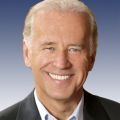
Joe Biden
“It is a fundamental truth of the 21st century, within each of our countries and as a global community, that our own success is bound up in others succeeding as well. To deliver for our own people, we must also engage deeply with the rest of the world to ensure that our own future must work together with other partners... Our security, our prosperity, and our very freedoms are interconnected.”
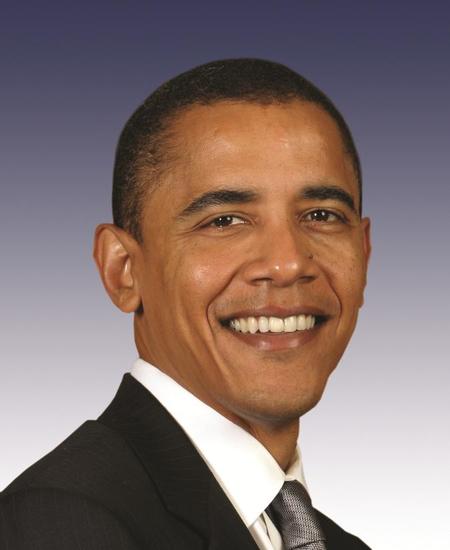
Barack Obama
“Sometimes I'm criticized in my own country for professing a belief in international norms and multilateral institutions. But I am convinced that in the long run, giving up some freedom of action – not giving up our ability to protect ourselves or pursue our core interests, but binding ourselves to international rules over the long term – enhances our security.”
UN Stance on Political Topics
The United Nations’ stance on Taiwan is one-sided: the UN states that Taiwan does not have any right or reason to join the UN and is not a member. Taiwan aspires to become a member, but its wishes are unlikely to be fulfilled. The UN mainly does not recognize or consider Taiwan as a member, as it prefers to remain neutral on the China-Taiwan conflict. If they chose to acknowledge Taiwan as a member, tensions between the UN and China would quickly rise.
The UN’s stance on abortion is quite complex and undefined. It does not take one side, but acknowledges both sides of the issue and recognizes its different perspectives. Some UN experts advocate for increased access and legalization of abortion, while some stress the role of national sovereignty and differing cultural values in determining abortion laws. The UN remains neutral on this issue, neither advocating for nor against it.
Unlike the issues outlined above, the UN’s stance on Russia and Ukraine has been clearly defined. The United Nations denounced Russia’s actions and demanded the withdrawal of its military forces from Ukraine’s borders. The UN has repeatedly stated its support and commitment to Ukraine’s sovereignty and has provided humanitarian aid to Ukraine. Despite these resolutions from the General Assembly directing Russia to withdraw from Ukraine, the war is still ongoing, and the resolutions have failed. The UN’s stance on Ukraine is entirely positive, and its support will not stop until Russia withdraws from Ukraine’s borders.
The UN plays an important role in assisting and uniting countries in times of need, promoting human rights, and strengthening democracy around the globe.
To learn more about biases and party affiliation, visit www.biasly.com. Biasly also offers a Premium Membership for an in-depth analysis of current news and access to bias analytics, discussions, and more.
