




64% Medium Right
Bias Meter
Extremely
Liberal
Very
Liberal
Somewhat Liberal
Center
Somewhat Conservative
Very
Conservative
Extremely
Conservative
-100%
Liberal
100%
Conservative

Biasly determines media bias ratings through a dual-layered approach combining artificial intelligence and analyst review. The platform’s proprietary bias detection engine, Bias Meter, evaluates sentiment, policy position alignment, and language framing across thousands of data points in news articles. Analysts then verify and interpret the AI’s findings, providing additional context where needed. Learn more about ratings
- Profile
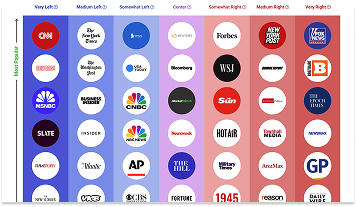
American Thinker on the media bias chart
- Bias Rating
64% Medium Right
- Reliability42% Reliable AveragePolicy Leanings
30% Somewhat Right
Extremely
LiberalVery
LiberalModerately
LiberalSomewhat Liberal
Center
Somewhat Conservative
Moderately
ConservativeVery
ConservativeExtremely
Conservative-100%
Liberal100%
Conservative
Average Reliability
*Our bias meter rating uses data science including sentiment analysis, machine learning and our proprietary algorithm for determining biases in news articles. Bias scores are on a scale of -100% to 100% with higher negative scores being more liberal and higher positive scores being more conservative and 0% being neutral. The rating is an independent analysis and is not affiliated nor sponsored by the news source or any other organization.
Politician Portrayal37% negative
Continue For Free
Create your free account to see the in-depth bias analytics and more.
By creating an account, you agree to our Terms and Privacy Policy, and subscribe to email updates.
Log In
Log in to your account to see the in-depth bias analytics and more.
Analysis of American Thinker Articles
Analysis of Bias in American Thinker Online Articles
To determine bias, we will typically focus on the following metrics in this article:
- Tone: attitude in writing, while diction focuses specifically on the author’s word choice.
- Author: the author’s stance and how it affects their writing by examining social media pages, past articles, etc.
- Diction: Word choices made by the author
- Tendency: Any partisan patterns in the author’s previous writing
- Expediency Bias: Quick visual or textual indicators, like headlines, that demonstrate bias.

The first article we’ll take a look at is titled “Are We Stuck With Biden?” by Paul Gottfried. Biasly rates this article as “Very Conservative.” Immediately, we can see where this rating is derived from as the politician’s portrayal score is 100% negative, indicating that the author writes critically of left-wing President Biden. The headline also clearly demonstrates expediency bias by using the word “stuck.”
Moreover, the tone is clearly stated in the opening paragraph of the article, where Gottfried claims there has been:
“abundant evidence that Biden’s lapses and incoherent speech patterns have grown worse since his election.”
Additionally, there is a persistent negative tone towards the Biden administration, including several digs at Vice President Kamala Harris, such as the following:
“She also luckily came from a racially mixed parentage with a Marxist revolutionary academic father.”
In turn, the tone clearly illustrates negative opinions toward the Biden administration- there are no statements in the article that portray the president positively.
Similarly, the diction is harsh towards Biden and rejects that his administration is doing anything correctly. Words such as “failure,” “corrupt”, and ”incompetence“ summarize the author’s stance on Biden and his team, thus creating bias.
For example, when talking about approval ratings, the author says this:
“No matter how disastrously his administration performs, he remains enormously popular with the public. According to Rasmussen, which seems to be a reliable poll, Biden’s popularity has been hovering around 50%.”
Not only does the author use the word “disastrous” to insinuate a negative performance in the office thus far, but also questions (using the phrase “seems to be”) the results of an approval poll, again confirming the author’s disapproval. Even if the author is partially correct, which we aren’t saying one way or the other, using softer or less emotionally charged language with a perspective from the other side could help improve the author’s argument.
Lastly, author Paul Gottfried is a self-defined paleoconservative political philosopher, who labels himself as:
“…society of the independent Right… well-educated young professionals, who consider themselves to be on the right, but not of the current conservative movement” (The New Yorker).
Moreover, his other articles and published books also reveal his biases and personal opinions concerning right-leaning topics such as conservatism and change, human rights, and foreign policy. In the article, Gottfried demonstrates omission bias by selectively choosing data regarding inflation and illegal immigration to paint the Biden administration in a negative light.
Gottfried excludes any sources that would negate claims about the Biden administration, which is relevant, as Biasly rated the Politician Portrayal score in this article as 100% negative. Additionally, research into Gottfried’s public X profile provides insights into his personal biases. One post criticizes feminism from an economic perspective, which is a typical conservative-leaning stance.
Democracy’s support for feminism, for example, creates short-term benefits but also long term headaches for the economy.
While today’s working women earn and spend more than their predecessors who were not part of the labor force, they are also less focused than earlier…
— Paul Gottfried (@paulegottfried) March 2, 2024
As a result, the author writes only in favor of one side of the political spectrum, which is also reflected in the tone and diction as discussed above.
While this article was found to be right-leaning, this also aligns with Biasly’s analysis of American Thinker, which was labeled as “Medium Right.” Being conscious of where these sources fall on the political spectrum helps readers get the most out of the news articles they consume.
Take this article, for example, which is an article without bias by American Thinker titled “What is Election Certification?” As a result of its neutrality, Biasly rates this article as “Center” with language that is very cut and dry, informative, and avoids any language that would look to sway a reader in one political direction or the other:
“The definition of certification is being officially attested or authoritatively confirmed as being genuine or true as represented, or complying with or meeting specified requirements or standards.”
“We are being continually hammered by pernicious media to deny the reality staring us in the face.”
There is little to no trace of the author’s opinion or belief being inserted into the article, so this is a better example of a less-biased writing piece.
Analysis of American Thinker Opinion Articles
While there is a significant difference between opinions and reporting, it is important to understand these differences to not let opinions from “professional” sources mislead you. The articles below are blog posts, meaning that the authors are expressing their personal views on certain issues. This is unlike reporting, where the goal is to inform readers and neutrally present issues. Consider the following articles as we uncover where bias may arise.
First, the article, “Border czar Kamala Harris beclowns herself trying to answer a reporter’s question about migrant surge”, has a title loaded with bias and negative insinuations about Kamala Harris. By stating that Harris is making a fool of herself in the title, it implies that the author thinks she is incompetent, without offering any background information. Beyond this, there is a plethora of similar bias and negative opinions of Harris and her administration throughout, in turn being the exact opposite of a neutral reporting article.
On the other hand, “A Century of ‘Climate Change’” has a more objective title, and one can determine that the article looks to provide some information and answers about climate change. In turn, this article has less bias (which is a good thing) because it uses neutral language and cites credible sources. From the title alone, the author is not trying to push a reader one way or the other.
Despite the analysis thus far, the articles from American Thinker that have been addressed so far are only a small representation of the source’s content as a whole. By examining each article individually, differences between subjective writing and genuine reporting can be identified.
Analysis of Reliability in American Thinker’s Online News Articles
Opinion and blog-style journalism allow reporters to express their opinions and beliefs, making them less trustworthy than factual news reporting. Yet there is an appeal to reading these opinion pieces, as readers can either sympathize with the author’s political viewpoints or deepen their understanding of a viewpoint they don’t typically subscribe to.
American Thinker’s blog posts have alarming headlines; this section will look beyond the headlines and examine the presence of selection and omission bias, as well as the quality of sources and facts used in these articles. In doing so, the reliability of these opinion pieces will be determined, and their 38% reliability score will be explained.
Quality of Sources and Facts Used
While American Thinker can be good at using reliable sources from both sides, including referencing the “Very Liberal” New York Times in the article presented in the previous section, consider a more opinionated article, such as Jack Hellner’s piece titled “Democrats love to lie and cover up for lies because they only care about power.”
In the article, the author argues that Democratic leaders and allied media figures routinely deceive the public to maintain political control. The tone is strongly partisan and accusatory. Rather than presenting a neutral review of events, the article frames its argument around the idea that dishonesty is central to Democratic strategy. This analysis reviews the article’s quotes, sources, balance, and factual reliability.
The article contains three direct quotes. The longest quote is 44 words, the shortest is 10 words, and the average length is about 27 words. While longer quotes can improve reliability when presented with context and verification, these quotes are used mainly to support the author’s argument rather than to provide balanced evidence. There is limited sourcing around the quotes, which reduces their overall credibility.
The article relies almost entirely on internal links to other pieces from the same conservative outlet. The article includes no external left-leaning or centrist sources, and no independent fact-checking organizations are cited. As a result, the sourcing lacks ideological diversity and outside verification.
- Jack Hellner, conservative commentator and author.
- Dan Goldman, U.S. Representative (quoted).
- Loretta Lynch, former U.S. Attorney General (referenced).
- Chuck Todd, television news host (referenced).
The sourcing is not balanced. Right-leaning commentary dominates completely, both in links and framing. There are no counterarguments, neutral experts, or opposing perspectives included. The article functions as opinion commentary rather than a multi-sourced analysis.
Sources are used to reinforce the author’s claims, not to explore alternative interpretations. Claims that contradict the article’s narrative are dismissed rather than examined. Skepticism is directed only at Democrats and the mainstream media. Based on sourcing, framing, and tone, the overall bias rating is Very Right.
Many of the article’s claims relate to ongoing political controversies, such as investigations involving Hunter Biden and debates over media coverage. While these issues are widely reported, the article presents them in a simplified and one-sided way. Broader reporting from mainstream outlets shows more nuance and disagreement. Overall, the piece mixes factual references with strong opinion, making it unreliable without independent verification.
Recall in the opening sections of the article where proven examples of misinformation from American Thinker were given. An additional example of this includes an article titled “Gun Confiscation Begins in New Jersey,” which was shot down by fact-check site Snopes.
Nevertheless, it was determined that false claims were made by American Thinker surrounding gun confiscations.
Selection and Omission Bias
Another example coming from American Thinker, where an author portrays significant bias towards one side of the political spectrum, includes an article titled “Biden’s Inaugural Address was a big, fat lie.”
Here, author David Zukerman neglects to include any opposing viewpoints or sources, relying solely on right-wing outlets such as The Washington Times and referencing Peter Navarro, a top aide to former Republican President Donald Trump. The only use of direct quotes beyond Biden’s Inaugural address itself comes from Navarro, such as this one:
“The Democrats’ persecution and prosecution of Mr. Trump and his advisors are equally toxic to our democracy. Never did I imagine in January 2017, when I entered the White House to serve my country, that virtually everyone I would share a foxhole with – along with the President himself – would be assaulted with indictment after indictment and subpoena after subpoena, not just by DOJ but also by big-city prosecutors and blue state attorneys general.”
As a result, the language disparaging Democrats is a tactic used by the author to omit any opinions or viewpoints other than those opposed to support for Democrats and the Biden administration. This omission bias primarily exposes the reader to the ideological perspective that the author wants his audience to read, in this case, supporting Republicans.
A clear-cut example of selection bias also comes from Navarro, as a narrative is created by blaming the Democrats:
“Roughly half of Republicans and over one-third of Democrats believe our country is on the brink of civil war. If such an unthinkable war breaks out, it will be the Democrats’ fault.”
This selection bias may mislead readers, as the article fails to select anything positive done by the Democrats and instead only selects instances and phrases to promote right-wing ideology and manipulate readers. None of the sources used by the author has opposite meanings, which is an easy way to identify the presence of selection and omission bias.
American Thinker Bias Overview
Launched in 2003 from El Cerrito, California, Thomas Lifson has since turned his platform into a daily online magazine devoted to the issues Americans face in their day-to-day lives. Subsequently, American Thinker places no limits on the topics covered on its site, ranging from business, science, and technology to strategic, economic, and military implications regarding national security.
The site deems that “there is no limit to the topics appearing on American Thinker.” In turn, this article will focus on this outlet’s coverage and substance to determine whether political bias is prominent in their reporting. This analysis aims to provide a complete answer to the question of whether American Thinker is biased, while discussing the factors that generally lead to media bias.
As a conservative news media outlet, American Thinker has more than a million total website viewers. Similar Web presents statistics about the source, showing it ranks slightly above The Federalist, a similar news source, and that around 77% of total viewers are male. This article will take a deep dive into American Thinker’s online content and analyze bias presented in the source’s publications.
Is American Thinker Biased?
Based on Biasly’s evaluations, American Thinker is rated as Medium Right.
By examining content patterns and the broader context of media influence, we aim to offer a balanced perspective on American Thinker’s political bias—and contribute to the ongoing discussion about bias in the news.
How Does Biasly Rate News Sources?
Biasly uses proprietary algorithms and a team of analysts to provide comprehensive bias evaluations across thousands of news outlets. Over 200,000 articles from more than 3,200 sources have been analyzed to identify the most accurate and unbiased stories.
Biasly assigns each outlet three key scores:
- Reliability Score – Reflects factual accuracy
- AI Bias Score – Generated via natural language processing
- Analyst Bias Score – Assessed by human political analysts
These scores are based on seven core metrics: Tone, Tendency, Diction, Author Check, Selection/Omission, Expediency Bias, and Accuracy. These elements help analysts and algorithms evaluate the political attitude conveyed by each article.
Biasly’s Bias Meter ranges from -100% (most left) to +100% (most right), with 0% indicating neutrality. The system evaluates individual articles based on political terms, policies, figures, and sentiment to calculate precise bias ratings.
Is American Thinker Politically Biased?
American Thinker earns a Medium Right rating for its AI Bias Score and a Medium Right for its Analyst Bias Score. The Analyst Bias Score is generated by reviewers from liberal, moderate, and conservative backgrounds. Despite American Thinker’s online magazines being devoted to “the thoughtful exploration of issues of importance to Americans,” many criticize the source for writing from an extremely conservative viewpoint.
Biasly’s scores closely align with third-party sources, which also agree that American Thinker displays media bias strongly aligning with conservative and right-wing policy agendas.
Before we begin, we need to discuss bias. Bias is a natural function of humans, and we can express it both consciously and unconsciously. Bias is one of the most fundamental forms of pattern recognition in humans. This isn’t to lower the bar and say that “all things are biased,” but to explain the process by which we may come to trust certain news organizations that display patterns of coverage.
On the media’s part, there is an incentive to retain audiences, encourage them to purchase subscriptions, and rate products positively. Bias is a two-way street; people want to see news stories about things they care about, and the media needs viewers to continue their operations. This creates a feedback loop that influences which stories are covered and how they are framed across many media organizations.
Consider also this graph from Pew Research, which determined that U.S. journalists believe that all sides of a story don’t always deserve equal coverage:
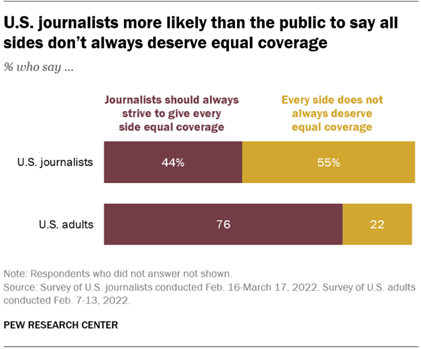
Source: Pew Research
Although this seems rather broad, it is important to understand that everyone’s perspective of the media (including the media itself) varies drastically.
How to Evaluate Bias
Although Biasly rates American Thinker as Medium Right, it’s important to remember that bias can vary from article to article. American Thinker also covers a conservative-leaning state with objectivity on many issues, from state legislation to social developments. This complexity underscores the importance of examining each article individually. So, let’s learn how to evaluate media bias.
Recognizing media bias requires awareness and critical thinking. Often, readers trust news sources that affirm their existing beliefs—a psychological tendency known as confirmation bias. This makes it harder to identify slanted narratives or one-sided reporting.
To combat this, it’s essential to challenge your assumptions by consulting multiple viewpoints and verifying news through third-party analysis. Tools like Biasly’s media bias ratings allow readers to compare the same news story across the political spectrum.
Ultimately, bias isn’t always a matter of what is said—it’s also about what is left out, how topics are framed, and which stories are chosen for coverage. Learning to recognize these patterns can help readers make more informed decisions and develop greater media literacy.
To start comparing news outlets and gain a better understanding of bias, sign up for Biasly’s Media Bias & News Analytics Platform to see how stories vary between sources.
American Thinker Reliability Overview
Is American Thinker Reliable?
American Thinker is an online news publication composed of accomplished contributors in their fields, such as author Thomas Lifson, former attorney Ed Lasky, and management consultant Richard Baehr. Despite this, the source has only gathered some attention from the public, finding itself ranked 362nd among news and media sources in the United States. Similar Web also estimates that American Thinker receives an average of 4.7 million visits per month.
This article will seek to evaluate the accuracy and dependability of American Thinker. Considering the somewhat limited popularity, does American Thinker have more incentive to push more fallacious content in hopes of gaining more public attention?
How to Evaluate Reliability?
Reliability refers to how trustworthy or accurate a news source is. If we can’t trust what we read, then continuing to consume content from that outlet serves little purpose. So how do we evaluate a news outlet’s reliability?
There are several potential measures of reliability to look out for when trying to determine whether a media source is reliable or not. Red flags for an unreliable article can include the presence of wild, unsubstantiated claims, facts dependent on other unreliable sources, heavy use of opinionated language, and more. In contrast, hallmarks of a reliable source include:
- Absence of subjective language
- Citing credible sources (e.g., .gov, .edu, academic references)
- Verifiable facts and statistics from multiple outlets
- Use of primary sources, like interviews or transcripts
- Consistency with coverage across other platforms
Biasly’s reliability scores incorporate these elements in evaluating media outlets.
So How Does American Thinker Fare in Its Reliability?
The political reliability index developed by Biasly assesses both accuracy and trustworthiness. American Thinker currently holds Average Reliability Score, which is calculated as a weighted average of:
- Fact Analysis Score – Evaluates the accuracy of claims, facts, and evidence.
- Source Analysis Score – Assesses the number, diversity, and credibility of sources and quotes used.
American Thinker’s Source Analysis Score is Average at 58% Reliable. This suggests readers can trust some of the sources, links, and quotes provided by the news source. This score, which is based on A.I., focuses on assessing the quality of sources and quotes used, including their number, length, uniqueness, and diversity.
The Fact Analysis Score of American Thinker is Average at 38% Reliable. This suggests readers can trust some of American Thinker’s content online. The Fact Analysis score focuses more on the accuracy of claims, facts, and sources presented in the article and any hints of selection and omission bias, which we will discuss further in the article.
However, since these scores are based on percentages and averages, individual articles could be more or less trustworthy depending on the context, author, and other factors. Our findings show that American Thinker’s reliability is mostly, but not all, factual because they have retracted several stories in the past or had pieces that were not factual.
Let us analyze the supporting data for American Thinker’s rankings and discuss what to watch out for while searching for trustworthy news sources.
American Thinker’s Accuracy and Reliability
According to Biasly’s analysis, American Thinker maintains Average Reliability Score, but individual articles may vary significantly. Let’s dive into the details.
The credibility of news organizations significantly varies depending on their bias and political beliefs and values as an organization. Evaluating the integrity of American Thinker’s news stories and scanning for selection and omission bias will help to assess the article’s overall factuality.
Recall that selection bias is when stories and facts are selected or deselected, often on ideological grounds, to create a narrative in support of the new source’s ideology. Omission bias, on the other hand, is when different opinions and political views regarding a situation are left out so that the reader is only exposed to the ideological perspective supported by the author. It’s important to keep in mind these two types of biases when trying to assess an article’s level of accuracy.
Biasly gives a percentage score to accuracy, with zero being the least accurate and 100 being the most accurate percentage score. These ratings are calculated by weighing claims with supporting evidence, the number of reliable internal sources used, and the number of external sources that an article includes.
A full page of Biasly’s dependability and accuracy ratings for American Thinker articles can be found here. As discussed in the section below, Biasly’s analysts rated American Thinker with a reliability score of “fair.” Although this score varies between articles and authors, the most extreme cases of a lack of reliability are caused by bias, specifically omission and selection bias.
As a self-stated right-wing media source, this type of bias is more likely to be found in stories displaying political leaning, meaning that authors are looking to push their personal conservative beliefs into their writing, rather than remaining neutral and including points from both sides of the political spectrum.
For example, an article with a reliability score of “Good” is titled “Aiming at the Wrong (Public) Opinion” versus that of a “Fair” reliability score titled “Joe Biden’s sorriest press conference lies.” As a result, stories that appear to be displaying a political leaning are less reliable than neutral ones. This isn’t always the case, but often is.
Another example, titled “Colorado, the Rocky Mountain Shooting Gallery,” receives a “Good” reliability score according to Biasly’s Chrome extension. In the article, author Brian C. Jooendeph succeeds in using several external sources and quotes, yet lacks an opposing viewpoint to have a holistic viewpoint of the issue.
“The Boulder shooter is a 21-year-old Ahmad al-Issa, a Syrian-born college student, who arrived in the US via an Obama-era asylum program. His Facebook page included pro-Islam and anti-Trump messages and likes for Hilary Clinton and Barack Obama.”
In turn, the article portrays a conservative stance. However, the author balances this challenging matter with sources such as The Denver Post, the New York Times, and the National Institute of Justice. Perhaps taking a further dive into the root causes and potential solutions from another angle, beyond just making it into a political issue, as the author does here:
“If the shooter is white, the left blames racism and privilege. If the shooter is non-white, guns are blamed, and racism or ideology is ignored. In this case, since the shooter is Syrian American, the gun and lax gun control laws will be blamed, ignoring that the shooting took place in Boulder, a left-wing utopia of tolerance, diversity, social justice, green energy, gun control, and kombucha on tap.”
So, is American Thinker Reliable?
Overall, American Thinker can be considered to be an outlet that is moderately reliable. All in all, opinion pieces often deal with a lack of factuality and credibility and instead present a lot of selection and omission bias, as seen in the articles above. Given that American Thinker self-identifies as a conservative online magazine, they have the demographic and incentive to continue to push conservative articles to their readers. Analyzing some articles and scanning for these misleading occurrences in articles will help to navigate to find the most accurate news.
As media literacy improves, readers can more easily detect issues with selection bias, omission bias, and factuality. To strengthen your ability to assess reliability across the political spectrum, use Biasly’s News Bias Checker to compare how multiple outlets report the same story.
This empowers readers to consume more accurate, balanced, and dependable news.
American Thinker Editorial Patterns
American Thinker’s coverage of political topics often reflects a Medium Right bias, with consistent patterns in phrasing, source selection, and thematic focus that are Moderately Conservative. This publication demonstrates moderate journalistic standards, but framing choices and word usage indicate a political slant. This content analysis will examine how American Thinker discusses liberal issues versus conservative issues with an emphasis on editorial tendencies.
Coverage of Liberal vs. Conservative Topics
American Thinker publishes articles covering a wide range of political topics and issues commonly discussed across major news media websites. The source specifically has no qualms with labeling liberal topics negatively in their headlines and within their articles. For example, one piece by Alan Loncar is titled “Liberal Bad Manners in Pursuit of Power.” A separate article by Matthew G. Anderson is headlined, “Leftists Love Institutions, Hate People.” The right-leaning bias, as identified by Biasly, is clearly visible across many facets of the source’s online publications.
These instances of bias on the platform suggest that the source is sympathetic to conservative topics and viewpoints, which explains why it often associates liberal topics with negative language. One example of the news source being complimentary to a conservative position includes an article entitled, “Let’s All Thank Alternative Conservative Media.” The supportive framework in the article headline, compared to those in the previous paragraph, illustrates the dichotomy between how liberal positions and conservative positions are framed within American Thinker.
Policy and Issue Framing
Building on the observations from the previous section, specific policies and issues covered by American Thinker paint liberal opinions as more harmful than beneficial. A specific example relates to the source’s coverage of LGBTQ+ rights, where one article calls Pride Month a “pagan festival of debauchery” within the first sentence. This publication by J.B. Shurk frames the issue through a religious lens and further criticizes socially liberal stances.
Another policy issue discussed by the source is immigration, in which American Thinker advocates continued support for ICE and Trump’s executive immigration decisions. One article specifically highlights the “left-wing outrage” after the death of two American citizens at the hands of ICE in Minnesota. That same article includes a headline labeling Trump’s second-term executive decisions as “acing the immigration test.” Regardless of the issue, the source often leans right. It is also worth noting that although the platform is biased and blames the left more than the right, American Thinker is willing to acknowledge the harm caused by the intense contemporary partisan divide.
“But it’s not insurmountable, so long as friends can find common ground. So long as we notice, at the very least, that forces continually pit us against each other.”
Coverage and Relevance
American Thinker’s reporting mainly covers U.S. political topics, including foreign policy, immigration, economics, and religion. The most popular articles, and those included on the source’s home page, pertain to domestic U.S. politics and breaking news.
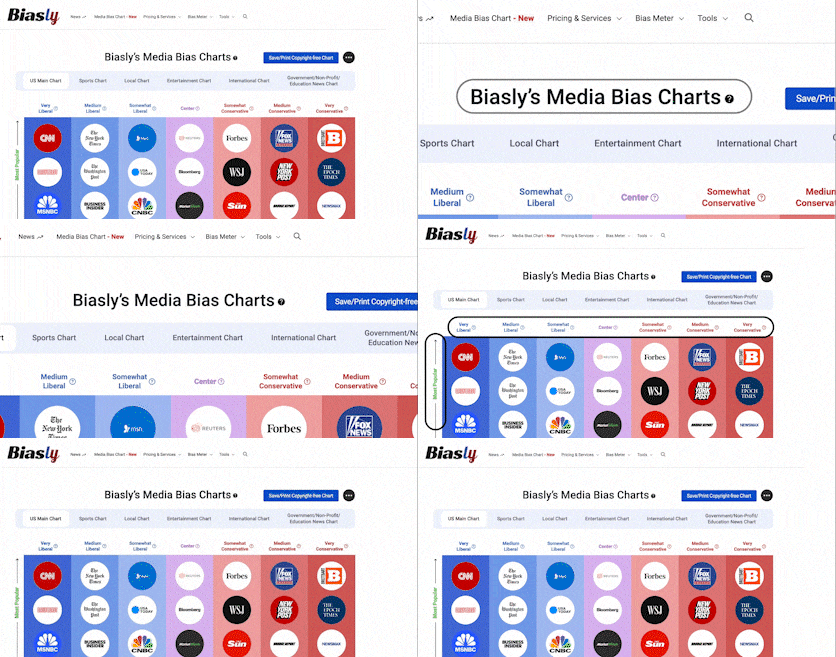
Readers who wish to further explore how American Thinker compares with other publications can visit Biasly’s Media Bias Chart to analyze tone and word choice in real time.
Funding and Ownership
Who Owns American Thinker?
American Thinker is a small daily online magazine founded in 2003 by Thomas Lifson. Lifson is described as a “Democrat by birth, Thomas became more conservative in adulthood as reality taught him that dreams of a perfect human society always run smack into human shape”.
Co-founder Richard Baehr is a chief political correspondent and management consultant in the healthcare field, while Ed Lasky is a former attorney. As such, contributors are accomplished in their fields, yet it is clearly stated that pieces are written with conservative leanings. Additionally, their webpage reads that there is an Intention to write for the general public out of concern for complex moral questions on the national agenda, such as national security.
Who Funds American Thinker?
This news source states that its main source of income comes from Google advertisements, as seen on the platform’s website, which is filled with pop-up ads. The second-largest source of income that the news source discloses is subscription-based, allowing subscribers to comment on the website and view all content without pop-up ads. Lastly, the source includes reader donations as a funding source.
A Harvard media-ownership index states that American Thinker does not have to disclose major funders beyond the public founders previously listed. Therefore, no list of large donors or equity holders exists for this publication. This has been discussed by the media platform’s founders, who call it an organization that “isn’t a profit-seeking venture.”
Additional Insights
News Source Comparison
When comparing news sources to American Thinker, we find many similarities between other predominantly conservative news organizations. Some of these comparable sources include the previously mentioned The Federalist, RealClearPolitics, The National Review, and Breitbart News. These platforms all publish right-of-center articles pertaining to U.S. politics and culture, although reliability and bias levels vary from source to source. The format of the articles published by these organizations is similar in that they tend towards opinion pieces rather than clear-cut, fact-based reporting.
One way American Thinker differs from these other sources is in its funding, as some of the sources mentioned are funded through donor-advised funds, LLCs, and other media-mogul families. American Thinker is also a much smaller organization than a source like Breitbart and ranks only slightly below The Federalist in audience reach metrics.
Notable Contributors and Authors
Many contributors and authors featured on American Thinker are freelance conservative writers. Some of the most notable commentators include Andrea Widburg, J.B. Shurk, and Thomas Kolbe. While writers like Shurk and Kolbe focus more on international economics and foreign affairs, Widburg covers domestic U.S. politics, like the culture wars, immigration, and demographics. Another prominent writer on the platform is Brian C. Joondeph, M.D., who often writes, as many of these authors do, with a sympathetic bias for the Donald Trump administration. This writer, in particular, has published articles with headlines like “Republicans are Facing an Extinction Event,” which demonstrate a slant away from fact-based coverage of particular news stories.
Related Tools and Resource Pages
To better understand how American Thinker fits into the broader media landscape, we recommend exploring these helpful resources:
- Media Bias Chart: See where American Thinker ranks among hundreds of media outlets across the political spectrum.
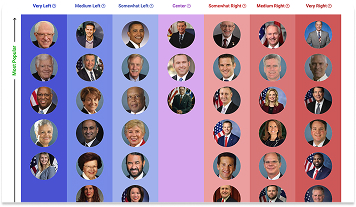
- Political Bias Chart: Visualize political slants of news sources across various policy areas.
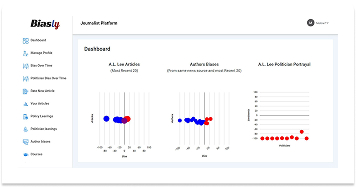
- Journalist Bias Analytics Platform: Explore how individual journalists contribute to bias within their publications.
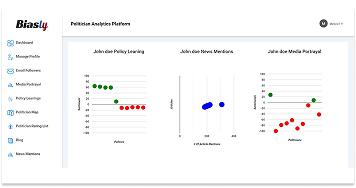
- Politician Bias Analytics Platform: Compare how politicians are framed differently by American Thinker and other outlets.
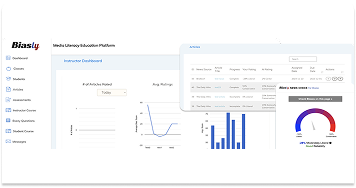
- Media Literacy Education Platform: Learn how to critically assess media sources, bias techniques, and news reliability.
Frequently Asked Questions
American Thinker is rated as Medium Right based on Biasly’s media bias algorithm, which assesses sentiment, article framing, and policy favorability.
American Thinker has been accused of fake news and misinformation in the past. One prominent example is when the source claimed that Dominion Voting Systems rigged the 2020 election against Donald Trump; they later retracted this statement following lawsuits. So when analyzing content by this source, it is important to know that on some occasions the writers have directly admitted including details that “…have no basis in fact.”
Biasly uses AI sentiment analysis and human analyst review to assess metrics like tone, fact accuracy, source quality, and media bias indicators. Learn more on our Bias Meter page.
On some occasions, yes, but as previously mentioned, it is important to double-check the source’s facts before believing what is printed. This source is more accurately considered to be a hub for conservative opinions rather than a source for fact-based reporting.
Military Spending
| Date | Sentiment | Associated Article | Snippet |
|---|---|---|---|
| 08/25/2019 | 75% For | Trump Family Detentions Flores Agreement (link) | So, of course, the Trump administration is doing the opposite in a baldfaced |