




26% Somewhat Right
Bias Meter
Extremely
Liberal
Very
Liberal
Somewhat Liberal
Center
Somewhat Conservative
Very
Conservative
Extremely
Conservative
-100%
Liberal
100%
Conservative

Biasly determines media bias ratings through a dual-layered approach combining artificial intelligence and analyst review. The platform’s proprietary bias detection engine, Bias Meter, evaluates sentiment, policy position alignment, and language framing across thousands of data points in news articles. Analysts then verify and interpret the AI’s findings, providing additional context where needed. Learn more about ratings
- Profile
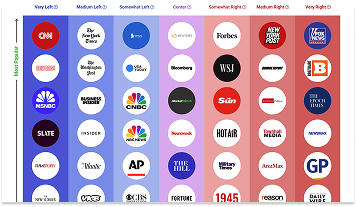
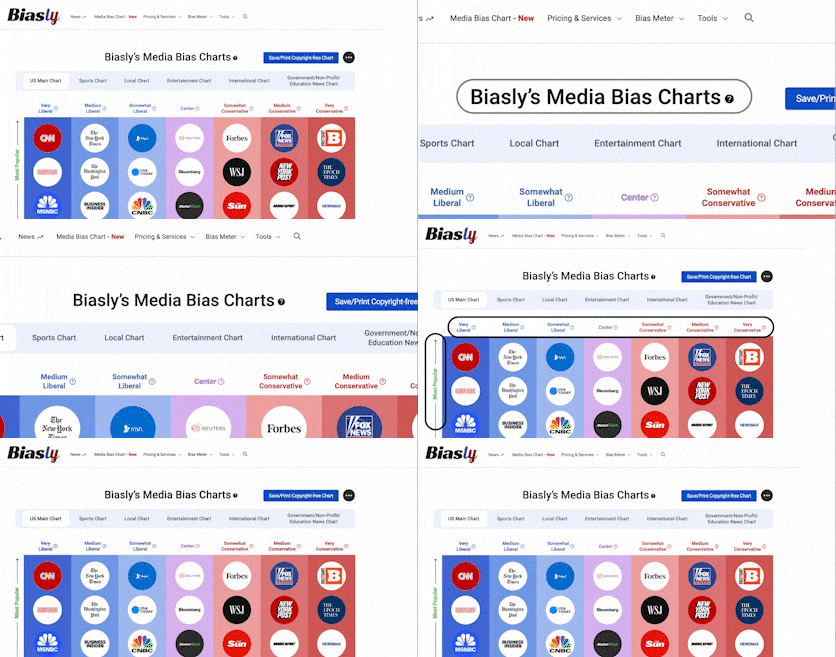
NewsBusters on the media bias chart

- Bias Rating
26% Somewhat Right
- Reliability46% Reliable AveragePolicy Leanings
30% Somewhat Right
Extremely
LiberalVery
LiberalModerately
LiberalSomewhat Liberal
Center
Somewhat Conservative
Moderately
ConservativeVery
ConservativeExtremely
Conservative-100%
Liberal100%
Conservative
Average Reliability
*Our bias meter rating uses data science including sentiment analysis, machine learning and our proprietary algorithm for determining biases in news articles. Bias scores are on a scale of -100% to 100% with higher negative scores being more liberal and higher positive scores being more conservative and 0% being neutral. The rating is an independent analysis and is not affiliated nor sponsored by the news source or any other organization.
Politician PortrayalN/A
Continue For Free
Create your free account to see the in-depth bias analytics and more.
By creating an account, you agree to our Terms and Privacy Policy, and subscribe to email updates.
Log In
Log in to your account to see the in-depth bias analytics and more.
Analysis of NewsBusters Articles
Analysis of Bias in NewsBusters Online Articles
To understand NewsBusters’s bias, it helps to start with what makes the site distinctive. Unlike many partisan outlets, it often builds articles around real television clips, transcript excerpts, headlines, or quoted passages from major media organizations. That gives the pieces an evidentiary base. But the interpretation placed on that evidence is usually sharply ideological.
To evaluate this, we can analyze select NewsBusters articles through several of Biasly’s bias rating criteria: Tone, Tendency, Author, Diction, and Expediency Bias.
- Tone: The overall attitude conveyed by the article
- Diction: Specific word choices made by the writer
- Author: The background and social presence of the journalist
- Tendency: Patterns of bias in the writer’s broader body of work
- Expediency Bias: Quick visual or textual indicators like headlines and photos that imply bias

Source: NewsBusters
One example is “Network Newscasts Continue to Shield Democrats During DHS Shutdown”. The headline already gives away the conclusion. The word “shield” implies intentional protection, not just uneven framing or incomplete coverage.
First, there are clear indicators that suggest potential bias. The title itself is framed in a way that presumes a conclusion before the reader even engages with the evidence. Words like “shield” imply intentional wrongdoing rather than leaving room for interpretation. Additionally, the article opens with charged phrasing such as “elitist media” and claims that networks are working “overtime” to protect Democrats, which gives the tone a somewhat accusatory or adversarial edge. These diction choices can make the piece feel less neutral at first glance.
That matters because the article begins from accusation, not inquiry. Phrases like “elitist media” and claims that networks are working “overtime” to protect Democrats push the tone toward adversarial commentary from the start.
The author’s background also contributes to this perception. Jorge Bonilla writes for the Heritage Foundation, a conservative-leaning organization known for critiquing mainstream media. That context might lead readers to expect a strongly opinionated or partisan argument. On social media, he posts conservative content and shares content made by other conservative writers.
REPORTER: Mr. President, as far as the naval blockade is concerned, what’s the end game? Is it to force Iran back to the negotiating table? Is it to open up the strait so that gas prices ultimately come down?
DONALD TRUMP: Maybe everything. I mean, both of those things,… pic.twitter.com/yIXz55mKg6
— Jorge Bonilla (@BonillaJL) April 13, 2026
At the same time, the article is not built out of thin air. Jorge Bonilla uses direct excerpts and transcript material from ABC News, CBS News, and NBC News. That gives readers a way to evaluate at least some of the underlying evidence themselves.
“Watching this, you’d think it was Republicans who insisted on shutting the DHS down. CBS doesn’t do much better on the Evening News. Watch as Nikole Killion weirdly frames Trump as more optimistic on Iran than on reopening DHS.”
This is a good example of how NewsBusters operates. The transcript material may be real, but the commentary around it is highly directional. The article is less about neutrally documenting how networks framed the shutdown and more about persuading readers that major broadcasters deliberately tilted coverage to protect Democrats.
A second example is “Talk About a ‘Hot’ Take! Climate-Mad Reuters Cheers Iran War as Fossil Fuel Killer”. Here the headline is even more revealing than the body.
Words like “Climate-Mad” and “Cheers Iran War” are loaded before the reader reaches any evidence. They frame Reuters as irrational and morally warped. That is classic expediency bias.
But the body is somewhat narrower than the headline suggests. The article is really criticizing how Reuters framed one consequence of conflict, not claiming Reuters literally supported war. That difference matters. The article is still highly biased, but the strongest distortion appears in the packaging and commentary, not necessarily in the raw subject it is referencing.
The author backgrounds reinforce this pattern. Writers like Bonilla and Joseph Vazquez operate inside a conservative institutional project rather than a general newsroom. Their work is designed to critique liberal media narratives, not to stand outside ideological conflict. That does not automatically make their factual references false. It does mean readers should expect selective framing, one-sided example choice, and interpretive pressure in nearly every piece.
Overall, NewsBusters’ news-style content often looks more documented than many partisan blogs, but it is still unmistakably ideological. Its bias usually appears through headline language, source selection, and the assumption that mainstream media error almost always cuts in one political direction.
Analysis of NewsBusters Opinion Articles
To fully understand political bias in media, it’s important to distinguish between factual reporting and opinion pieces. While reporting aims to present facts and let readers form their own conclusions, opinion articles express personal viewpoints on current issues. Although the previous section examined factual reporting, this section turns to how bias surfaces through NewsBusters’s selection and tone of opinion content.
NewsBusters opinion articles often exhibit a conservative bias in their titles and language. For example, an opinion article titled “WRONG! CNN Reporter Claims Hunter Biden ‘Has Struggled’ to Sell His Crappy Paintings,” by Tim Graham, displays a pro-conservative bias from the outset. The article’s main objective is to criticize CNN reporter Evan Perez’s reporting on Hunter Biden and disapprove of Hunter Biden’s lifestyle choices. According to the article:
“The New York Post and other media outlets reported in July that Hunter’s paintings drew at least $1.3 million in revenue…how is that ‘struggling’? It sounds more like ‘immediate success.’ Artists who have actually struggled to make a living (not a million) would agree.”
This quote explicitly aims to belittle Hunter Biden and portray him as playing the victim, aligning with a broader conservative objective to discredit the Biden administration and its associates.
The “Worst Media Quote of the Week” feature published by NewsBusters, a project of the Media Research Center, provides a useful case study in how bias can shape media criticism. The April 13, 2026, winner illustrates how selection, framing, and language choices reflect a particular ideological perspective rather than a neutral evaluation of media content.
In that week’s poll, Bruce Springsteen was selected as the winner with 36% of the vote for criticizing the Trump administration during a concert, calling it “corrupt, incompetent, racist, reckless, and treasonous.” While the feature presents itself as a contest identifying the “worst” quote, the process itself reveals several layers of bias.
First, selection bias is evident in how nominees are chosen. The article explicitly frames the competition as identifying comments from “leftist journalist[s] or celebrity,” which signals a predetermined ideological focus. By limiting candidates primarily to individuals critical of conservative figures or policies, the feature excludes comparable statements from other political perspectives, shaping the outcome before voting even begins.
Second, framing bias appears in the descriptive language. Terms like “leftist singer” are used to characterize Springsteen, which subtly primes readers to interpret his comments through a partisan lens rather than evaluating the substance of the statement itself. This kind of labeling can influence audience perception by attaching ideological identity to the speaker instead of focusing purely on the quote.
Third, the feature demonstrates audience bias through its voting system. The results are determined by readers and supporters of the site, who are likely to share similar viewpoints. As a result, the poll reflects the preferences of a specific ideological audience rather than a broad or representative sample of the public. The close result, 36% for Springsteen, 35% for Michael Che, and 29% for Chuck Todd. This shows engagement, but not neutrality.
Finally, mission-driven bias plays a central role. The Media Research Center openly states that its goal is to “document and combat” what it sees as falsehoods in mainstream media, reflecting a conservative advocacy perspective. This mission shapes how content is curated and presented, meaning the feature is not simply reporting on media quotes but actively reinforcing a broader narrative about perceived liberal media bias.
In conclusion, the “Worst Media Quote of the Week” is less an objective ranking of problematic statements and more an example of how media criticism itself can be influenced by ideology. Through selective nomination, loaded language, audience-driven voting, and organizational goals, the feature demonstrates how bias operates not only in news reporting but also in how the media is evaluated and judged.
Analysis of Reliability in NewsBusters’s Online News Articles
NewsBusters aims to serve conservatives with objective, fact-based reporting, although their staff is mostly made up of conservative writers. However, readers should distinguish between news reporting and opinion pieces to evaluate credibility effectively.
One article authored by Jeffery Lord, titled “Media Ignores Tlaib’s Two Contradictory Flags – Palestine and LGBTQ,” is rated at Very Conservative with an A.I. score of “Fair Reliability.” While the article portrays an almost outspoken conservative stance, it focuses on the sins of the “mainstream media” with little to no inclusion of opposing viewpoints or substantive examples from said media. However, the article does include some quotes, albeit from ideologically similar news sites like Townhall and Not the Bee:
“And while it shouldn’t be shocking that she has a Palestinian flag outside her office, the Pride flag in the vicinity makes this a humorous exhibit, a pure contradiction if we ever saw one. Lady, dare we say what happens to the LGBT folks in the West Bank and Gaza?” – Matt Vespa, Townhall.
“She’s gotta be trolling us, right? I’m just saying that maybe Tlaib should try carrying that rainbow flag around Hamas-controlled Gaza and see how it works out for her. Rashida Tlaib and the squad really don’t make any sense. It’s like they’re on a mission to support and insult Hamas all at the same time.” – Not the Bee, cited by Sean Hannity.
The article lacks balance in its sources, primarily featuring the right-wing perspective. Including the viewpoints of the “mainstream media,” the subject of the article’s disparagement would have provided a more comprehensive view of the issue, enhancing the piece’s reliability.
The NewsBusters article titled “Kimmel Tries To Make Intel Official Resigning a Big Deal” provides a clear example of opinion-driven media criticism rather than highly reliable, neutral reporting. While it is based on a real segment from ABC’s Jimmy Kimmel Live, its overall reliability is best described as average.
One of the article’s strengths is that it references an actual event: a monologue by Jimmy Kimmel discussing the resignation of Joe Kent. This means the core subject matter is factual, Kimmel did comment on the issue, and the article is not fabricating the existence of the event. However, reliability begins to weaken when examining how that event is interpreted.
A major issue is loaded and subjective language. The article describes Kimmel as someone who embraces “Trump Derangement Syndrome,” a highly partisan phrase that signals opinion rather than objective analysis. Such wording is not neutral and frames the reader’s perception before any evidence is evaluated. This reduces reliability because it prioritizes persuasion over balanced reporting.
Additionally, the article shows selective framing. It presents Kimmel’s comments in a way that emphasizes criticism of him rather than fully contextualizing what he said or why. For example, the author challenges Kimmel’s characterization of Joe Kent, labeling Kent a “foreign policy radical” and claiming he “flip-flopped.” These assertions are presented without supporting evidence or opposing viewpoints, which limits the reader’s ability to independently assess the situation.
Another key limitation is the lack of multiple sources or verification. The article relies primarily on the author’s interpretation of a single TV segment. There are no external sources, expert opinions, or direct comparisons to other coverage. This absence of corroboration lowers its credibility compared to more rigorous journalism that cross-checks claims.
Finally, the article reflects institutional bias. NewsBusters is part of the Media Research Center, whose stated mission is to “combat” perceived liberal bias in media. This advocacy role means the content is designed to critique rather than neutrally inform, which inherently affects reliability.
In conclusion, the article is factually grounded but interpretively biased. It can be useful for understanding a conservative critique of late-night comedy and media narratives, but it should not be treated as a fully reliable or objective account. For a more accurate understanding, it would need to be supplemented with primary sources (such as Kimmel’s full monologue) and coverage from outlets with different perspectives.
Quality of Sources and Facts Used
NewsBusters often uses real source material, but it usually filters that material through a conservative media-bias frame. That is one of the clearest patterns in how the outlet builds credibility while still pushing a strong ideological argument.
A good example is “ELECTION INTERFERENCE: Nine Big Biden Scandals the Networks Have Hidden”. This is not structured like a traditional investigative report. It reads more like a compilation-style media criticism piece.
Instead of building a fresh fact pattern through independent reporting, the article assembles allegations, media excerpts, and prior coverage from mostly conservative or right-leaning sources. It then uses that material to argue that ABC, CBS, and NBC intentionally suppressed negative stories about President Biden.
The article is highly quote-driven. It contains roughly 22 direct or partial quotations, including short fragments and longer excerpts. The shortest quote is 2 words, the longest is about 49 words, and the average quote length is roughly 14 to 18 words.
That matters because many of the most memorable quotes are also the most provocative. Phrases like “It’s a lie,” “in the tank,” and “burying the Hunter laptop bombshell” create a strong rhetorical effect. They help the article feel forceful, but they also increase the risk of selective framing because readers are often shown isolated fragments rather than fuller context.
The sourcing footprint leans heavily right. The article references outlets and entities such as the New York Post, Fox News, the Daily Mail, Joe Rogan’s podcast, House Oversight Committee Republicans, and institutional bodies like the FBI and National Archives.
In broad ideological terms, the mix appears to be Left = 0, Center = 1–2, Right = roughly 7–8. That does not mean every source is invalid. It does mean the article draws most of its energy from conservative media ecosystems and Republican-led investigations rather than from a broad cross-ideological base.
Sources referenced in the article include:
- Joe Biden responding to Steve Doocy in 2019
- Donald Trump debate context involving Biden and Burisma
- New York Post reporting on Hunter Biden
- Daily Mail reporting on a Biden voicemail
- House Oversight Committee material
- an audio recording linked to Hunter Biden’s laptop
- repeated references to ABC, CBS, and NBC network coverage
The article does include some useful primary material. Direct quotes from Joe Biden help anchor parts of the story in verifiable language.
“I’ve never spoken to my son about his overseas business dealings.”
“I have not taken a penny from any foreign source at any point in my life….Nothing was unethical….My son has not made money in….China.”
Those quotes add factual weight. But they also have limits. Joe Biden is mentioned dozens of times, yet the main direct quotations come from much older public statements rather than newer, fuller exchanges that might better address the article’s claims.
That is a good example of how NewsBusters uses sourcing. The material is often real, but it is arranged to support one conclusion. The article spends far more time building a case against mainstream networks than testing whether competing interpretations might also be reasonable.
A second example is“WashPost Touts Khamenei as Man With an ‘Easy Smile’ and Love of ‘Poetry’”. Here the sourcing is much narrower, but also more focused.
The article relies primarily on The Washington Post and The New York Times. It uses their own language as the evidence base for critique.
That gives the piece a stronger primary-source foundation than a purely rhetorical attack. Readers can at least see the wording being challenged. But the scope is still narrow. The argument depends almost entirely on how those two outlets are selectively quoted and compared.
The Washington Post is the main target and is referenced several times. The New York Times appears mainly as a point of contrast. What is missing are broader obituary norms, expert views on Iran coverage, or a wider range of international reporting that could test whether the Post’s language was truly unusual.
Overall, NewsBusters often builds articles on real quotations, real clips, and real reporting. That helps its factual baseline. But the source mix is usually narrow, the ideological balance is weak, and the interpretation is strongly shaped by the outlet’s conservative media-bias mission.
That is why the site can feel documented without feeling neutral. The facts may be real, but the sourcing pattern often pushes readers toward one political conclusion rather than helping them weigh multiple credible interpretations.
Selection and Omission Bias
NewsBusters provides extensive coverage of Democrat leaders. However, bias may still emerge through framing and story selection.
In an extreme example, an article by Tim Graham, titled “AP Softens Own Poll: 68% of Americans Think Biden Did Something Illegal or Unethical,” focuses on the bipartisan negative perception of the Biden administration, with the intent to discredit the President and tout the merits of Republican leadership.
“What boggles my mind about this poll is the 33% of respondents who said that Joe Biden ‘did nothing wrong.’ What planet are these people from and do they ever watch anything on television other than reruns of Sex and the City?”
This comment, cited from Jazz Shaw at Hot Air, implies that respondents who believed Biden did nothing wrong are out of touch or misinformed.
Moreover, omission bias is evident with the article failing to acknowledge the similarly bipartisan distaste for the Trump administration, which had a 34% approval rating in January 2021. The omission of these facts does not help NewsBusters’s case, but explaining each point and its reasoning might lend it more credibility.
Similarly, this article by Tim Graham, “WashPost Hates Cancel Culture When It’s Applied to Leftist Anti-Semites,” cites several instances of disparaging language from political figures who are critical of enabling Israel’s actions in its crusade against Hamas. The author spends most of his time deconstructing these quotes and dismissing them as logically inept.
“Israel bears full responsibility for this tremendous loss of life,” Ryna Workman wrote. “This regime of state-sanctioned violence created the conditions that made resistance necessary. I will not condemn Palestinian resistance.”
This quote indicates Workman’s pro-Palestinian viewpoint on the Israel-Gaza conflict, which Graham writes off as Workman having “lost her mind.” Doing so introduces a subjective and dismissive tone that is in line with a conservative bias.
NewsBusters Bias Overview
NewsBusters was founded in 2005 by the Media Research Center (MRC), a conservative media organization. The idea behind NewsBusters was to create a platform that would monitor and critique perceived liberal bias in the mainstream media.
NewsBusters primarily focuses on analyzing and criticizing news coverage from various media outlets, with a particular emphasis on perceived liberal bias. The website covers a range of topics, including politics, entertainment, and culture, but its primary mission is to highlight what it considers to be instances of media bias or inaccurate reporting.
Is NewsBusters Biased?
Based on Biasly’s evaluations, NewsBusters is rated as Somewhat Right.
By examining content patterns and the broader context of media influence, we aim to offer a balanced perspective on NewsBusters’s political bias—and contribute to the ongoing discussion about bias in the news.
How Does Biasly Rate News Sources?
Biasly uses proprietary algorithms and a team of analysts to provide comprehensive bias evaluations across thousands of news outlets. Over 200,000 articles from more than 3,200 sources have been analyzed to identify the most accurate and unbiased stories.
Biasly assigns each outlet three key scores:
- Reliability Score – Reflects factual accuracy
- AI Bias Score – Generated via natural language processing
- Analyst Bias Score – Assessed by human political analysts
These scores are based on seven core metrics: Tone, Tendency, Diction, Author Check, Selection/Omission, Expediency Bias, and Accuracy. These elements help analysts and algorithms evaluate the political attitude conveyed by each article.
Biasly’s Bias Meter ranges from -100% (most left) to +100% (most right), with 0% indicating neutrality. The system evaluates individual articles based on political terms, policies, figures, and sentiment to calculate precise bias ratings.
Is NewsBusters Politically Biased?
NewsBusters earns a Somewhat Right rating for its AI Bias Score and a Medium Right for its Analyst Bias Score. The Analyst Bias Score is generated by reviewers from liberal, moderate, and conservative backgrounds. Analysts reviewed NewsBusters articles and noted preferences in conservative positions.
How to Evaluate Bias
Although Biasly rates NewsBusters as Somewhat Right, it’s important to remember that bias can vary from article to article. This complexity underscores the importance of examining each article individually. So, let’s learn how to evaluate media bias.
Recognizing media bias requires awareness and critical thinking. Often, readers trust news sources that affirm their existing beliefs—a psychological tendency known as confirmation bias. This makes it harder to identify slanted narratives or one-sided reporting.
To address this, it’s essential to challenge your assumptions by consulting multiple perspectives and verifying information through third-party analysis. Tools like Biasly’s media bias ratings allow readers to compare the same news story across the political spectrum.
Ultimately, bias isn’t always a matter of what is said—it’s also about what is left out, how topics are framed, and which stories are chosen for coverage. Learning to recognize
these patterns can help readers make more informed decisions and develop greater media literacy.
To start comparing news outlets and gain a better understanding of bias, sign up for Biasly’s Media Bias & News Analytics Platform to see how stories vary between sources.
NewsBusters Reliability Overview
Is NewsBusters Reliable?
NewsBusters finds itself toward the middle of the spectrum, with neither high nor low accuracy. Despite being dedicated to fighting “bias” in political news, their sourcing can be very conservative-leaning.
At Biasly, we specialize in evaluating not just bias but also the reliability of media outlets. Let’s explore the accuracy and trustworthiness of NewsBusters.
How to Evaluate Reliability?
Reliability refers to how trustworthy or accurate a news source is. If we can’t trust what we read, then continuing to consume content from that outlet serves little purpose. So how do we evaluate a news outlet’s reliability?
There are several key indicators of reliability to consider when assessing a media source. Red flags of an unreliable article can include wild, unsubstantiated claims, facts that depend on other unreliable sources, heavy use of opinionated language, and more. In contrast, hallmarks of a reliable source include:
- Absence of subjective language
- Citing credible sources (e.g., .gov, .edu, academic references)
- Verifiable facts and statistics from multiple outlets
- Use of primary sources, like interviews or transcripts
- Consistency with coverage across other platforms
Biasly’s reliability scores incorporate these elements in evaluating media outlets.
So How Does NewsBusters Fare in Its Reliability?
The political reliability index developed by Biasly assesses both accuracy and trustworthiness. NewsBusters currently holds Average Reliability Score, which is calculated as a weighted average of:
- Fact Analysis Score – Evaluates the accuracy of claims, facts, and evidence.
- Source Analysis Score – Assesses the number, diversity, and credibility of sources and quotes used.
NewsBusters’s Source Analysis Score is Average at 49% Reliable. This suggests moderate trustworthiness in its sourcing practices. The score is AI-generated and considers quote length, frequency, diversity, and quality.
The Fact Analysis Score of NewsBusters is Average at 46% Reliable. This further shows how well NewsBusters supports its claims, addresses selection and omission bias, and presents verifiable evidence.
While NewsBusters leans toward factual reporting, occasional lapses—such as unbalanced viewpoints or incomplete data—can affect its reliability rating. These nuances emphasize the importance of analyzing individual articles.
NewsBusters’s Accuracy and Reliability
According to Biasly’s analysis, NewsBusters maintains Average Reliability Score, but individual articles may vary significantly. Let’s dive into the details.
Political orientation plays a crucial role in how audiences perceive reliability. NewsBusters has been accused of favoring a conservative narrative, potentially at the expense of factual reporting. To validate such claims, it’s essential to analyze whether the publication backs its assertions with sufficient evidence and diverse viewpoints.
Two common types of bias that affect factuality include:
- Selection Bias – Highlighting or omitting stories to fit a particular narrative.
- Omission Bias – Leaving out differing perspectives or relevant details to skew perception.
Biasly’s accuracy ratings use a scale from 1% (least accurate) to 100% (most accurate). Factors include supporting evidence, reliable internal and external sources, and balanced viewpoints.
For example, according to Biasly, the Ventura County Star is rated as a generally centrist news source with average reliability. Biasly assigns it a Center bias score, suggesting that its reporting shows little consistent ideological leaning overall. The outlet’s reliability score is listed as average reliability, meaning it is considered moderately dependable but not among the highest-rated publications.
This assessment indicates that readers can likely expect the Ventura County Star to provide mostly balanced coverage, especially on local issues, without a strong partisan slant. However, an “average reliability” rating suggests that, like many regional newspapers, quality may vary by article type, source material, or topic. Readers may benefit from cross-checking major claims with additional reputable outlets.
Biasly also notes that the publication is sometimes treated as a news aggregator, meaning some political or national stories may rely on syndicated content rather than original reporting. That can reduce opportunities for direct editorial bias, but it may also mean less in-depth investigative reporting in certain areas.
Overall, the Ventura County Star appears to be a reasonably trustworthy local news source, particularly for Ventura County and surrounding California coverage. It may not rank among elite national investigative outlets, but it is generally viewed as credible and only mildly biased.
So, is NewsBusters Reliable?
Overall, NewsBusters can be considered to be an outlet that is moderately reliable.
The site often prioritizes opinion-driven content, with variable sourcing and occasional editorial framing on sensitive international topics. While some claims are supported with evidence, consistency in sourcing and balance could be improved to meet stronger journalistic standards.
As media literacy improves, readers can more easily detect issues with selection bias, omission bias, and factuality. To strengthen your ability to assess reliability across the political spectrum, use Biasly’s News Bias Checker to compare how multiple outlets report the same story.
This empowers you to consume more accurate, balanced, and dependable news.
NewsBusters Editorial Patterns
NewsBusters’s coverage of political topics often reflects a Somewhat Right bias, with consistent patterns in phrasing, source selection, and thematic focus that are Slightly Conservative. While the publication demonstrates journalistic standards in many of its reports, the choice of issues, framing, and word usage can indicate a political slant. The editorial patterns of NewsBusters lean conservative.
Coverage of Liberal vs. Conservative Topics
Generally speaking, NewsBusters focuses on coverage of liberal media bias. They attack this perceived bias with great scrutiny. This can also lead to harsh language being used for liberal politicians and policies.
Conservative politicians and policies do not get this level of coverage from NewsBusters. When they do, NewsBusters is usually defending them rather than evaluating them unbiasedly.
Policy and Issue Framing
Although NewsBusters focuses on covering bias in media, they do cover traditional political issues, just usually through the lens of how other media sites cover the issue.
NewsBusters covers affirmative action, Black Lives Matter, and clean energy with minimal bias. None of these issues is covered extensively, but the lack of bias is still commendable.
Meanwhile, abortion, border control, and the border wall are covered with conservative bias. These issues are covered more extensively by NewsBusters, meaning this bias is more noticeable.
Coverage and Relevance
NewsBusters’s reporting often touches on key issues central to the media political bias discussion, like including newspaper bias, bias in journalism, and biased media narratives. As such, it serves as a compelling case study for examining source bias and news media bias.
Readers who wish to further explore how NewsBusters compares with other publications can visit Biasly’s Media Bias Chart to analyze tone and word choice in real time.
Funding and Ownership
Who Owns NewsBusters?
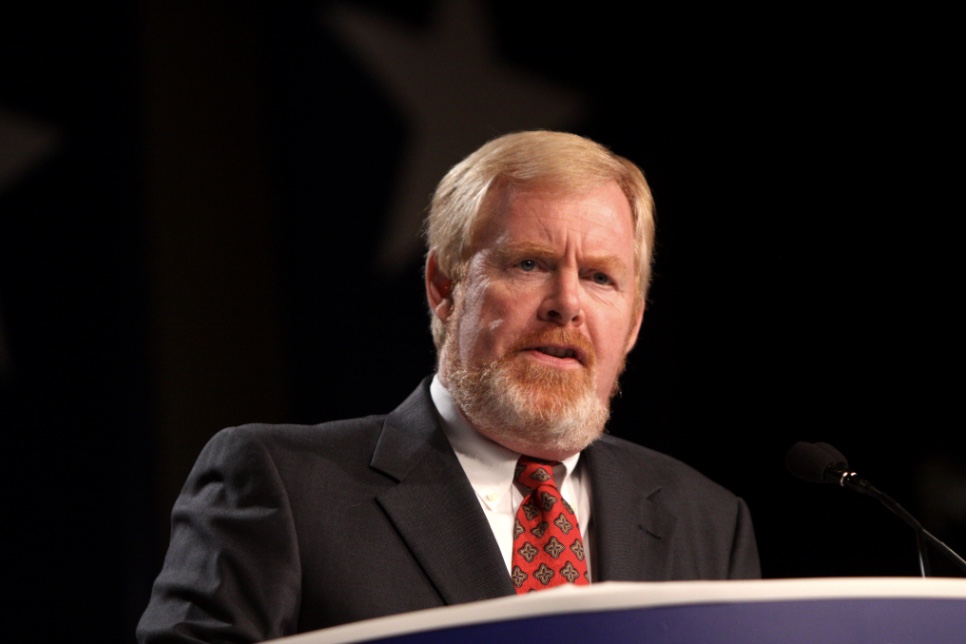
Brent Bozell III, founder of NewsBusters- source: Wikimedia Commons
NewsBusters is still owned by the Media Research Center. The Media Research Center was founded by L. Brent Bozell III in 1987 to expose liberal bias in the media. NewsBusters serves as the center’s internet platform that allows them to quickly call out and expose liberal bias when they see it. Bozell III stepped down from his leadership role in 2025 and was replaced by his son, David Bozell.
Who Funds NewsBusters?
NewsBusters is owned and operated by Media Research Center, a 501(c)(3) nonprofit organization governed by a board of directors.
This means that NewsBusters does not make a profit. They rely on donations from conservatives. Although there is a link on their site to donate, they mostly rely on donations from business leaders and former Republican politicians. Charity Navigator gives them an 84% out of 100 grade. They publicly release all their financial records, but their score is brought down by the fact that they don’t have a clear, tangible goal, don’t consider opinions from non-board members, and have poor compensation to their employees.
Additional Insights
News Source Comparison
When it comes to news source comparison, NewsBusters is often evaluated alongside other outlets that lean right or center-right. Sources like Hot Air, The National Interest, or The Dispatch often present similar tones and editorial philosophies. While NewsBusters maintains a Somewhat Right media bias, it differs from strongly partisan sources in that it occasionally includes opposing viewpoints and strives for coverage balance.
This contrasts with more biased media outlets that present consistently one-sided narratives without factual counterpoints. Readers seeking balanced political coverage may compare NewsBusters’s framing of issues with outlets rated as Center or Lean Right on our Media Bias Chart, or explore other regional papers on our Similar Sources page.
Notable Contributors and Authors
NewsBusters features many notable conservative writers.
Clay Waters is an experienced journalist for NewsBusters. He started off as an opinion writer for Bridge News in 1998, where he wrote many articles calling for fiscally conservative policies. In 2003, he was hired by the Media Research Center to evaluate bias within The New York Times. Since 2014, he’s run a blog on NewsBusters where he criticizes popular news.
Thomas Olohan is one of the most notable conservatives with NewsBusters. He’s worked with several political groups like AIPAC, Heritage Action for America, and Lone Conservative. He was hired by NewsBusters in 2023 as a staff writer. He also does research for the Media Research Center, focusing on bias in Wikipedia articles.
Related Tools and Resource Pages
To better understand how NewsBusters fits into the broader media landscape, we recommend exploring these helpful resources:
- Media Bias Chart: See where NewsBusters ranks among hundreds of media outlets across the political spectrum.
- Political Bias Chart: Visualize political slants of news sources across various policy areas.
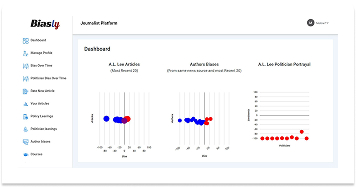
- Journalist Bias Analytics Platform: Explore how individual journalists contribute to bias within their publications.
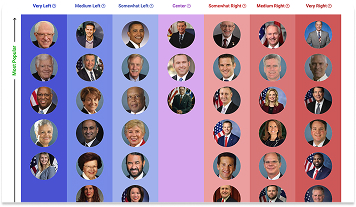
- Politician Bias Analytics Platform: Compare how politicians are framed differently by NewsBusters and other outlets.
- Media Literacy Education Platform: Learn how to critically assess media sources, bias techniques, and news reliability.
Frequently Asked Questions
NewsBusters is rated as Somewhat Right based on Biasly’s media bias algorithm, which assesses sentiment, article framing, and policy favorability.
NewsBusters has faced criticism from media watchdogs and researchers for spreading misinformation and promoting ideologically driven narratives, particularly on climate-related issues. Academic studies and media analysts have cited the outlet for publishing claims that contradict the overwhelming scientific consensus that human activity is the primary driver of climate change. Critics also argue that the site increasingly promotes “discourses of delay,” focusing less on outright climate denial and more on questioning the practicality of renewable energy and climate policy solutions.
Biasly uses a combination of AI sentiment analysis and human analyst review to assess tone, fact accuracy, source quality, and media bias indicators. Learn more on our Bias Meter page.
Generally, yes, though partisan framing and selective reporting can affect perceived reliability.
Military Spending
| Date | Sentiment | Associated Article | Snippet |
|---|---|---|---|
| 08/25/2019 | 75% For | Trump Family Detentions Flores Agreement (link) | So, of course, the Trump administration is doing the opposite in a baldfaced |