




-4% Center
Bias Meter
Extremely
Liberal
Very
Liberal
Somewhat Liberal
Center
Somewhat Conservative
Very
Conservative
Extremely
Conservative
-100%
Liberal
100%
Conservative
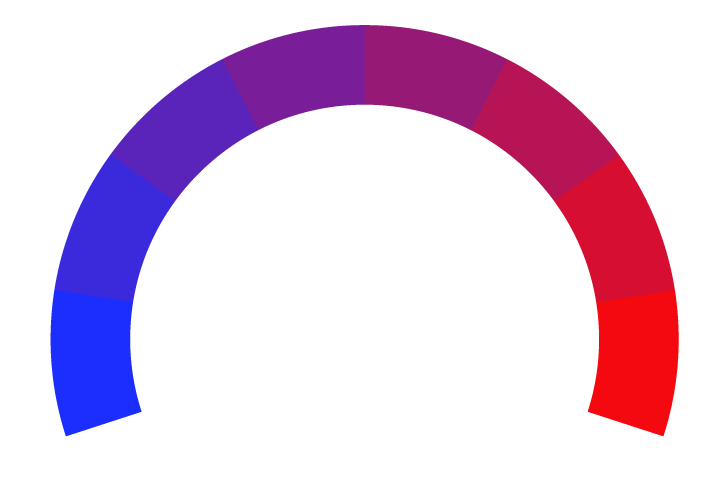
Biasly determines media bias ratings through a dual-layered approach combining artificial intelligence and analyst review. The platform’s proprietary bias detection engine, Bias Meter, evaluates sentiment, policy position alignment, and language framing across thousands of data points in news articles. Analysts then verify and interpret the AI’s findings, providing additional context where needed. Learn more about ratings
- Profile
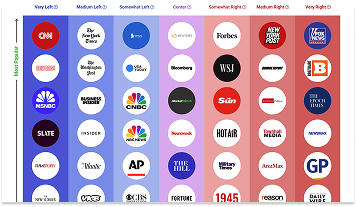
Political Wire on the media bias chart

- Bias Rating
-4% Center
- Reliability74% Reliable GoodPolicy Leanings
10% Center
Extremely
LiberalVery
LiberalModerately
LiberalSomewhat Liberal
Center
Somewhat Conservative
Moderately
ConservativeVery
ConservativeExtremely
Conservative-100%
Liberal100%
Conservative
Average Reliability
*Our bias meter rating uses data science including sentiment analysis, machine learning and our proprietary algorithm for determining biases in news articles. Bias scores are on a scale of -100% to 100% with higher negative scores being more liberal and higher positive scores being more conservative and 0% being neutral. The rating is an independent analysis and is not affiliated nor sponsored by the news source or any other organization.
Politician PortrayalN/A
Continue For Free
Create your free account to see the in-depth bias analytics and more.
By creating an account, you agree to our Terms and Privacy Policy, and subscribe to email updates.
Log In
Log in to your account to see the in-depth bias analytics and more.
Analysis of Political Wire Articles
Analysis of Bias in Political Wire Online Articles
Political Wire is, it must be said, largely a news amalgamation site in which editors basically reiterate what other outlets have said, with credit. However, where these stories come from reflects some degree of bias.
To evaluate this, we can analyze select Political Wire articles using several of Biasly’s bias-rating criteria: Tone, Tendency, Author, Diction, and Expediency Bias.
- Tone: The article’s overall attitude or emotional stance.
- Diction: The writer’s word choices, especially loaded or framing language.
- Author: The journalist’s background and public footprint.
- Tendency: Recurring bias patterns across the author’s broader work.
- Expediency Bias: Quick cues (e.g., headlines or images) that signal a slant.
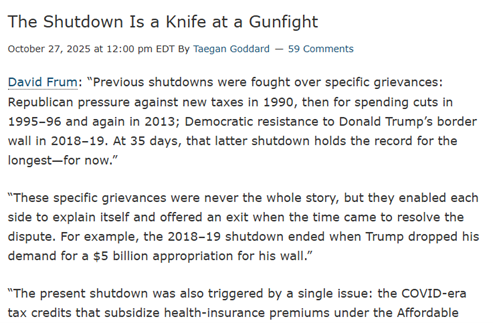
For example, Political Wire drew quotes from an Atlantic article of the same name for “The Shutdown is a Knife in a Gun Fight.” The Atlantic has been generally regarded and rated by Biasly as somewhat left-leaning, which bleeds into the quotes chosen and the tone of its message. Both articles frame the recent government shutdown as liberal resistance with a positive connotation behind it, as standing up to President Trump’s recent policies and congressional Republicans.
“That real issue is Trump’s challenge to Congress’s constitutional taxing and spending powers,” David Frum, the author of the original article, wrote. Frum’s X account also reveals his biases, as he has called for impeachment in the past and has accused the Trump administration of working in tandem with President Vladimir Putin of Russia.
A similar pattern rises in the article “Lawsuit Pushes New York into Gerrymandering Fight,” which was taken from a New York Times article of the same name. Despite the Times’ Somewhat Left rating from Biasly, the quotes used focus on the core issue at hand: writing.
“A lawsuit filed on Monday on behalf of four New Yorkers charges that the state’s congressional map unconstitutionally dilutes Black and Latino votes in a district that covers Staten Island and part of southern Brooklyn,” the New York Times reports. “The case marked New York’s official entrance into the national gerrymandering arms race. Rewriting the state’s existing congressional districts represents one of Democrats’ best hopes of improving their chances in the 2026 midterm elections.
That is the entire text of the Political Wire article. Effectively, it only draws on quotes from the original article, none of which include judgments. This is, by all means, a neutral article. However, the coverage undoubtedly focuses on an issue of particular concern to liberals, particularly in New York City.
Other articles are even shorter. The entirety of “House Staffers May Soon Feel Shutdown Pinch” reads, “Thousands of House staffers are preparing to miss their first paycheck this Friday if the shutdown drags on another week,” Bloomberg reports.
Other sources that Political Wire frequently use are Politico, the New Yorker, NOTUS, the Washington Post, Mediaite, and others. Consistently, these outlets are left-leaning, and their contents are published verbatim.
There are strengths and weaknesses to this. There is extremely little room for explicitly biased language, which is good. However, by cherry-picking quotes the way Political Wire does, it makes it difficult to get a full read on any given issue and leaves readers with an underdeveloped, if not incomplete, picture.
Taegan Goddard maintains a relatively professional and promotional presence on his X (formerly Twitter) account, primarily using the platform to share updates from his website, Political Wire, and to repost commentary from political journalists and analysts.
Many of his posts consist of links to articles, job listings for political organizations, and promotional material for his publication, suggesting that the account serves largely as a distribution channel for his media platform rather than a space for personal political commentary.
However, the account occasionally reposts commentary from political figures and analysts that reflect center-left policy perspectives, particularly on issues such as climate change, scientific research, and Democratic Party political developments. While the tone of the account is generally informational rather than overtly ideological, the selection of reposted material and featured topics may reflect editorial preferences consistent with Political Wire’s audience and coverage.
As a result, the feed appears primarily informational but may indirectly reinforce moderate or center-left viewpoints through topic selection and amplification of certain commentators.
A Triple Threat to Humanity @politicalwire More on our recent opinion article and upcoming book: Science Under Siege @public_affairs later this year by @MichaelEMann @PeterHotez https://t.co/28xgd200l1
— Prof Peter Hotez MD PhD DSc(hon) (@PeterHotez) January 3, 2025
Overall, these articles are extremely short and draw on key points from many articles across the internet, most of them from left-leaning media outlets like The Atlantic and The New York Times. Though Political Wire reports on their issues fairly (within the space it uses), it focuses much more on issues that would be of particular interest to Democrats.
Analysis of Political Wire Opinion Articles
Political Wire doesn’t have a designated area for opinion articles, and in the articles reviewed by Biasly, there are limited articles in which Political Wire seems to emphasize its own opinion.
However, we can find content resembling an opinion column from other sources that Taegan Goddard, the founder and author behind Political Wire, contributes to. Most consistently, Goddard is very active on Substack, where he publishes Politics Extra, his newsletter. Here, he is also liberal-leaning, the articles’ subject focusing on democratic interests as well as the Trump administration’s failures, including Signalgate, listing how the president behaves like a king, and, outright, “Trump is not good at legislative politics.”
This judgment is tentative, as the bulk of his articles’ content is behind a membership paywall, but biases arise from the headlines and the focus on the story, even if the actual content is fact-based.
Even then, however, though many of the opinions are liberal, they are backed up by facts. For example, in the post “Four Ways Trump Acts Like a King,” the reasons are not judgment-based and list tangible actions that the president has taken that strain the limits of presidential power through an independent lens.
More recently, Goddard published a short article titled “Democrats Get Nothing,” an appraisal of the route taken to effectively end the government shutdown. From the headline alone, there is a sympathetic tone towards the democrats, even though the writing itself seems impartial. However, he writes, “More than a month ago, I wrote that this shutdown would likely end when Democrats agreed to fund the government in exchange for a vague promise that Republicans would ‘later discuss’ Obamacare subsidies. That’s exactly what happened.”
Though this is a close approximation of the facts, it must be noted that the tone is rather explicitly placing the blame on Congressional Republicans for the later consequences, including the denial of pay to federal workers and the food benefits to millions of disenfranchised Americans. Nevertheless, he does make an effort to be critical of Democrats as well, further writing:
There have been four major shutdowns in the modern era. In each, the party driving the confrontation lost the political battle. No one has ever engineered a strategic shutdown and emerged stronger.
Analysis of Reliability in Political Wire’s Online News Articles
Political Wire functions differently from traditional reporting outlets because its posts are primarily short aggregations of reporting from other news organizations. Rather than publishing original investigative journalism, founder Taegan Goddard typically summarizes a story in a few sentences and embeds quotations from other publications. This format allows Political Wire to deliver rapid updates on political developments, but it also means that the reliability of each post depends heavily on the credibility of the outlet being referenced.
One example is the post titled “Trump Tries to Set Policy Without Legislation.” The article consists of a short introduction followed by two direct quotations from a New York Times report describing how executive actions may allow policies to bypass the legislative process. The post does not include additional commentary or independent verification from Political Wire itself. Instead, the credibility of the piece rests largely on the New York Times’ reputation as a widely recognized national news organization.
Another post, “Officials Underestimated War’s Impact on Strait of Hormuz,” follows the same structure. The article includes several direct quotes attributed to CNN reporting on U.S. national security decision-making and the possible consequences of Iranian retaliation. Like many Political Wire entries, the post functions as a brief summary and gateway to the original reporting rather than a standalone analysis.
Political Wire also posts commentary-driven items. In “Joe Rogan Questions Having UFC Fight at White House,” the site relays remarks from podcaster Joe Rogan criticizing the optics of hosting a sporting event at the White House during wartime. The post consists primarily of Rogan’s direct quote and attribution to Mediaite, again demonstrating the site’s reliance on external reporting rather than original analysis.
Similarly, the post “A Weakened Iran Finds a Way to Hit Back” quotes reporting from the New York Times about Iran threatening shipping traffic through the Strait of Hormuz after U.S. and Israeli strikes. The article contains two passages describing how Iranian actions could disrupt global oil markets and trade routes.
Across these examples, Political Wire articles are concise summaries that typically include one or more quotes from another publication. This approach allows the site to deliver frequent updates throughout the day, but it also means that the reliability of each entry depends largely on the accuracy and context of the original reporting being cited.
Quality of Sources and Facts Used
Political Wire articles generally rely on established national news organizations as their primary sources. In the posts examined above, the outlet cites reporting from The New York Times, CNN, and Mediaite, all of which are recognized political or media outlets. These citations lend credibility to the summaries because the underlying reporting originates from organizations that adhere to professional editorial standards.
Across the four articles analyzed, the posts contain a total of 9 direct quotes in quotation marks (including partial quotes). Individually, the articles include: 2 quotes (“Trump Tries to Set Policy Without Legislation”), 3 quotes (“Officials Underestimated War’s Impact on Strait of Hormuz”), 2 quotes (“Joe Rogan Questions Having UFC Fight at White House”), and 2 quotes (“A Weakened Iran Finds a Way to Hit Back”). Quote lengths range from very short phrases (as few as ~8–10 words) to long excerpts exceeding 40 words, with the average quote length falling roughly between 25–30 words across the sample. The structure is highly quote-driven: in most cases, the quoted material makes up the majority of each post, with minimal original narration beyond attribution. This approach can increase transparency by presenting longer, uninterrupted excerpts from source publications (reducing the risk of cherry-picked micro-quotes), but it also means Political Wire functions more as an aggregator than a primary reporting source—readers rely heavily on the framing and selection of external quotes rather than full contextual reporting.
On linked sources, the four articles reference 4 distinct external sources: The New York Times (2 articles), CNN (1 article), and Mediaite (1 article). By ideological distribution: Left = 2 (New York Times), Center = 1 (CNN), Right = 0, Mixed/Media-focused = 1 (Mediaite). The sourcing pattern shows a limited but consistent reliance on mainstream national outlets, with no cross-ideological diversity or direct primary-source linking. Rather than functioning as an independent evidence base, the links primarily serve as attribution to already-published reporting, reinforcing Political Wire’s role as a curated summary layer rather than a standalone reporting platform.
In terms of sources appearing in the articles, the primary entities referenced include:
- CNN – National news organization cited as the original reporting source (Center-Left)
- The New York Times – National newspaper cited for political reporting (Center-Left)
- Mediaite – Media commentary and political news site (Center-Left)
- Donald Trump – U.S. President referenced in reporting (Right)
- S. Pentagon and National Security Council – Government institutions discussed in the reporting (Institutional)
- Iran – Foreign government referenced in geopolitical reporting (Institutional/International actor)
When it comes to the balance of sources and links, the four articles show a narrow but consistent sourcing pattern rather than a broadly balanced one. All external references point to established, mainstream outlets—primarily The New York Times and CNN, with one instance of Mediaite. There are no links to right-leaning outlets, independent blogs, or primary documents, which limits ideological diversity within the cited material. While these sources are generally considered credible and widely used in mainstream reporting, the lack of variation means the perspective is shaped largely through a center-left media ecosystem.
In terms of bias balance, this sourcing approach does not appear overtly partisan on its own, but it does lean toward a single media lane. Because Political Wire does not introduce its own reporting or counter-sources, the selection of which outlets to quote becomes the primary editorial filter. This creates a subtle form of selection bias: even if each individual source is relatively reliable, the absence of ideologically contrasting viewpoints (e.g., right-leaning analysis or policy-focused primary sources) means readers are not exposed to a full spectrum of interpretation. As a result, the content feels more like a curated digest of mainstream narratives rather than a balanced aggregation of competing perspectives.
Selection and Omission Bias
Since Political Wire posts typically consist of short excerpts from external reporting, potential bias tends to appear in story selection and quotation choices rather than in extensive editorial commentary. The outlet frequently highlights breaking political developments, particularly stories involving presidential decision-making, national security, or campaign strategy.
For instance, the post “Trump Tries to Set Policy Without Legislation” selects a passage from a New York Times report emphasizing how executive actions may circumvent the legislative process. While the summary accurately reflects the quoted material, it does not present perspectives from administration officials or legal experts who may support the policy approach. This type of omission is common in aggregation journalism because the platform relies on excerpts rather than full reporting.
Similarly, the post “Officials Underestimated War’s Impact on Strait of Hormuz” highlights reporting describing strategic miscalculations by the Trump administration. The selected quotes focus on criticism of the administration’s national security planning but do not include statements from officials defending those decisions. Readers seeking a fuller picture would need to consult the original CNN article referenced in the post.
In contrast, the article “Joe Rogan Questions Having UFC Fight at White House” simply relays commentary from a podcast host reacting to a political event. The post includes a direct quote from Rogan expressing concern about the optics of hosting a sporting event during wartime. While the quote reflects Rogan’s opinion rather than factual reporting, the Political Wire entry presents it neutrally without additional editorial commentary.
Political Wire provides extensive coverage of US politics, and while these events are actively occurring and not necessarily incorrect, Political Wire repeatedly and overwhelmingly covers issues related to supporting, or at the very least sympathizing with, Democrats. This isn’t to an inherent detriment, but it’s significant in failing to provide comparable coverage to Republican legislators and interests.
For example, there is simply a much higher frequency of using the word ‘Democrat/Democratic’ in headlines. Exclusively on October 27th, the following headlines ran:
- “The Immigration Crisis Facing Democrats,”
- “Why Democrats Say the Shutdown Will Never End,”
- “Why Biden’s Press Secretary is Leaving the Democrats,”
- “Democrats Shutdown Coalition Begins to Fray.”
Though these were not the only subjects written about on the 27th, there is a clear pattern that does not exist the other way around.
Overall, Political Wire’s aggregation model limits the depth of analysis within each post. The site tends to highlight developments reported by other outlets rather than investigate them independently. This approach can introduce selection bias depending on which stories are chosen for amplification, but the posts themselves generally maintain a concise, informative tone.
Political Wire Editorial Patterns
Political Wire’s coverage of political topics often reflects a Center bias, with consistent patterns in phrasing, source selection, and thematic focus that are Neutral. While the publication demonstrates journalistic standards in many of its reports, the choice of issues can indicate a political slant. This content analysis examines how Political Wire handles liberal and conservative issues and evaluates its language choices and editorial tendencies.
Coverage of Liberal vs. Conservative Topics
Political Wire’s articles frame progressive social causes, such as LGBTQ+ rights, racial justice, and climate policy, in a generally positive light. Political Wire addresses threats to gay communities with some concern, as well as instances of injustice to women.
Political Wire generally makes a point to publish democratic issues and related articles that have to do with them. Though there is little explicit bias in what is actually said, it excludes issues that a conservative audience would resonate with.
Policy and Issue Framing
Political Wire is much more likely to regularly publish material that is critical of Republican policies and lawmakers. Regarding the recent 60 Minutes interview with Donald Trump, Political Wire shared a CNN article reporting that he lied 18 times. That said, although there were several concerns about ambiguity in her answers, there were no substantial claims that she lied in her interview, according to Politifact.
Political Wire has also republished articles regarding the government shutdown. They tend to focus on the Democratic side, framing it more as a welcome act of resilience on behalf of Democratic lawmakers. Further, Republican efforts are downplayed and rarely mentioned. Recent articles point instead to a civil war within the GOP.
Views regarding abortion access and opinions regarding it are much more neutral, but do still exhibit bias. In certain articles, Political Wire is very willing to view abortion rights sympathetically. For instance, Political Wire will republish articles regarding the negatives of stricter abortion access, like “Miscarriage becomes life-threatening after abortion bans,”
In other articles, Political Wire also includes negative undertones when discussing Republican measures to limit abortion access. The headline “Republicans find new way to block abortion access” has an almost sardonic tone, and even in more neutral headlines like “Justices allow states to defund Planned Parenthood,” the use of the word ‘allows’ has undertones of accusation.
Similar patterns appear when analyzing Political Wire’s approach to racial inequality. Political Wire and the sources that it promotes view racism as a serious issue, and promote articles that take racial issues and DEI programs seriously.
For instance, the New York Times headline that Political Wire republished, “An overwhelmingly white administration” regarding President Trump’s team, has explicitly negative undertones, indicating that there would be merit in having more diversity around the president. “A white nationalist problem on the right,” from the same source, not only explicitly calls white nationalism a problem but directly associates it with American conservatism.
Though neither mainstream conservatives nor Democrats are in favor of racism, Democrats are more likely to believe that issues like systemic racism continue to affect people of color today. Republicans don’t tend to believe that it’s a major issue. As such, associations with racism in the traditional sense and white supremacy are more prevalent among the right.
Coverage and Relevance
Political Wire’s writing touches on key issues in domestic politics, sometimes drawing attention to international dealings. However, the focus is overwhelmingly on the United States policy and parties, which makes sense. Most articles focus specifically on the workings of Capitol Hill and the White House, with some coverage of the New York mayoral election. It seems that when a local issue is deemed a national concern, Political Wire taps into articles on the topic.
That said, the publication itself is based in New York City, according to X. This does not overly bleed into its coverage. However, as a major economic, political, and cultural hub, New York is important when mentioned.
Readers who wish to further explore how Political Wire compares with other publications can visit Biasly’s Media Bias Chart to analyze tone and word choice in real time.
Political Wire Bias Overview
Political Wire is an online news platform that was founded in 1999 by Taegan Goddard after being inspired by a similar column in the Washington Post, titled the Washington Wire. The idea was to have the equivalent of a newspaper’s politics page online when the internet was new, and for readers to return to the page throughout the day to see what was happening.
Goddard told Fishbowl DC that people sometimes get confused by his politics because he’s fiercely independent in his views and “not a joiner by nature.” This is understandable, as Pew Research reports that 58% of US adults believe journalists to be biased. However, this article delves into Political Wire’s editorial tendencies to explore whether political bias is present and, if so, to what degree.
Is Political Wire Biased?
Based on Biasly’s evaluations, Political Wire is rated as Center.
By examining content patterns and the broader context of media influence, we aim to offer a balanced perspective on Political Wire’s political bias—and contribute to the ongoing discussion about bias in the news.
How Does Biasly Rate News Sources?
Biasly uses proprietary algorithms and a team of analysts to provide comprehensive bias evaluations across thousands of news outlets. Over 200,000 articles from more than 3,200 sources have been analyzed to identify the most accurate and unbiased stories.
Biasly assigns each outlet three key scores:
- Reliability Score – Reflects factual accuracy
- AI Bias Score – Generated via natural language processing
- Analyst Bias Score – Assessed by human political analysts
These scores are based on seven core metrics: Tone, Tendency, Diction, Author Check, Selection/Omission, Expediency Bias, and Accuracy. These elements help analysts and algorithms evaluate the political attitude conveyed by each article.
Biasly’s Bias Meter ranges from -100% (most left) to +100% (most right), with 0% indicating neutrality. The system evaluates individual articles based on political terms, policies, figures, and sentiment to calculate precise bias ratings.
Is Political Wire Politically Biased?
Political Wire earns a Center rating for its AI Bias Score and a Somewhat Left for its Analyst Bias Score. The Analyst Bias Score is generated by reviewers from liberal, moderate, and conservative backgrounds. Analysts reviewed several of Political Wire articles and noted preferences in areas like coverage of Democrats, tariff policies, and government spending.
How to Evaluate Bias
Although Biasly rates Political Wire as Center, it’s important to remember that bias can vary from article to article. Political Wire also covers a Democratic politician with objectivity on many issues, from state legislation to social developments. This complexity underscores the importance of examining each article individually. So, let’s learn how to evaluate media bias.
Recognizing media bias requires awareness and critical thinking. Often, readers trust news sources that affirm their existing beliefs—a psychological tendency known as confirmation bias. This makes it harder to identify slanted narratives or one-sided reporting.
To combat this, it’s essential to challenge your assumptions by consulting multiple viewpoints and verifying news through third-party analysis. Tools like Biasly’s media bias ratings allow readers to compare the same news story across the political spectrum.
Ultimately, bias isn’t always a matter of what is said—it’s also about what is left out, how topics are framed, and which stories are chosen for coverage. Learning to recognize these patterns can help readers make more informed decisions and develop greater media literacy.
To start comparing news outlets and gain a better understanding of bias, sign up for Biasly’s Media Bias & News Analytics Platform to see how stories vary between sources.
Political Wire Reliability Overview
Is Political Wire Reliable?
Political Wire finds itself toward the middle of the spectrum, with neither high nor low accuracy. Its status as a news aggregation website or blog contributes to its moderate reputation for reliability. The sources and their quotes, though not Goddard’s own words or work, are usually published with little to no context or added analysis on the author’s part. In this way, the reliability of Political Wire depends on the news media source it uses on a case-by-case basis.
How to Evaluate Reliability?
Reliability refers to how trustworthy or accurate a news source is. If we can’t trust what we read, then continuing to consume content from that outlet serves little purpose. So how do we evaluate a news outlet’s reliability?
There are several potential measures of reliability to look out for when trying to determine whether a media source is reliable or not. Red flags for an unreliable article can include the presence of wild, unsubstantiated claims, facts dependent on other unreliable sources, heavy use of opinionated language, and more. In contrast, hallmarks of a reliable source include:
- Absence of subjective language
- Citing credible sources (e.g., .gov, .edu, academic references)
- Verifiable facts and statistics from multiple outlets
- Use of primary sources, like interviews or transcripts
- Consistency with coverage across other platforms
Biasly’s reliability scores incorporate these elements in evaluating media outlets.
So How Does Political Wire Fare in Its Reliability?
The political reliability index developed by Biasly assesses both accuracy and trustworthiness. Political Wire currently holds Good Reliability Score, which is calculated as a weighted average of:
- Fact Analysis Score – Evaluates the accuracy of claims, facts, and evidence.
- Source Analysis Score – Assesses the number, diversity, and credibility of sources and quotes used.
Political Wire’s Source Analysis Score is Average at 48% Reliable. This suggests moderate trustworthiness in its sourcing practices. The score is AI-generated and considers quote length, frequency, diversity, and quality.
The Fact Analysis Score of Political Wire is Good at 81% Reliable. This further shows how well Political Wire supports its claims, addresses selection and omission bias, and presents verifiable evidence.
While Political Wire leans toward short-form blog posts that aggregate news, occasional lapses—such as unbalanced viewpoints or incomplete data—can affect its reliability rating, as described earlier in this article. These nuances emphasize the importance of analysis.
Political Wire’s Accuracy and Reliability
According to Biasly’s analysis, Political Wire maintains Good Reliability Score, but individual articles may vary significantly. Let’s dive into the details.
Political orientation plays a crucial role in how audiences perceive reliability. Political Wire has been accused of favoring a liberal narrative, potentially at the expense of factual reporting. To validate such claims, it’s essential to analyze whether the publication backs its assertions with sufficient evidence and diverse viewpoints.
Two common types of bias that affect factuality include:
- Selection Bias – Highlighting or omitting stories to fit a particular narrative.
- Omission Bias – Leaving out differing perspectives or relevant details to skew perception.
Biasly’s accuracy ratings use a scale from 1% (least accurate) to 100% (most accurate). Factors include the presence of supporting evidence, internal and external reliable sources, and balanced viewpoints.
Recall that our analysts give RedState a reliability rating of 47%. Although this score varies between articles and authors, the most extreme variation in reliability stems from selection and omission bias, which we will explore below. Consider also an extreme left-wing source such as HuffPost UK, which has a rating of “Very Liberal” and is deemed to have “Good” reliability according to Biasly’s analysts. While they have one article rated with “Excellent” reliability titled “DHS Chief: U.S.-Mexico Border Is Closed, But Unaccompanied Minors Accepted,” another article from the same source was only 44% reliable, titled “Calif. Venue Reportedly Boots Matt Gaetz, Majorie Taylor Greene’s America First Rally.” As a result, this demonstrates that articles from the same source can vary widely in reliability and that articles with heavy political topics and leanings are less reliable than neutral reports.
“The plan is supported by Oklahoma State Superintendent Ryan Walters: The problem is that charter schools are considered public schools by default.”
We will take a closer look at more examples like this below to provide a further investigation into the reliability of Political Wire’s articles. This will include its use of selection bias and omission bias, as well as the quality of its sources and the facts it uses.
So, Is Political Wire Reliable?
Overall, Political Wire can be considered to be an outlet that is very reliable. It demonstrates a consistent goal of journalistic integrity and typically supports claims with sources and quotes. Occasional omissions and framing bias do appear, particularly on culturally sensitive or partisan issues.
As media literacy improves, readers can more easily detect issues with selection bias, omission bias, and factuality. To strengthen your ability to assess reliability across the political spectrum, use the News Bias Checker to compare how multiple outlets report the same story.
This empowers you to consume more accurate, balanced, and dependable news.
Funding and Ownership
Who Owns Political Wire?

Taegan Goddard, Founder, Political Wire – Source: Wikipedia
Political Wire operates under a for-profit business model, and most of the content is locked behind a paywall. This does, however, make sense when acknowledging that practically all of the content is written by Taegan Goddard, the publisher of Political Wire, who founded it in 1999.
Goddard, according to Political Wire, “spent more than a decade as managing director and chief operating officer of a prominent investment firm in New York City. Previously, he was a policy adviser to a U.S. Senator and Governor.” Though it does not specify, he worked with Donald Riegle, a Democrat from Michigan, and former Independent Connecticut Governor Lowell Weicker.
Though he makes a concerted effort to be impartial in the articles he shares and the things he writes, these considerations still affect his potential for bias toward progressive politics.
Who Funds Political Wire?
Political Wire is primarily funded through a subscription-based revenue model, with much of its content placed behind a paywall for paying members. In addition to subscriptions, the site also generates revenue through advertising and affiliate partnerships, though these are secondary compared to its paid access model.
Because Political Wire is largely operated and written by its founder, Taegan Goddard, it does not rely on large corporate ownership, external investors, or government funding. This independence allows for editorial flexibility, but it also means the platform’s financial sustainability depends heavily on maintaining a loyal subscriber base.
As a result, the content is often structured to be concise, frequent, and engaging—encouraging repeat visits and continued subscriptions rather than long-form investigative reporting.
Additional Insights
News Source Comparison
When it comes to news source comparison, Political Wire is often evaluated alongside other regional and national outlets that focus on politics, and has collaborated with many of them. Sources like the Daily Beast and Congressional Quarterly are usually referenced in tandem. Though the Beast has an explicit left-leaning bias, Congressional Quarterly is much more non-partisan, though much more private as well, providing in-depth reporting on Congress. Political Wire maintains a Center media bias, which is generally in line with these sources.
Notable Contributors and Authors
All of Political Wire’s articles are credited as having been posted by Goddard, though he doesn’t write his own material for it. The authors from the sources he uses vary, despite Goddard himself having been a journalist for several years and being credited with the political management book, ‘You Won: Now What? How Americans Can Make Democracy Work from City Hall to the White House.’
Related Tools and Resource Pages
To better understand how Political Wire fits into the broader media landscape, we recommend exploring these helpful resources:
- Media Bias Chart: See where Political Wire ranks among hundreds of media outlets across the political spectrum.
- Political Bias Chart: Visualize political slants of news sources across various policy areas.
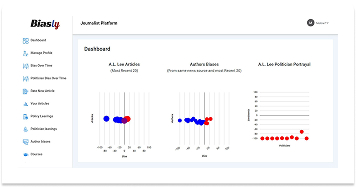
- Journalist Bias Analytics Platform: Explore how individual journalists contribute to bias within their publications.
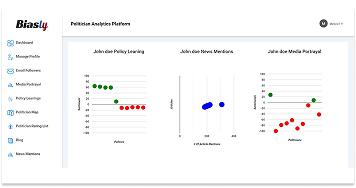
- Politician Bias Analytics Platform: Compare how politicians are framed differently by Political Wire and other outlets.
- Media Literacy Education Platform: Learn how to critically assess media sources, bias techniques, and news reliability.
Frequently Asked Questions
Political Wire is rated as Center based on Biasly’s media bias algorithm, which assesses sentiment, article framing, and policy favorability.
While Political Wire is not widely known for promoting fake news, some articles have shown selection and omission bias, especially in political reporting. Its factual reporting is generally sound.
Biasly uses a combination of AI sentiment analysis and human analyst review to assess tone, fact accuracy, source quality, and media bias indicators. Learn more on our Bias Meter page.
Yes, but with caution. Political Wire simply doesn’t show the full picture in politics, which is to be expected given its short-form content. The articles it publishes are generally credible and fact-based, though coming from left-leaning sources. Political Wire is under no circumstances a source, though it is an incredibly helpful resource for further reading.
Military Spending
| Date | Sentiment | Associated Article | Snippet |
|---|---|---|---|
| 08/25/2019 | 75% For | Trump Family Detentions Flores Agreement (link) | So, of course, the Trump administration is doing the opposite in a baldfaced |